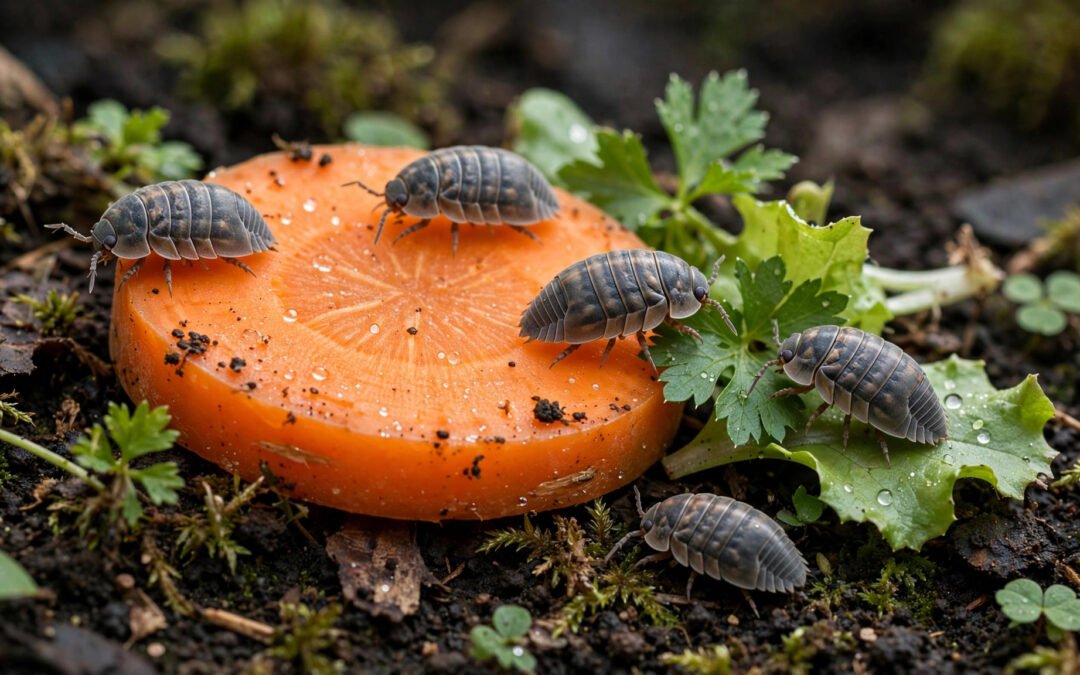
Staple Isopod Foods (Always Available)
- Leaf litter — oak, magnolia, or maple leaves, replenished every few weeks
- Decaying wood — cork bark or untreated hardwood breaks down slowly and provides constant grazing material
Leaf litter is the foundation food — see the best leaf litter for isopods ranked.
Supplemental Foods (1-2x per week)
- Fish flakes or pellets — high in protein, isopods find them quickly
- Vegetable scraps — carrots, zucchini, spinach, cucumber
- Dry dog food (crushed) — an occasional protein boost
Calcium Sources for Isopods (Critical for Molting)
- Cuttlebone — crushed or left whole for isopods to graze on
- Crushed eggshell — a free, easy calcium source
Calcium deficiency is one of the most common causes of failed molts. Therefore, always keep a calcium source available in the enclosure.
Feeding Schedule
In general, feed supplemental foods 1-2 times per week in small amounts. Remove any uneaten fresh food (vegetables, fish flakes) after 24-48 hours to prevent mold buildup — leaf litter and wood can stay indefinitely since they break down naturally.
Signs of Overfeeding
Excess mold, fruit fly infestations, or a strong odor usually mean you’re feeding too much or leaving food in too long. In addition, cut back and remove leftovers more promptly.
For more on avoiding common issues, see our common mistakes guide.
What Do Isopods Eat?
In the wild, isopods are detritivores — they eat decaying leaves, soft wood, fungi, algae, and dead plant matter, with the occasional bit of animal matter. In captivity, the same principle applies: the bulk of the diet should be leaf litter and plant matter, with calcium and a little protein on the side. For example, a good everyday mix is pesticide-free leaf litter (oak and maple are popular), a rotating vegetable such as zucchini, carrot, sweet potato, or squash, and a constant calcium source such as cuttlebone or crushed eggshell. Protein — fish flakes, dried shrimp, or a small piece of freeze-dried mealworm — can be offered once or twice a week in small amounts. In general, variety matters more than any single “superfood”: colonies that eat several foods tend to eat better and breed more steadily than colonies that eat one food alone.
Foods to Avoid or Limit
Most vegetables are fine, but keep a few foods rare or avoid them. In general, keepers commonly avoid citrus fruit in large amounts, onion, and garlic. Heavily salted, spicy, or processed foods do not belong in an isopod enclosure, and neither does produce that may carry pesticides — wash everything and buy pesticide-free where you can. In addition, remove uneaten fresh food within 24 to 48 hours: food left to rot draws mites and fungus gnats and can foul the substrate. A little mold on leaf litter is normal, but slimy, foul-smelling leftovers should come out.
Frequently Asked Questions
What do isopods eat?
Primarily decaying plant matter. For example, in captivity, the everyday diet is leaf litter plus vegetables such as zucchini, carrot, sweet potato, and spinach, with cuttlebone or eggshell for calcium and a little protein (fish flakes or dried shrimp) once or twice a week.
What can I feed isopods?
Leaf litter, vegetables (zucchini, carrot, sweet potato, squash, spinach), calcium sources (cuttlebone, crushed eggshell), and occasional protein (fish flakes, dried shrimp). In addition, wash all produce, choose pesticide-free where possible, and remove uneaten fresh food within 24 to 48 hours.
How often should I feed isopods?
Keep leaf litter available at all times — that is the staple. In addition, offer fresh vegetables two to three times a week in small amounts, and adjust to colony size: a large colony eats more, a small starter colony needs very little. Finally, remove leftovers before they mold.
Can isopods eat spinach?
Yes. Spinach is a safe leafy green for isopods. In addition, wash it well, offer it in small amounts, and rotate it with other greens rather than feeding spinach alone.
What do isopods like to eat most?
It varies by species and colony, but isopods usually eat soft vegetables, leaf litter, and calcium sources first. Therefore, offer variety and watch what disappears — your colony will show you its preferences.
References
- Australian Museum — Isopoda: australian.museum
- Encyclopaedia Britannica — Isopod: britannica.com
Note: Isopod care requirements can vary by species, enclosure size, and local conditions — treat the guidance above as a starting point and adjust to what your colony shows you.