
Overfeeding causes mold and mites; underfeeding stalls breeding. Get a weekly plan for feeding isopods matched to your colony size and species type.
New to isopods? The woodlouse overview on Wikipedia explains the basics of these terrestrial crustaceans.
How much should you be feeding isopods?
Feeding isopods sounds simple until mold appears or breeding stalls. Overfeeding causes mold and mites; underfeeding slows growth. This calculator builds a balanced weekly plan for feeding isopods from your colony size and species type — staple dry food amounts, fresh vegetable schedule, plus the protein and calcium most keepers forget.
The isopod feeding rules that matter
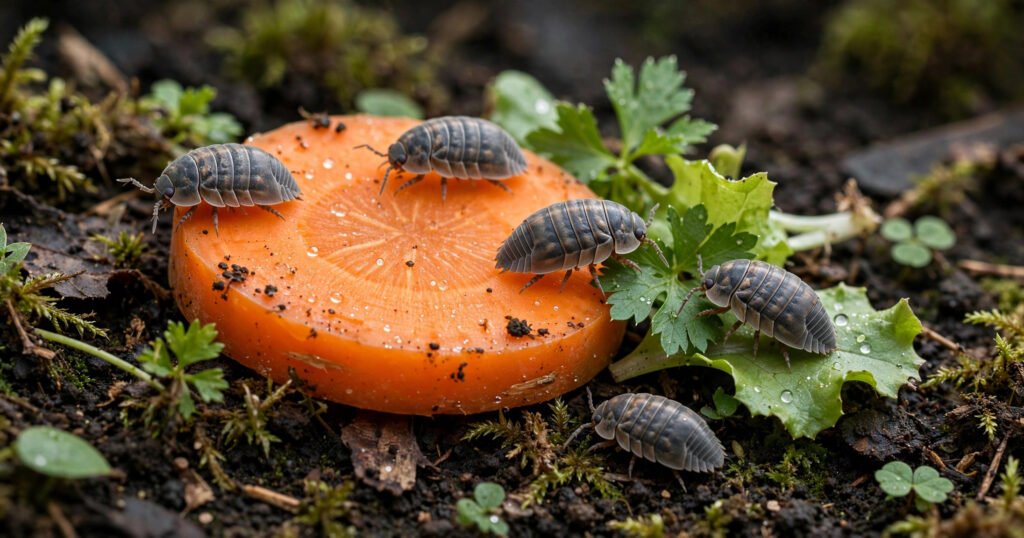
When feeding isopods, variety beats quantity: rotate zucchini, carrot, sweet potato and squash; offer protein once or twice weekly; keep cuttlebone in 24/7. Remove uneaten fresh food after 24–48 hours. If food vanishes in hours, feed more; if it sits two days, cut back.
FAQs on Feeding Isopods
How often should I feed my isopods? For example, offer dry food daily and fresh vegetables 2–3 times per week. In addition, always keep cuttlebone available.
What vegetables are safe? Carrots, zucchini, sweet potato, and squash are excellent choices. However, avoid onions, garlic, and citrus fruits.
How much protein do they need? Offer a protein source once or twice weekly. For instance, dried shrimp, fish flakes, or boiled egg work well. As a result, your colony will breed faster.
Why is there mold in the food dish? You’re likely overfeeding. Therefore, remove uneaten fresh food after 24–48 hours. First, reduce portions; then adjust as needed.
Can I feed them fruit? Yes, but sparingly. Fruits are high in sugar, so offer tiny pieces once a week at most. Otherwise, stick to vegetables and protein for the healthiest colony.
Need help with calcium? Moreover, check our Calcium for Isopods guide. For the full set of free tools, visit the Isopod Tools page.