
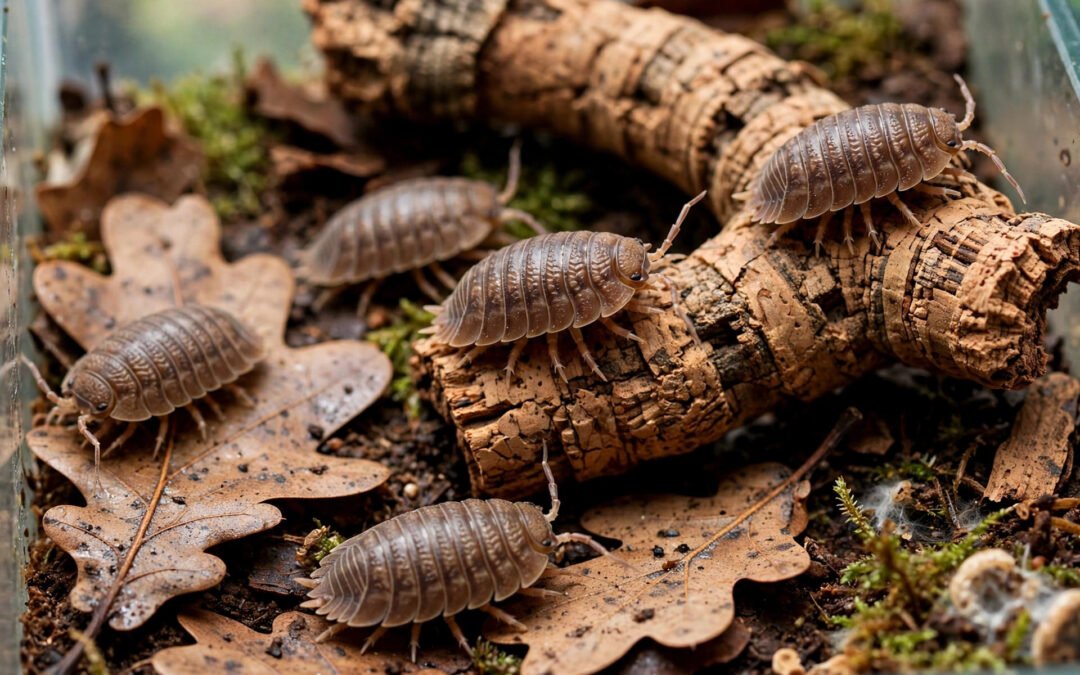
Giant Canyon Isopod Care: The Complete Porcellio Dilatatus Guide
Giant Canyon isopods (Porcellio dilatatus ‘Giant Canyon’) are one of the largest, hardiest isopods you can keep — adults reach 18–20 mm, breed fast, and tolerate a wider range of conditions than most beginner species. They need a deep-substrate tub with a clear moisture gradient, room temperature, leaf litter plus regular protein and calcium, and very little fussing. The honest catch: they spend most of their time burrowed out of sight, so buy them for the cleanup job they do brilliantly, not as a display pet you will watch all day.
What Is a Giant Canyon Isopod?
Giant Canyon is the hobby name for a large, wide-bodied form of Porcellio dilatatus, a woodlouse native to Western Europe that has spread across North America too. Adults are a uniform muted brown, sometimes with a faint blue-grey cast, and their stocky build makes them look even bigger than their 2 cm length suggests. Unlike the round, ball-rolling Armadillidium species, Porcellio cannot curl into a ball — they run for cover, and their first instinct when disturbed is to dig down. That burrowing habit shapes everything about keeping them: a Giant Canyon colony is a working colony that eats leaf litter, breaks down waste, and quietly multiplies underground.
Giant Canyon Isopod Care at a Glance
| Care factor | What works |
|---|---|
| Scientific name | Porcellio dilatatus ‘Giant Canyon’ |
| Adult size | 18–20 mm (about 2 cm) |
| Lifespan | 2–3 years with good care |
| Difficulty | Beginner |
| Temperature | 18–25 °C / 65–77 °F — room temperature |
| Humidity | 50–70%, with one damp corner always available |
| Enclosure | 6 qt tub to start; 12 qt or larger for a mature colony |
| Substrate depth | 8–10 cm (3–4 inches) |
| Diet | Leaf litter and rotting wood, plus protein and calcium |
| Breeding speed | Fast — broods of 20–60+ mancae |
Giant Canyon Isopod Care: Enclosure Setup
Start 10–12 animals in a 6 qt clear plastic tub and upgrade to 12 qt or larger as the colony grows — a mature colony eats and breeds fast enough to outgrow a shoebox tub in months. Pick a tub taller than it is wide if you can: these animals live in the first few inches of substrate, and a cube-shaped container gives them the depth they want without wasting floor space. Drill ventilation holes near the top of the sides, above the substrate line, and cover them with fine mesh to stop tiny mancae squeezing out. Porcellio dilatatus is not fussy about airflow, but every isopod enclosure still needs fresh air — stale, stuffy tubs are where mould and mite problems start. Furnish it like a forest floor: thick leaf litter, cork bark and rotting wood to hide under, and cuttlebone in the damp corner. Lifting the bark is how you check on a colony that otherwise lives underground. For a deeper look at sizing, see our isopod enclosure size guide.
Giant Canyon Isopod Care: Substrate and the Moisture Gradient
Substrate depth is the one setup detail you cannot shortcut with this species. Give them 8–10 cm (3–4 inches) of a moisture-holding mix — coconut coir, topsoil or peat blended with rotting wood and leaf litter — because Giant Canyons burrow and moult underground, and a shallow tub forces them to moult on the surface where they dry out. Our best substrate mix for isopods recipe works well here; just pour it deeper than you would for a surface-dwelling species. The second non-negotiable is the moisture gradient: one end of the tub damp, the other end dry, so the animals can choose. Mist the damp corner only, never the whole tub — soaking everything is the fastest way to get mould. If you are unsure how to judge it, our isopod humidity control guide explains how to measure and adjust it without guessing.
Giant Canyon Isopod Care: Temperature and Humidity
Search for Giant Canyon temperature advice and you will find sellers quoting 65–75 °F, others 75–85 °F, and care sheets saying 59–79 °F. They are all partly right, because the honest answer is that this species tolerates a wide band and normal room temperature is fine. Keep them between 18 and 25 °C (65–77 °F), out of direct sunlight, and do not buy a heat mat — a tub on a sunny windowsill can turn into a greenhouse and kill a colony faster than any cold snap will. Below about 15 °C in winter the colony slows down and breeds less, but it will not die. Humidity is the same story, with the same caveat: the wide tolerance is real, but it is not a licence to ignore the damp corner. A colony kept bone-dry will eat and walk around for a while — and then you will start finding failed moults, animals stuck half out of their old shell. Keep one corner reliably damp and the rest takes care of itself.
Giant Canyon Isopod Care: Feeding
Like all isopods they are detritivores: leaf litter and decaying wood are the staple, and a colony this size eats through them noticeably fast, so top the litter layer up often. On top of the staple, Porcellio need more protein than the ball-rolling Armadillidium species do — fish flakes, dried shrimp, or freeze-dried fish food two or three times a week, in portions they finish within a day. Calcium must always be available: cuttlebone in the tub at all times, with crushed eggshell as a cheap backup. Vegetables and fruit — squash, carrot, sweet potato, apple — are welcome extras in small pieces, removed before they mould. Our protein sources for isopods guide covers portions and frequency in detail. Two opinions worth stating plainly: fish flakes are underrated — keepers chase boutique isopod foods while a pinch of flakes does the same job for pennies. And overfeeding protein is a real mistake — uneaten shrimp moulds within a day in a warm tub, and the mould, not the food, is what causes problems. Feed small, feed often, remove what is left.
Giant Canyon Isopod Care: Breeding
Give them space, food, and a damp corner and Giant Canyons breed fast. Females carry broods in a pouch and release 20–60 or more tiny white mancae at a time; in a healthy colony you will spot them clustered under bark within a few months of setup. You do not need to do anything special — no pairing, no separation, no extra heat. If breeding stalls, the cause is almost always too dry, too crowded, or not enough protein; our isopod colony not breeding checklist walks through the diagnosis in likelihood order. The flip side of fast breeding is overpopulation: a colony that started as 12 animals can number in the hundreds within a year, and a crowded tub breeds less, moults worse, and eats its leaf litter faster than you can replace it. When the tub looks full at every lift of the bark, split the colony — move half the animals, with a scoop of their substrate and litter, into a fresh tub.
Giant Canyon Isopods as a Bioactive Cleanup Crew
This is where the species earns its keep. Giant Canyons are a workhorse cleanup crew for larger bioactive setups: they break down leaf litter, animal waste, and shed skin quickly, tolerate the drier end of the humidity range better than most isopods, and are big and tough enough to live with medium and large terrarium inhabitants. They are one of the few cleanup-crew options that also cope in an arid-leaning terrarium, provided a damp retreat exists. There are two limits to know. First, they burrow — in a display terrarium you will see them far less than a surface-active species like powder oranges. Second, they are large enough to be noticed, and eaten, by the animals they clean up after; treat them as a crew that needs cover and numbers, not as pets. Stock generously, give them deep substrate and bark to retreat under, and let them establish for two to three weeks before the terrarium’s main resident moves in. For the full setup, see our bioactive terrarium cleanup crew setup guide.
Giant Canyon Isopod Care: Common Problems and How to Fix Them
- Animals stuck mid-moult: the damp corner has dried out. Mist it, add damp sphagnum moss, and check the gradient daily for a week.
- You never see your isopods: usually normal — they live underground. Lift the bark at night rather than assuming the colony is gone.
- Mould on food: portions too big or left too long. Feed less, remove leftovers within 24 hours, and add springtails — they eat mould before it spreads.
- Colony stops breeding: usually crowding, dryness, or low protein. Split the colony, restore the damp corner, and feed protein twice a week for a month.
Are Giant Canyon Isopods Right for You?
Buy Giant Canyons if you want a big, tough, fast-breeding cleanup crew or a low-maintenance first Porcellio — they forgive beginner mistakes that would stall a Cubaris colony. Skip them if you want a display pet you can watch: dairy cows or powder oranges will be out in the open far more often. If you are still choosing your first species, our best isopod species for beginners guide ranks the options side by side. Start with 10–12 animals, give them depth, keep one corner damp, feed protein twice a week — and then mostly leave them alone. They do the rest underground.
Frequently Asked Questions
How big do Giant Canyon isopods get?
Adults reach 18–20 mm (about 2 cm), one of the largest isopods commonly kept. Keep density low if you want the largest individuals — crowded colonies produce smaller adults.
Do Giant Canyon isopods need high humidity?
No — 50–70% suits them. What they need is a moisture gradient: one corner of the tub kept damp at all times, so they can moult and drink. A uniformly dry tub causes failed moults even in this tolerant species.
Can Giant Canyon isopods live with other isopod species?
They can share a bioactive terrarium with springtails, but mixing two isopod species in one culture tub is not recommended — the faster breeder, usually the Giant Canyon, outcompetes the other. Keep one isopod species per tub.
References
Care ranges here are drawn from keeper care sheets and species guides, including Terrarium Tribe’s Giant Canyon profile, Furry Critter Network’s Giant Canyon Woodlouse guide, Crawler Island’s care guide, and GotFeeders’ isopod care notes. Ranges differ between sources; where they disagree, this guide follows the overlap — room temperature and a moisture gradient — rather than any single seller’s numbers. Individual colonies and local conditions vary, so treat these as starting points and adjust to what your animals show you.
Disclaimer: This guide is for general care information only. Isopod care varies by species, setup, and local conditions — always observe your colony and adjust. If animals show signs of illness or mass die-off, check moisture, temperature, and food freshness first.