
Isopod Colony Not Breeding? Troubleshooting Checklist for Keepers
A healthy isopod colony should produce tiny white babies — called mancae — within a few weeks to a few months of setup, depending on the species. If yours has not, the cause is almost always husbandry, not bad luck: too few founding animals, a temperature or moisture setting the species dislikes, not enough protein, or simply too much disturbance. Work through this isopod colony not breeding checklist in order, and most colonies start producing within a month of the fix.
First, Make Sure They Really Are Not Breeding
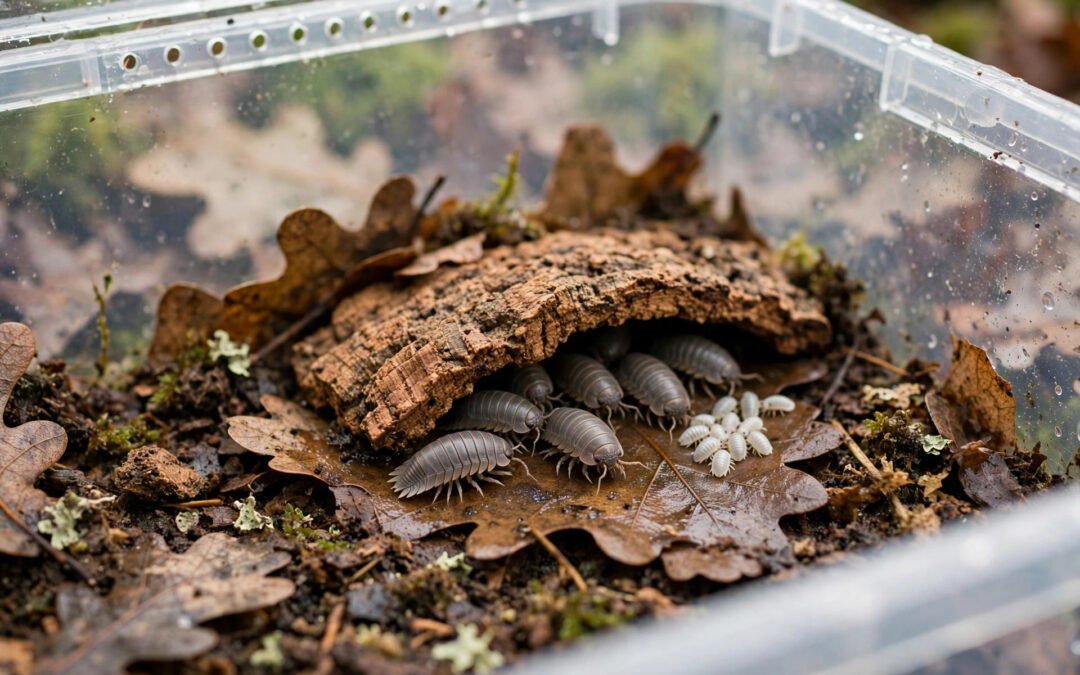
Before you change anything, rule out the most common false alarm in the hobby: the babies are there, you just cannot see them. Newborn mancae are 1–2 mm long, white, and they spend their first weeks buried in substrate, under bark, or inside leaf litter. A colony can look empty on the surface while a whole generation grows underneath.
Do the night-lift test: wait until an hour after lights-out, then gently lift one piece of cork bark or a flat stone and look at the damp underside. Mancae cluster there. If you find even a handful of tiny white specks that move, your colony is breeding — it just needs time, not an overhaul. Only proceed down the checklist if two night checks turn up nothing. One more honest check: count your adults. If you started with five or six animals, you may simply have too few — or all one sex.
How Long Should You Wait? Species Timelines for Breeding
Patience is part of the diagnosis. Hardy species breed fast; slow, high-humidity species do not, and judging a Cubaris colony by Powder Orange standards will have you “fixing” a colony that was never broken.
- Fast breeders (first mancae in 3–8 weeks): Powder Orange and Powder Blue (Porcellionides pruinosus), Dairy Cow (Porcellio laevis), Dwarf White (Trichorhina tomentosa).
- Medium breeders (2–4 months): Porcellio scaber, Armadillidium vulgare, Zebra isopods (Armadillidium maculatum).
- Slow breeders (3–6 months, sometimes longer): most Cubaris species, including Little Sea (Cubaris murina) and Panda King.
Rule of thumb from our isopod beginner FAQ: if a hardy species shows nothing after three months, or a slow species nothing after six, something in the setup needs changing. Until then, the best move is usually to leave the tub alone.
The Troubleshooting Checklist: 10 Causes, Most Likely First
Work top-down. Fix one thing, wait two to three weeks, and check again before changing the next — changing five variables at once means you never learn what actually worked.
1. Too Few Founders, or Only One Sex
Ten to twenty unsexed adults is the standard starter group for a reason: it virtually guarantees both sexes and enough genetic diversity for steady breeding. A group of three or four can take months to get going, and a single-sex group never will. If you bought a small “starter culture,” this is your prime suspect. The fix is simple: add 10+ more adults, ideally from a different source, which also refreshes the gene pool. Our isopod breeding basics guide covers starter-group sizing in detail.
2. Temperature Too Low (or Too High)
Temperature is the master switch for breeding. Most common species breed best between roughly 20–26 °C (68–79 °F). Below about 18 °C, breeding slows sharply, and near 4 °C it stops altogether. A tub parked against a cold exterior wall or in an unheated room over winter can look perfectly healthy while producing nothing. Conversely, a tub above 30 °C stresses animals into hiding and failed moults. Check with a thermometer inside the tub, not by room feel, and see our isopod temperature guide for species-by-species ranges. Moving the tub to a stable 22–24 °C spot is the highest-return fix on this whole list.
3. Moisture Gradient Wrong
Isopods need a gradient, not a swamp and not a desert: one damp end, one dry end, so they can choose. A uniformly soaked tub drives adults to the surface and drowns mancae; a uniformly dry tub desiccates them before they ever breed. Mist only the damp side, and keep the substrate damp like a wrung-out sponge, never wet. If you are misting the whole tub every day, stop — that daily ritual is overrated and is a classic cause of stalled colonies. Our isopod humidity control guide explains how to measure and hold the gradient.
4. Not Enough Protein
Leaf litter alone does not fuel reproduction. Females carrying a brood need protein, and a colony fed only leaves and the occasional carrot will breed slowly or not at all. Offer a protein source twice a week — fish flakes, dried shrimp, or dried mealworms — in a pinch-sized amount eaten within 48 hours. Here is an underrated truth: plain aquarium fish flakes outperform most boutique “isopod protein blends” at a tenth of the price. See our protein sources for isopods guide for the full ranking and the 48-hour rule.
5. Calcium Shortfall
Every manca grows a new exoskeleton, and every moult draws calcium. A colony without a permanent calcium source — cuttlebone, eggshell, or limestone — will show failed moults and few babies long before adults start dying. Keep cuttlebone in the tub at all times, not as an occasional treat. Our calcium for isopods guide covers sources, schedules, and deficiency signs.
6. Too Much Disturbance
Isopods breed when they feel safe. A keeper who lifts every hide daily, digs through substrate “checking for babies,” or rehomes the colony to a fresh tub every month is resetting the settling clock each time. New colonies need 2–4 undisturbed weeks to establish. After that, limit full-tub inspections to once a week and never dig for mancae. If you recently rebuilt the enclosure, the colony is not failing — it is restarting. Give it a month of quiet.
7. Overcrowding: The Population Cap
Here is the cause almost nobody talks about: a colony can breed itself to a standstill. In a severely overcrowded tub, females can stop producing — a kind of emergency brake on reproduction when density, waste, and competition peak. If your tub is wall-to-wall adults and has not produced mancae in months, it is not starving, it is full. Split the colony into a second tub, or move part of it to a larger enclosure (see our isopod enclosure size guide), and breeding usually resumes within weeks.
8. Mites or Other Pests
A grain-mite explosion, usually from overfeeding fresh food, stresses a colony enough to pause breeding. White mites swarming the food dish are the tell. Cut fresh food back, remove uneaten food within 48 hours, keep the dry side dry, and the mites collapse on their own. If you recently introduced a new culture without quarantine, hitchhikers may also be at work — our quarantining new isopods guide explains the four-week protocol that prevents this.
9. Wrong Species for Your Setup
A tropical Cubaris in a dry temperate setup, or a dry-loving Armadillidium in a dripping wet vivarium, will survive for a while and never breed. Match the species to the enclosure, not the other way round. If you are keeping a species outside its comfort range because it was the one available, either adjust the setup toward that species’ needs or swap to a species suited to what you already run.
10. Old or Inbred Stock
A colony founded years ago from a handful of animals, with no new blood ever added, can lose vigour: smaller broods, weaker mancae, eventually nothing. If everything else checks out and the colony is long-established, introduce 10–15 unrelated adults. Fresh genetics is the cheapest rejuvenation a colony ever gets.
What to Fix First: A 4-Week Recovery Plan
- Week 1 — Verify and measure. Night-lift test for hidden mancae, thermometer in the tub, moisture-gradient check. Fix temperature first if it is off — it is the master switch. Add permanent cuttlebone and twice-weekly protein; remove fresh food within 48 hours.
- Week 2 — Stop disturbing. One quick check per week, no digging, no rebuilds.
- Week 3 — Top up the colony. If you started with fewer than 10 adults, add more from a different source.
- Week 4 — Reassess. Night-lift test again. Mancae mean you are done. Still nothing after working the list top-down? Move to the restart decision below.
When to Start Over vs Keep Waiting
Keep waiting if: the species is a slow breeder and you are inside its timeline, adults are active and eating, and you recently changed something (a rebuild restarts the clock). Start over — rehouse survivors onto fresh substrate in a corrected setup — if: adults are dying as well as not breeding, the substrate smells sour or is waterlogged, or six months have passed for a hardy species with zero mancae despite corrected temperature, moisture, protein, and group size. A restart is not a failure; survivors almost always rebound faster in a corrected tub than they would have in the old one.
Frequently Asked Questions
Can isopods stop breeding permanently?
Very rarely. In nearly every case the pause is environmental — temperature, moisture, food, crowding, or disturbance — and correcting it restarts breeding. True permanent infertility from old age or severe inbreeding is fixed by adding fresh stock, not by replacing the whole colony.
Do isopods need males to breed?
Yes, for almost all commonly kept species — which is why a starter group of 10–20 unsexed adults matters. A group that turns out to be all females will never produce a brood, however perfect the setup. If you suspect this, add new adults and watch for gravid females (a visible brood pouch underneath) within a month.
Why did my colony breed, then stop?
The usual culprits are overcrowding, a seasonal temperature drop, or a substrate that has gone stale — compacted, spent, or waterlogged after months without topping up. Split the colony, refresh the top layer of substrate and leaf litter, and check the temperature trend over the last month.
References
- PostPods — How to Breed Isopods: A Step-by-Step Guide
- ReptileKnowledge — Why Are My Isopods Not Breeding?
Disclaimer: This guide reflects common keeper experience, not veterinary advice. If a colony shows mass die-offs alongside breeding failure, isolate it and check for contamination or pesticide exposure before adding new stock.