Short Answer: No, Pet Isopods Cannot Bite You
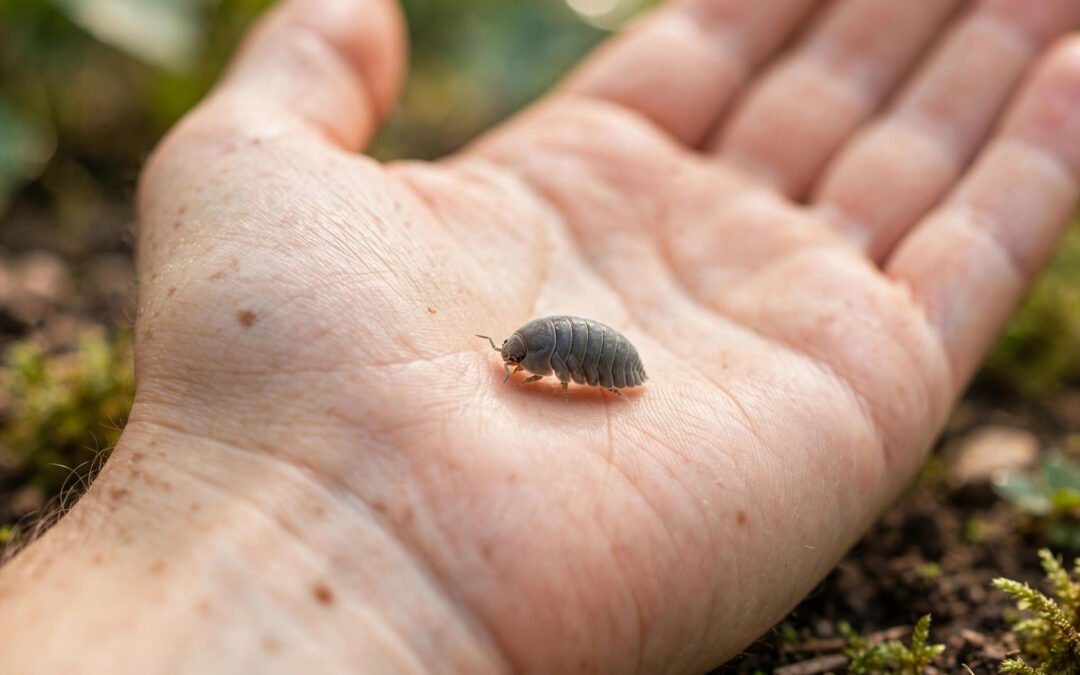
Terrestrial isopods — the pillbugs, roly-polies, and woodlice commonly kept as pets or found in gardens — cannot bite humans. Their mouthparts are built for scraping and chewing decaying leaves and wood, not for piercing skin. They are harmless detritivores, and handling them is generally considered safe for both adults and children with basic supervision.
Why Do People Ask If Isopods Bite?
The question usually comes from new keepers who notice their isopods crawling over their hands and wonder whether those tiny mouthparts can do any damage. Others have heard stories about “giant isopods” or marine isopods and assume all isopods behave the same way. The confusion is understandable — the word “isopod” covers more than 10,000 species across marine, freshwater, and terrestrial habitats, and they are not all alike.
Terrestrial Isopods: Harmless Decomposers That Can’t Bite
The isopods kept in the hobby — species like Armadillidium vulgare (common pillbug), Porcellio scaber, and Porcellio laevis (including the dairy cow morph) — are detritivores. Their mandibles are adapted to break down soft, decaying organic matter such as leaf litter and rotting wood. They lack the sharp, piercing mouthparts that a biting animal would need, and their small size means they cannot puncture human skin. There are no documented cases in the medical literature of injury from a terrestrial isopod bite.
Some keepers report feeling a faint tickle or the sensation of tiny legs when isopods walk across their hands. This is simply the feeling of their legs and antennae — not biting.
Can Marine Isopods Bite? A Different Story
Some marine isopod species are a different matter. Certain sea-dwelling isopods, such as members of the family Cirolanidae, are scavengers or predators that can nip at swimmers — there are documented cases of beachgoers receiving small, mosquito-like bites from swarms of Excirolana species in shallow water. These are ocean animals, however, and have nothing to do with the land isopods kept as pets or found under garden logs. If you keep terrestrial isopods, marine isopod behavior is not relevant to your colony.
Are Isopods Safe for Children to Handle?
Yes — terrestrial isopods are widely regarded as one of the safest invertebrate pets for children. They do not bite, sting, or transmit diseases to humans. That said, a few sensible precautions apply:
- Gentle handling: Isopods are small and fragile. Teach children to let isopods walk on open hands rather than pinching or squeezing them.
- Wash hands afterward: Like with any animal that lives in soil and decaying matter, washing hands after handling is good hygiene.
- Supervise young children: Very young children may try to put small animals in their mouths — supervise to prevent accidental ingestion.
Handling Tips for Keepers
Even though isopods cannot bite, good handling habits keep both you and your colony healthy:
- Handle over a soft surface or close to the enclosure in case one drops.
- Keep handling sessions brief — isopods breathe through gills that need humidity, so prolonged handling in dry air can stress them.
- Always return them to an enclosure with proper moisture and hiding spots.
Frequently Asked Questions
Do roly-polies bite?
No. Roly-polies (pillbugs) are terrestrial isopods with mouthparts designed for decaying matter. They cannot bite humans.
Can isopods pinch with their claws?
Terrestrial isopods do not have claws capable of pinching human skin in any meaningful way. At most, you may feel their legs tickling.
Are isopods dangerous to pets like cats or dogs?
No. Terrestrial isopods are not venomous and pose no danger to household pets. A curious cat or dog that eats one is unlikely to be harmed, though the isopod will not appreciate it.
What about giant deep-sea isopods?
Giant isopods (Bathynomus species) are deep-sea scavengers that can grow over 30 cm long. They are not kept as pets and never encountered on land — they are irrelevant to hobbyists keeping terrestrial species.
References
- Australian Museum — Isopoda (isopod mouthparts and feeding): australian.museum
- Encyclopaedia Britannica — Isopod: britannica.com
- Kok & Ho (2005), reported aquatic isopod bite case — PubMed: pubmed.ncbi.nlm.nih.gov
Note: Isopod care requirements can vary by species, enclosure conditions, temperature, humidity, ventilation, and colony size. The recommendations above are general husbandry guidance; always consider the requirements of the specific species you keep.
Are Isopods Dangerous?
No. The isopods people keep as pets — pillbugs, roly-polies, and woodlice — are not dangerous to people. They have no venom and no sting, and their mouthparts are made for nibbling soft, decaying plant matter, not skin. They can crawl over your hand without hurting you, and they are safe around children and household pets too. The one exception is a few giant deep-sea isopods, which are wild animals rather than pets; they can pinch hard if handled, so they are best left to aquariums and researchers.
Are Giant Isopods Dangerous to Humans?
Giant isopods are not dangerous to humans in the way a venomous animal is — they have no venom and they do not hunt people. But a live giant isopod, like a Bathynomus species, is a strong scavenger with sharp, powerful mouthparts, and it can give a painful pinch or bite if it is grabbed or cornered. In practice the risk is almost zero for most people, because these animals live hundreds of metres down in the deep sea and are only handled by researchers and aquarium staff, with gloves and tools. The small land isopods kept as pets are a different matter entirely: they cannot bite or hurt you.
Do Isopods Bite Humans?
No — the pet isopods most people keep cannot bite humans. Pillbugs, roly-polies, and woodlice have small mouthparts built for scraping soft, rotting leaves and wood, and they cannot break human skin. The most you will feel is a faint tickle as their tiny legs walk across your hand. A few large marine isopods are different and can nip if handled carelessly, but those are deep-sea animals, not the isopods in a home enclosure. As with any animal that lives in soil, wash your hands after handling them.
Do Giant Isopods Bite?
Yes, giant isopods can bite — or more precisely, they can pinch hard with their sharp mouthparts if they are picked up or feel threatened. They use those mouthparts to tear into dead fish and other carrion on the deep-sea floor. But there is no need to worry about them in everyday life: they live in deep water far from shore, they do not hunt people, and you are only likely to meet one in an aquarium. The isopods you keep at home cannot bite you.