Feeding Vegetables to Isopods: Safe List, Prep & What to Avoid
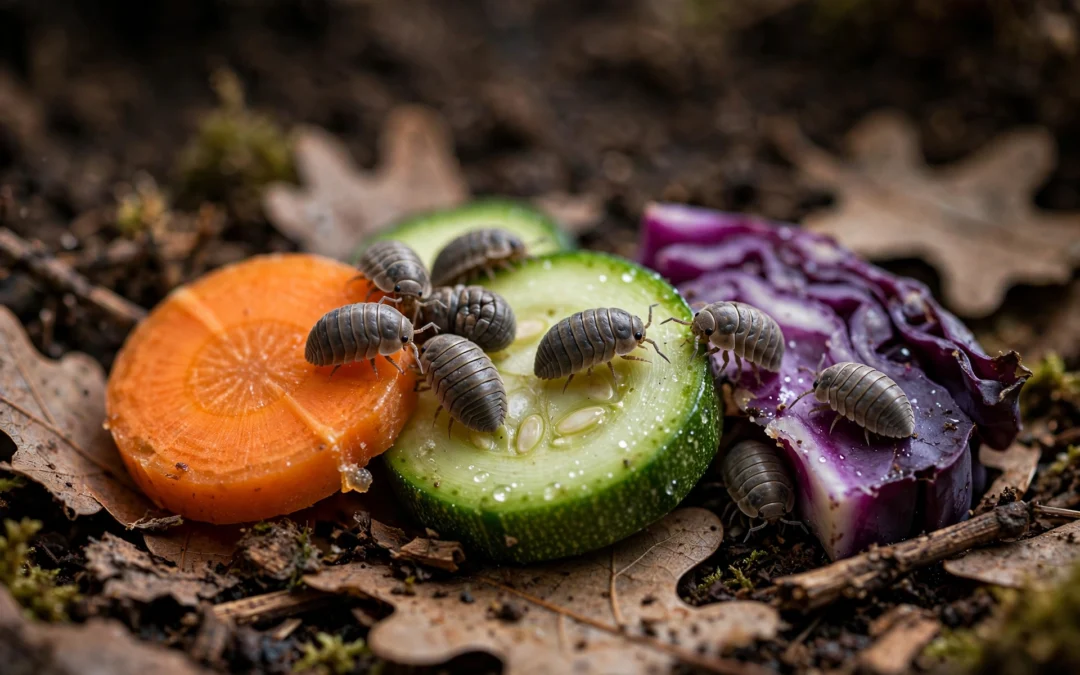
Feeding vegetables to isopods is one of the easiest ways to add variety to their diet — and watching a colony swarm a slice of sweet potato is genuinely fun. But here’s the framing most guides miss: vegetables are enrichment, not dinner. The foundation of a healthy colony is still leaf litter and decaying wood, which isopods graze on continuously. Get the vegetables right — the safe list, the right prep, the right amount — and you’ll get more active, faster-breeding colonies. Get it wrong and you’ll get mold, mites, and wasted food. This guide covers the full safe vegetable list, what to keep out, and the preparation tricks that actually work.
Do Isopods Actually Need Vegetables?
Short answer: no, not to survive. Isopods are detritivores — in the wild they eat decaying leaves, rotting wood, and whatever plant matter is breaking down around them. Research (Zimmer 2002) shows they digest partly decomposed plant matter far more efficiently than fresh material, which is why leaf litter — not kitchen scraps — is the dietary backbone of the hobby. If you haven’t built that foundation yet, start with our complete isopod feeding guide.
But “not needed” isn’t the same as “not useful.” Feeding vegetables to isopods earns its place in the enclosure for three reasons:
- Hydration. Watery vegetables like zucchini are a moisture top-up for colonies that don’t get misted daily.
- Variety. Isopods self-select what they need when offered options, and colonies on varied diets breed more consistently (see isopod breeding basics).
- Colony feedback. A vegetable slice is the best hunger gauge in the hobby. If it vanishes overnight, the colony wants more food. If it’s untouched after three days, you’re overfeeding.
Keep vegetables to roughly 5–10% of the total diet by volume. Never let vegetables replace the leaf litter — our best leaf litter for isopods ranking explains why that layer matters so much.
The Safe Vegetables List: What Isopods Can Eat
Nearly everything from the produce aisle is fine — but some vegetables last longer in the enclosure, rot slower, and carry more nutrition. Here’s my tiered ranking from observation:
Everyday Staples — Offer Freely
- Sweet potato: the king of isopod vegetables. Dense, nutritious, resists molding for 3–4 days, and colonies go mad for it. Raw or lightly blanched both work.
- Carrots: the classic. Hard, so a slice keeps for days while the colony gnaws it down gradually. Root slices are best; tops wilt fast.
- Butternut and winter squash: same appeal as sweet potato, and a chunk lasts for days in the enclosure.
- Pumpkin: a great seasonal option — cheap, dense, and enthusiastically eaten.
Good in Moderation
- Zucchini and summer squash: soft and popular; check them after 24–48 hours because they mold faster than root vegetables.
- Leafy greens (kale, spinach, collards): nutritious but wilt quickly — offer small amounts.
- Peas and green beans: best blanched soft; widely accepted.
- Broccoli and cauliflower: small blanched florets work well.
- Mushrooms: isopods eat fungi readily in the wild; shop mushrooms are a safe, natural-feeling option.
- Bell peppers: mild varieties are fine; skip hot and chili peppers entirely.
Occasional Treats
- Cucumber: accepted by colonies, but let me be blunt — it’s the most overrated isopod vegetable in hobby guides. Over 90% water, it molds within a day in warm enclosures and carries almost no nutrition. Fine as an occasional hydrator, never the mainstay.
- Tomato (flesh only): popular but watery — small pieces, removed after 24 hours.
- Lettuce: mostly water, very little nutrition. An occasional hydrator at best.
- Corn: eaten but starchy; molds fast.
Vegetables to Avoid or Limit
This is where my list differs from the casual “they eat everything” advice you’ll see in some hobby guides. Isopods are hardy detritivores and tolerate a lot, but I still keep these out of my enclosures:
- Onion, garlic, chives, leeks: contain thiosulfates known to be toxic to many animals. No controlled studies exist on isopods specifically, but with so many safe options available, the risk-to-reward ratio is terrible. Skip them.
- Rhubarb leaves: very high in oxalic acid. Avoid entirely.
- Potato and tomato leaves/stems: contain solanine. The flesh is fine; the green parts go in the bin.
- Anything pickled, salted, or seasoned: salt, vinegar, and spices have no business in an isopod enclosure.
- Citrus fruits: here’s an honest take — I know of no study showing citrus is actually poisonous to isopods, and the “acidity” warning is repeated keeper folklore. In practice, isopods mostly ignore citrus pieces anyway. I simply don’t bother with it; there’s plenty they genuinely enjoy.
- Produce from sprayed gardens or roadsides: pesticide residues are the real vegetable killer in this hobby — more on that in the prep section.
How to Prepare Vegetables for Isopods
This is the part most guides to feeding vegetables to isopods skip, and in my experience it matters more than which vegetable you pick:
- Wash everything. A quick rinse removes surface residues. For root vegetables, scrub or peel — soil clinging to a carrot skin can carry fungicides.
- Cut thin slices. Slices 3–5 mm thick beat chunks: more surface area means they soften faster and the colony finishes them before mold moves in.
- Blanch hard vegetables briefly. This is the trick almost nobody mentions: 1–2 minutes in boiling water, then cool before serving. Isopods are detritivores — they prefer food that’s already breaking down. A briefly blanched carrot slice is softer and “pre-decayed,” and colonies mob it far faster than a raw one. You’re not cooking for nutrition; you’re matching how they naturally eat.
- Freeze-then-thaw soft produce. Freezing ruptures cell walls, so thawed zucchini or berries break down faster — same principle as blanching.
- Serve on the dry side. Food sitting in the moist corner molds in hours; on the dry side it lasts days and stays cleaner.
- Keep portions modest. A coin-sized slice for a starter culture, more for big colonies. One slice is also easier to remove than ten scattered bits.
How Often and How Much to Feed Vegetables
Feeding vegetables to isopods twice a week is the sweet spot for most colonies — the same cadence from the complete isopod feeding guide. Simple rhythm: offer on day one, remove on day two. But removal timing should follow the vegetable, not the calendar:
- Watery vegetables (cucumber, zucchini, tomato): remove after 24 hours, sooner if you spot mold fuzz.
- Dense vegetables (carrot, sweet potato, squash): 48–72 hours is fine — isopods graze gradually.
Use the colony-gauge method: if a slice disappears within 12 hours, increase portions; if it’s still sitting there after three days, scale back. Overfeeding doesn’t just waste food — leftover vegetables feed grain mites and fuel mold, which is exactly how mold and mite problems start.
Do All Isopods Eat Vegetables Equally?
Appetite varies more between species than most care guides admit:
- Porcellio laevis (Dairy Cow and other morphs): the vacuum cleaners of the hobby. They devour almost anything overnight — use them as your indicator colony.
- Armadillidium vulgare and A. maculatum (zebra): steady eaters of both vegetables and leaf litter — consistent but not frantic.
- Porcellio scaber: solid all-rounders that work through veg slices reliably.
- Porcellionides pruinosus (Powder Orange / Powder Blue): enthusiastic eaters, especially for soft vegetables.
- Cubaris species: notably pickier and slower. They eat less vegetable matter overall and prefer leaf litter and soft, decaying foods — so don’t panic if your Cubaris ignore a carrot slice for days. That’s normal for the genus, not a feeding problem.
Beginner Mistakes with Vegetables
- Replacing leaf litter with vegetables. When feeding vegetables to isopods, remember that vegetables are a supplement; leaf litter is the diet. A vegetable-heavy colony without enough litter stalls and molds.
- Leaving food in too long. When in doubt, take it out. Five seconds of removal beats a week of mite cleanup.
- Feeding unwashed market produce. A splash of water isn’t enough — scrub or peel root vegetables to remove residue.
- Scattering lots of tiny pieces. One slice, one spot. Easier to monitor, easier to remove.
Frequently Asked Questions
Can isopods eat raw vegetables?
Yes — raw vegetables are safe. But briefly blanched ones are accepted faster, because isopods prefer partly broken-down food. Wash or peel everything first regardless.
Can isopods eat tomatoes?
Yes, the flesh in small pieces, removed after 24 hours. Skip the leaves and stems. Some keepers avoid tomatoes entirely; in my experience an occasional thin slice causes no issues.
Can isopods eat onions or garlic?
I don’t recommend it. Onion and garlic contain compounds known to be toxic to many animals. Isopods might tolerate them, but with so many safe options available, there’s no reason to risk it.
Will feeding vegetables cause mold in my enclosure?
Feeding vegetables to isopods causes mold only if you overfeed or leave food in too long. Feed twice a week, place vegetables on the dry side, and remove uneaten pieces within 24–72 hours depending on the vegetable. Good ventilation and a springtail population help keep any mold in check.
Note: Isopod care requirements can vary by species, enclosure conditions, temperature, humidity, ventilation, and colony size. The recommendations above are general husbandry guidance; always consider the requirements of the specific species you keep.
References
- PostPods — “What Do Isopods Eat?” https://postpods.co.uk/blogs/isopods-useful-articles/what-do-isopods-eat (accessed 2026-10-15)
- Smug Bug — “What do Isopods Eat?” https://www.smug-bug.com/post/what-do-isopods-eat (accessed 2026-10-15)
Trackbacks/Pingbacks