
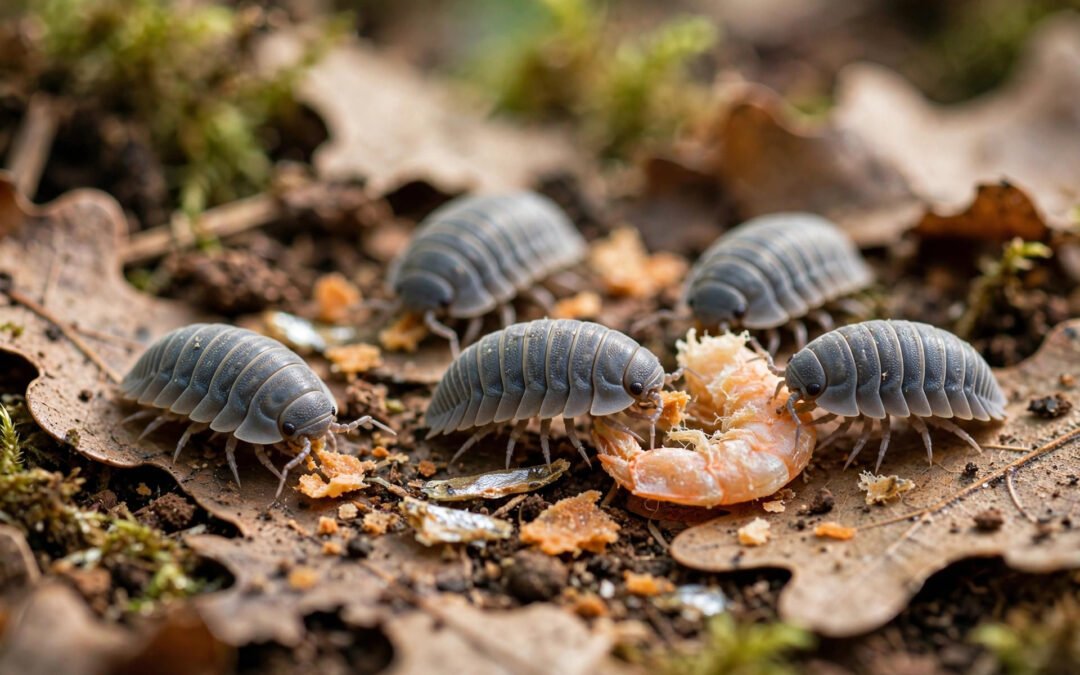
When beginners picture an isopod diet, they usually picture leaves and rotting wood — and they’re mostly right. But there’s a reason experienced keepers keep a tub of fish flakes or dried shrimp next to every colony: protein sources for isopods are what turn a surviving colony into a thriving, breeding one. Leaf litter is the staple; protein is the growth engine.
Isopods are opportunistic scavengers. In the wild they eat dead insects, carrion, fungi, and moulted exoskeletons alongside decaying plant matter. In a closed tub, none of that arrives on its own — so if you never offer protein, your colony runs on a diet the wild would never serve them. This guide ranks the best protein sources for isopods, shows you exactly how often to feed them, and flags the common mistakes that bring grain mites to your door.
Why Isopods Need Protein — Not Just Leaves
Leaf litter and rotting wood provide bulk fiber and slow-release nutrients, but they’re low in amino acids. Protein does the jobs leaves can’t:
- Mancae growth: baby isopods grow astonishingly fast, and protein-rich food produces noticeably larger, hardier adults.
- Breeding: females need protein to develop egg masses. Colonies with no protein input often just… stop breeding, with no other symptoms.
- Moulting: every moult is a metabolic marathon. Protein plus calcium is the combination that gets isopods through it.
- Peace in the tub: large Porcellio species that are underfed on protein sometimes start chewing on slower tankmates. A pinch of fish flakes is cheaper than losing half a colony.
Premium Cubaris and some Ardentiella are famously protein-hungry — therefore, for those, protein is maintenance, not a treat. Hardy Armadillidium species are more forgiving, but they still breed better with it. As a result, most keepers who’ve run colonies for a while will tell you that choosing protein sources for isopods is the second most important diet decision after leaf litter itself.
5 Signs Your Colony Needs More Protein
This is the section most protein guides skip, and it’s the one that actually diagnoses problems. Watch for these:
- Breeding has stalled for no reason. Humidity is fine, temperature is fine, calcium is available — but no new mancae for months. Protein shortage is the most common invisible cause.
- Mancae that never size up. Babies appear but stay tiny for weeks. Growth that stalls at the baby stage usually means the colony’s protein budget is empty.
- Pale, soft-looking juveniles. Healthy young isopods have firm, well-formed segments. Protein-starved ones can look washed out and fragile.
- Isopods chewing each other. Nipped antennae, missing legs, or — in extreme cases — adults eating freshly moulted tankmates is a red flag. Don’t assume aggression; assume hunger first.
- The colony just sits there. No deaths, no drama, no growth. Experienced keepers call this “maintenance mode,” and adding protein twice a week is the standard way to break out of it.
One note of caution: these symptoms can have other causes too (temperature swings, poor ventilation), so treat protein as the first thing to fix, not the only thing to check. Care needs can also vary by species, so watch how your colony responds rather than following any chart blindly.
Best Protein Sources for Isopods, Ranked
Here’s my honest ranking — not by what sounds exotic, but by what actually works in real tubs. When you’re comparing protein sources for isopods, cost, portioning, mould risk, and whether the colony actually eats the stuff matter as much as the nutrition label.
1. Fish flakes (the underrated champion)
Plain aquarium fish flakes are the best protein source most beginners never take seriously. They’re cheap, easy to portion (a pinch), widely available, and colonies eat them fast. First, choose a fish-meal-based flake and read the label: avoid anything with added copper compounds, heavy salt, or garlic-heavy “conditioner” blends. Offer once or twice a week.
2. Dried shrimp and krill
Freeze-dried shrimp pieces, krill meal, and shrimp powder are protein-dense and resist mould well because they’re dried. They also bring omega-3 fatty acids that support overall colony health. Isopods swarm these — break larger pieces into bite-size bits first.
3. Freeze-dried bloodworms
Another aquarium-aisle staple. High protein, long shelf life, no fly attraction, easy to crumble over the substrate. Slightly more expensive per gram than flakes, but a small tub lasts months.
4. Insect meals and powders
Cricket meal, mealworm meal, and black soldier fly larvae (BSFL) meal give you the nutrition of insects without the bulk. BSFL meal is especially interesting because it’s one of the few insect proteins with meaningful calcium content. Available from reptile shops and invertebrate suppliers.
5. Repashy Bug Burger
This is a gel food made for feeder insects that many isopod keepers swear by. Additionally, you mix the powder with hot water, let it set, and portion it out — it freezes well. Excellent nutrition, slightly more prep than dry foods.
6. Hard-boiled egg (the DIY diagnostic)
A tiny piece of hard-boiled egg yolk is a fine occasional protein source, and it’s also my favorite colony diagnostic. If the yolk vanishes within a day, the colony was hungry for protein. If it sits untouched, protein isn’t their problem. Never feed raw egg, and remove leftovers promptly.
7. Dead feeder insects (free if you keep reptiles)
Dead crickets, dubia pieces, or mealworms from your reptile feeding bin are perfectly good isopod protein. Only use insects from clean, known sources — never wild-caught insects from sprayed lawns or gardens, where pesticide residue can devastate a colony. Dead, not live: live insects stress isopods and disturb the colony.
8. Nutritional yeast
A controversial one. Some keepers use it as a protein and B-vitamin boost. It works, but it’s dusty, easy to over-apply, and ferments fast in humid tubs. Use sparingly if you try it — a light dusting, not a spoonful.
Protein Sources for Isopods: How Much and How Often
First of all, more is not better. The right frequency depends on colony size and goals:
| Colony stage | How often | Portion |
|---|---|---|
| Starter culture (20–50 isopods) | Once a week | A thumbnail-sized pinch |
| Growing colony (100+) | Twice a week | Two pinches, spread out |
| Breeding bin (300+) | Every 2–3 days | Small amounts, gone within 48h |
| Maintenance / Armadillidium | Every 1–2 weeks | A single pinch |
The golden rule: food should be mostly gone within 48 hours. If it’s still sitting there, then you’re offering too much. Feed less more often rather than dumping a pile once a month — big piles grow mould, and mould brings grain mites.
Actively breeding colonies earn more frequent protein; colonies you’re happy to keep stable need less. Let the colony’s appetite set the schedule. For the vegetable side of the diet, see our guide to feeding vegetables to isopods, and our complete isopod feeding guide covers how all the food groups fit together.
The Pinch Method: Serve Protein Without the Mites
Once you’ve found protein sources for isopods your colony actually eats, technique matters as much as the food itself. Here’s the method that has kept my colonies mite-free:
- Spread thinly across the substrate instead of piling it in one spot, so every isopod gets access.
- Use a feeding dish or flat stone — a consistent spot makes it easy to see what’s left and remove it.
- Remove uneaten protein within 24–48 hours. This is the single most important anti-mite habit in the hobby.
- Feed in the evening — isopods are nocturnal, so food offered at night gets eaten while food offered at noon sits and spoils.
- Watch the response. A colony that swarms protein needed it. A colony that ignores it for two days straight already has enough — skip next week’s feed.
Consequently, grain mites are the classic punishment for protein overfeeding: tiny white dots swarming the food dish within days of a too-generous offering. If they appear, stop all protein for a week, let the tub dry slightly, and resume with half portions.
Protein and Calcium: Don’t Confuse the Two
A persistent myth says insect exoskeletons are a great calcium source for isopods. That’s because insect shells are made of chitin, not calcium carbonate — insect shells are not a calcium source at all. That’s why reptile keepers have to dust feeder insects with calcium before feeding them to lizards.
Protein and calcium are both essential, but they’re separate jobs. Your colony needs a permanent calcium source — cuttlebone, crushed eggshell, or limestone left in the enclosure at all times — in addition to its protein schedule. We covered calcium in depth in our calcium for isopods guide, including deficiency signs that look confusingly similar to protein problems.
For a deeper dive into the insect side specifically, PostPods’ guide to feeding insects to isopods is a solid reference, and their supplement breakdown covers how protein and calcium fit together.
Protein Sources to Avoid
However, not everything high in protein belongs in a tub:
- Dog or cat kibble: high salt, preservatives, and additives — the classic mite magnet.
- Salty kitchen meat: deli slices, bacon, seasoned leftovers. Salt and spices harm isopods.
- Tuna or meat in brine/oil: the liquid fouls the substrate and the salt load is dangerous.
- Dairy: cheese and milk products mould explosively and attract every pest in the room.
- Wild-caught insects from sprayed areas: pesticide contamination is real and can wipe out a colony.
- Rancid or stale feeder insects: store dried protein sealed, cool, and dry — rancid fats are worse than no protein at all.
The Bottom Line on Protein for Isopods
First, you don’t need an exotic shopping list. Of all the protein sources for isopods we’ve covered, the aquarium aisle remains the best value: a tub of plain fish flakes and some dried shrimp offered in small pinches once or twice a week and removed if uneaten — will transform most colonies within a month — faster mancae growth, females breeding again, and calmer tubs. The boutique “isopod protein blends” work too, but in my experience they mostly repackage the same ingredients at triple the price. Start boring, watch the colony, and let their appetite — not the product label — decide what they get. If you’re planning to breed seriously, our isopod breeding basics guide shows how diet fits into the bigger picture.
Frequently Asked Questions
Can isopods get enough protein from leaf litter alone?
Usually not. Leaf litter is an excellent staple, but it’s low in amino acids. Colonies kept on leaves and wood alone typically survive but breed slowly and grow mancae slowly. Even small, regular additions of the protein sources for isopods listed above change the trajectory.
How often should I feed protein to isopods?
Once or twice a week for most colonies, every 2–3 days for active breeding bins, and every 1–2 weeks for low-maintenance Armadillidium. Adjust based on whether the food is fully consumed within 48 hours.
Are fish flakes safe for isopods?
Yes — plain, fish-meal-based flakes are among the safest protein sources for isopods. Just read the label and avoid added copper compounds, heavy salt, or strong additives, and remove uneaten flakes within a day or two.
Can too much protein hurt isopods?
Indirectly, yes, because excess protein grows mould fast and attracts grain mites, which stress the colony. The isopods themselves tolerate protein well; however, it’s the enclosure hygiene that suffers. Small portions, removed promptly, is the whole trick.
Disclaimer: Care requirements vary between species — tropical species and premium Cubaris generally need more protein than hardy temperate species. Observe your own colony’s response and adjust portions and frequency accordingly.