Do Isopods Need Light? The Honest Lighting Guide for Isopod Keepers
New isopod keepers worry about lighting far more than they need to. They buy UVB lamps, full-spectrum grow lights, and red “night viewing” bulbs — and then watch their pods spend all day hiding under the leaf litter anyway. Here is the short answer, then the full story: isopods do not need light. Ambient room light is plenty. But there is a difference between “they don’t need it” and “light doesn’t matter,” and that difference is where colonies quietly get harmed.
Why Do Isopods Need Light Less Than Almost Any Pet You Own?
Isopods are crustaceans that breathe through gill-like structures called pleopods. Gill breathing in a terrestrial animal is an engineering problem: the gills only work when moist. Every behavior isopods have around light exists to solve that one problem.
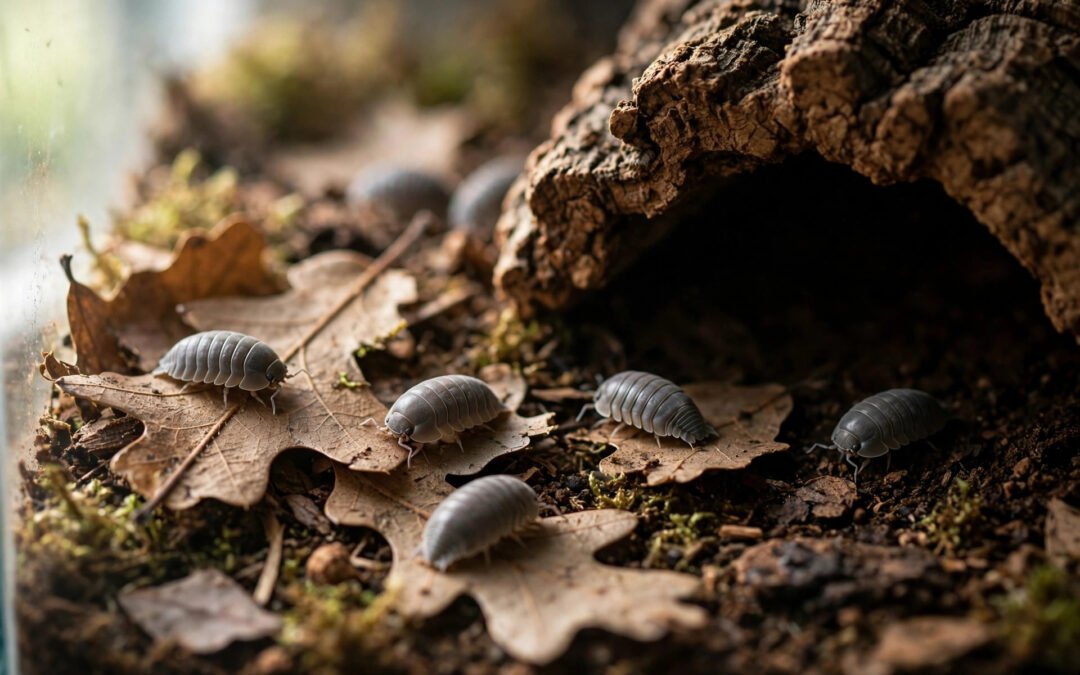
Isopods are negatively phototactic — they actively move away from light. They do this for two reasons: light usually means dryness and heat, and it usually means exposure to predators. A roly-poly pressed into the damp underside of a log isn’t being shy; it is protecting its gills. This is why every serious care guide tells you the core of the enclosure must be dark, humid, and undisturbed. The honest rule: isopods don’t want darkness for darkness’s sake — they want choice. Give them deep substrate, layered leaf litter, and a piece of cork bark, and they will regulate their own exposure perfectly.
Do Isopods Need Light for a Day/Night Cycle?
No special lighting setup is required to create one. Normal ambient room light — the day/night rhythm that already exists in the room where you keep your tubs — is a perfectly adequate cycle, and arguably better than any timer setup. Keepers who put colonies in windowless closets report colonies breeding just fine, and keepers who keep tubs on a desk report the same. The rhythm matters far less than the hides.
My take, after watching dozens of colonies: the “day/night cycle” requirement is the most overrated lighting advice in the hobby. People buy timers before they buy a second hide. If your tub has dark retreats, the pods experience their own “night” whenever they walk under the bark. Skip the timer; buy more leaf litter.
Is Sunlight Dangerous to Isopods?
This is the one lighting question that actually kills colonies. Direct sunlight on a plastic tub is the fastest way to wipe out a colony you will ever see. A clear storage tub in a sunny window acts like a greenhouse: the interior can swing past 35°C (95°F) within an hour. At those temperatures the substrate dries, gills fail, and the pods cook.
This is also the most common seasonal accident in the hobby. Winter sun through a window feels harmless — until a bright afternoon turns a windowsill tub into an oven. The rule is simple: never place an isopod enclosure in direct sun, in any season. A shaded shelf, a dim corner, or a room that gets indirect light is ideal. Sunlight gives isopods nothing they need and can take everything from them in an afternoon.
Do Isopods Need Light From UVB or Grow Lights?
No. This is borrowed reptile advice that does not transfer. UVB matters for animals that synthesize vitamin D3 through their skin — isopods get their calcium from cuttlebone, eggshell, and their leaf litter, and their exoskeleton is built from diet, not sunlight. There is no credible evidence that any isopod species needs UVB, specific colour temperatures, or particular wavelengths for health, breeding, or colour.
Grow lights are a different question, because the light isn’t for the pods — it is for the plants. If you run a planted bioactive enclosure or a dart-frog vivarium with an isopod cleanup crew, the plants genuinely need a light cycle, and a moderate LED on a 12-hour timer is standard practice. The pods will simply retreat to their hides during the day and come out at night. Just make sure the light doesn’t cook the dry end of the enclosure or blast the moist hide where the mancae cluster. Our bioactive cleanup crew guide covers balancing plant needs with pod comfort.
Do Isopods Need Red “Night Viewing” Lights?
In my opinion: no. The old claim was that nocturnal animals can’t see red light, so a red bulb lets you watch them at night without disturbing them. For isopods, this misses the point — they don’t react to light primarily through eyesight. They react through simple phototaxis: light means “go the other way,” regardless of colour. A red bulb is still light, still dries the air, and still tells every pod in the tub to retreat. If you want to watch your colony at night, a brief sweep with a dim phone flashlight is less disruptive than leaving a red bulb on for hours. The red bulb is marketing, not husbandry.
Can You Put a Light on Your Isopod Enclosure for Viewing?
Yes, with limits. A low-intensity LED on a timer (roughly 8–12 hours, matching your own daytime) makes display enclosures and bioactive vivaria far more enjoyable, and healthy colonies tolerate it fine as long as they have genuine dark retreats. The mistakes are predictable: bright desk lamps heating the lid, clip-on lights with no shaded zones, and “display” setups where the whole enclosure is lit like a stage. If every square centimetre is illuminated, the pods have nowhere to be themselves — that’s when you see them pressed into corners and breeding slows.
The test I use: can the colony’s behaviour tell me the light level is right? Pods out foraging under dim ambient light, retreating during bright periods, and mancae visible at the moist end after lights-out means the setup works. A colony that never emerges, even at night, is telling you something is wrong — and light is one of the suspects.
Do Different Isopod Species React to Light Differently?
Yes, and this is genuinely useful for choosing display species. Bolder, day-active species stay visible in brighter setups; shy burrowers vanish regardless of what you do.
- Porcellio species (scaber, laevis, and their morphs) tend to be more active and visible — good display choices under moderate ambient light.
- Armadillidium species are conglobating rollers; many are bolder than their reputation, and zebra isopods in particular will wander openly in daytime.
- Cubaris species are the classic shy burrowers — brilliant pods, terrible display animals. Don’t buy a light to watch your Cubaris; buy a different genus if you want daytime activity. Our Cubaris murina guide covers their reclusive habits.
Honestly, species choice matters more for visibility than any lighting purchase. Match the species to your viewing habits, not the other way round.
The Lighting Setup That Actually Works
Forget shopping lists. The lighting setup for 95% of colonies is: a room with a window somewhere (not aimed at the tubs), tubs on a shelf out of direct sun, and hides inside every tub. That’s it. If you have live plants, add a moderate LED on a timer for the plants’ sake, and keep the pods’ hides dark. If you want to observe at night, use your phone briefly and put it away.
The things that actually decide whether a colony thrives — humidity control, ventilation, substrate, and temperature — are all unaffected by your lighting choices. Get those right and the pods will forgive almost any light level you give them, from a dim closet to a bright plant room.
Frequently Asked Questions
Should I keep my isopods in total darkness?
There’s no need. A normal day-night rhythm suits them fine; what matters is that they have dark hides to retreat into. Constant pitch dark doesn’t harm them, but it doesn’t help either — and it makes the colony impossible to enjoy.
Can isopods see light?
They sense it well enough to avoid it. Isopods show negative phototaxis — movement away from light — driven more by moisture-preservation instinct than by vision. Bright light means “dry and exposed” to a pod, so they retreat.
Will a grow light dry out my bioactive enclosure?
It can, especially over the moist end. Pair any plant light with a moisture gradient — mist one side, keep hides dark — and check the damp end daily until you know the rhythm. See our quarantine setup for how a simple gradient works.
Do isopods need light to breed?
No. Breeding is driven by temperature, humidity, food, and colony maturity — not light. Some of the most productive colonies in the hobby live in rack systems with almost no ambient light at all.
References
- PostPods — Do Isopods Need Light? The Short Answer
- PostPods — Should Isopods Be Kept in the Dark?
- IsopodCareHub — Isopod Beginner FAQ (lighting section)
Species-specific care varies — always check the guidance for your species, and never place any enclosure in direct sunlight.
Can Isopods See Red Light
Isopods do not react to light primarily through eyesight, but a red bulb is still light to them — it tells every pod in the tub to retreat and hide. So red light is not invisible to an isopod colony: keep any bulb, red or white, off the enclosure or dim and indirect, and give the colony dark hides it can retreat to.
Do Isopods Need Sunlight
No — sunlight gives isopods nothing they need and can take everything from them in an afternoon by overheating and drying the enclosure. Never place an isopod enclosure in direct sun; ambient room light is plenty.
Do Isopods Need Light
No, isopods do not need a light over their enclosure. They are nocturnal detritivores that spend the day tucked away under bark, leaves, and cork, and the ordinary daylight that comes into a room is more than enough for them. A low-wattage light on a timer for a few hours, or just the room’s natural day and night, keeps their routine steady. Keep the light gentle and indirect, keep their hides dark, and never put the tub in direct sun. Light is for you to watch them by, not for them.