One of the best things about keeping isopods is that, unlike most invertebrate pets, you can actually pick them up. They don’t sting, they don’t bite, and watching a pillbug trundle across your palm is half the charm of the hobby. But “safe to touch” doesn’t mean indestructible. Isopods are small crustaceans with delicate exoskeletons, and most beginner handling injuries come from enthusiasm outpacing technique. Learning how to handle isopods properly comes down to preparation, a gentle touch, and knowing when to put them back. This guide covers each of those in turn.
5 Handling Rules at a Glance:
- Wash hands before and after — no lotions or sanitizer residue
- Let the isopod walk onto your hand — never grab or pinch
- Keep handling sessions under 5 minutes
- Handle over a soft surface close to the enclosure
- Some species (like rubber duckies) stress easily — observe more, handle less
How to Handle Isopods: Reading Their Body Language
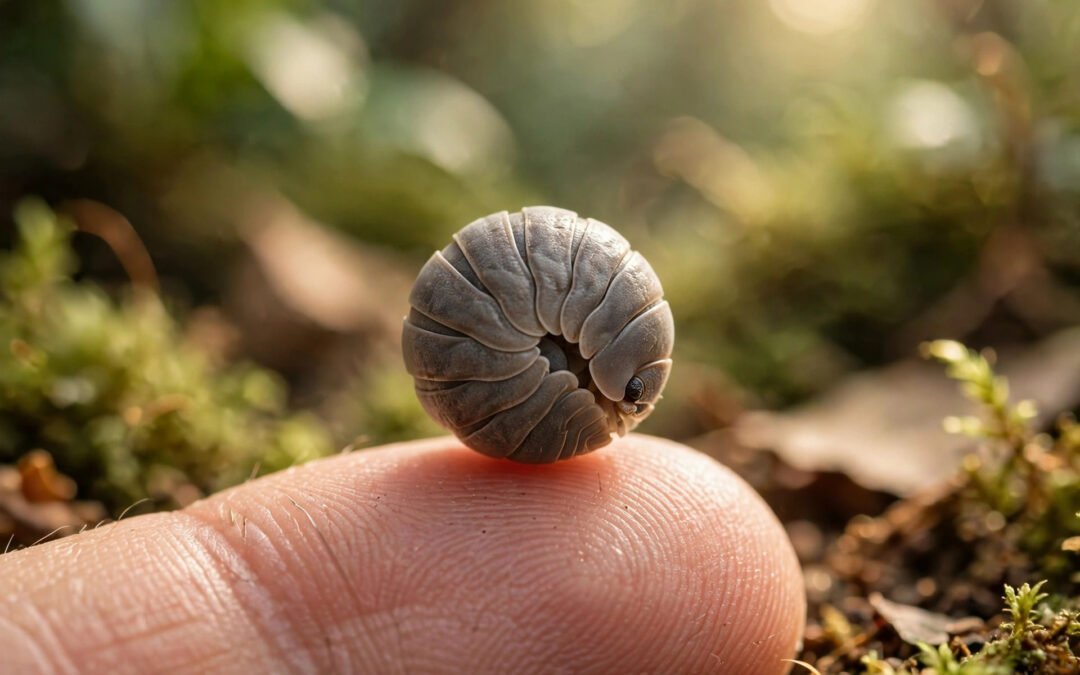
An isopod’s first reaction to being touched tells you which kind you’re holding. Members of the Armadillidium family — common pillbugs and zebra isopods — tuck into a tight ball. This is conglobation, a defence posture that shields their soft underside. It isn’t lasting distress, but it does mean the animal would rather be left alone for the moment. Hold a rolled-up pillbug still in a cupped hand and it will usually unroll within a minute or two and start exploring.
Faster species such as Porcellio laevis or Porcellionides pruinosus don’t roll — they run, sprinting for the edge of your hand on ticklish little legs. Neither reaction is dangerous. Isopods have no venom, no sting, and mouthparts built for chewing dead leaves rather than skin. With isopods, the safety question is never “will it hurt me?” — it’s “will I hurt it?”
How to Handle Isopods: Preparing Your Hands
Your hands are the biggest hazard an isopod will meet — not through size, but chemistry. Residue from soap, hand sanitiser, sunscreen, insect repellent, perfume, and some laundry detergents can be toxic to small invertebrates. Before reaching into the enclosure:
- Wash with plain soap and rinse thoroughly — then rinse again. Leftover soap film is worse than skipping the wash.
- Skip hand sanitiser entirely; alcohol-based residue lingers and can harm isopods.
- Leave your hands slightly damp. Dry, warm skin draws moisture from an isopod’s body, and since isopods breathe through modified gills, a lightly damp hand keeps them comfortable.
Clean hands are the first half of how to handle isopods; the second half is technique. If your hands are cold, warm them first — a sudden chill can send a whole handful scrambling.
How to Pick Up an Isopod Without Hurting It
The golden rule of how to handle isopods: scoop, don’t pinch. An isopod lifted between thumb and forefinger can be squeezed far harder than its shell tolerates, and gripping a leg or antenna can tear it off. Isopods can drop a limb that is gripped roughly, and while they may regrow it across later molts, the injury is entirely avoidable.
The gentlest approach is the two-finger scoop: slide an index finger underneath and lift the animal onto an open palm. Rolled-up pillbugs can simply be tipped onto the palm with a fingertip. For skittish runners, use the “leaf taxi” — lift the bark or leaf litter the isopod is standing on and inspect the animal without touching it at all.
Mancas (newborn isopods) and tiny species like dwarf whites are too small for fingers. Nudge them with a soft, damp paintbrush — one light stroke underneath lifts the animal without pressure. Use the brush for females carrying a brood pouch too, since squeezing the abdomen can damage the developing young.
How to Handle Isopods: Keeping Sessions Short
Even in ideal conditions, an isopod out of its enclosure is slowly drying out, so knowing how to handle isopods also means knowing when to stop. Two to five minutes is plenty for one session. Put the animal back if it runs frantically, stays balled up for several minutes, or feels noticeably dry and light.
Frequency matters as well. A colony handled daily stays stressed and may breed less readily, and repeatedly disturbed females can drop a brood. A couple of short sessions per week is a good beginner rhythm — and honestly, a quiet ten minutes of watching teaches you more about their behaviour than handling ever will.
How to Handle Isopods: Species-by-Species Differences
Technique should match the species:
Armadillidium (common pillbugs, zebras): the easiest to handle. They roll up, sit still, and unroll when they feel safe — ideal for children. See our best isopod species for beginners ranking for the calmest choices.
Porcellio (dairy cows, Spanish giants): fast, flat, and skittish. Handle them over a table or tray so escapees are easy to recover.
Tiny and soft species (dwarf whites, mancas): skip fingers entirely; use the damp paintbrush or move them with their substrate. For guidance on the smallest species, see dwarf white isopod care .
Freshly molted isopods: hands off completely. A newly molted animal is pale, soft, and fragile — handling can dent the new shell before it hardens. If you’re unsure whether a still, pale isopod is molting or dying, our isopod molting vs dying guide explains the difference.
Mistakes That Injure Isopods
Most injuries trace back to a short list:
Dropping them. A fall onto hard flooring can crack a shell — always handle seated, with the enclosure or a table directly below your hands. The number-one rule for children.
Squeezing. It takes almost no pressure to damage an isopod; teach kids “flat hands, like a table.”
Handling during a molt. Pale and soft means hands off, full stop.
Chasing escapees. A sprinting Porcellio is better caught by placing a cup over it and sliding a card underneath than by grabbing mid-run.
Dirty hands. Perfume, repellent, and sanitiser residue is the most common invisible cause of deaths after an otherwise harmless session.
Putting Them Back and Washing Up
Return handled isopods to the damp side of the enclosure — they’ve lost moisture and will head straight for humidity. Set them down gently and replace any bark or leaf litter you moved.
Then wash your own hands properly. Isopods pose very little risk to people, but their enclosures hold soil and decaying matter, so soap and water afterwards is basic hygiene, especially before eating.
Handled calmly and briefly, isopods are a genuine pleasure to hold — a living armoured ball crossing your palm never quite gets old. Clean, damp hands, a gentle scoop, and an early return: those three habits are the whole of how to handle isopods well.
When a colony needs to move to a new home, packing matters as much as handling — see how to ship isopods safely for packing, heat and cold packs, and ventilation tips.
References
Wikipedia — Woodlouse: https://en.wikipedia.org/wiki/Woodlouse
University of Kentucky Entomology — Pillbugs and Sowbugs (ENTFACT-439): https://entomology.ca.uky.edu/ef439
Note: Isopod care requirements can vary by species, enclosure conditions, temperature, humidity, ventilation, and colony size. The recommendations above are general husbandry guidance; always consider the requirements of the specific species you keep.
Do Isopods Bite?
No, pet isopods do not bite. The pillbugs, roly-polies, and woodlice you keep at home have mouthparts made for scraping soft, rotting leaves and wood, and they cannot break human skin. The most you will feel is a tickle as they walk over your hand. Larger marine isopods are a different story: they can nip if handled roughly, but those live in the sea, not in your enclosure. Handle your isopods with slightly damp hands, let them walk onto you rather than grabbing them, and wash your hands afterwards.