
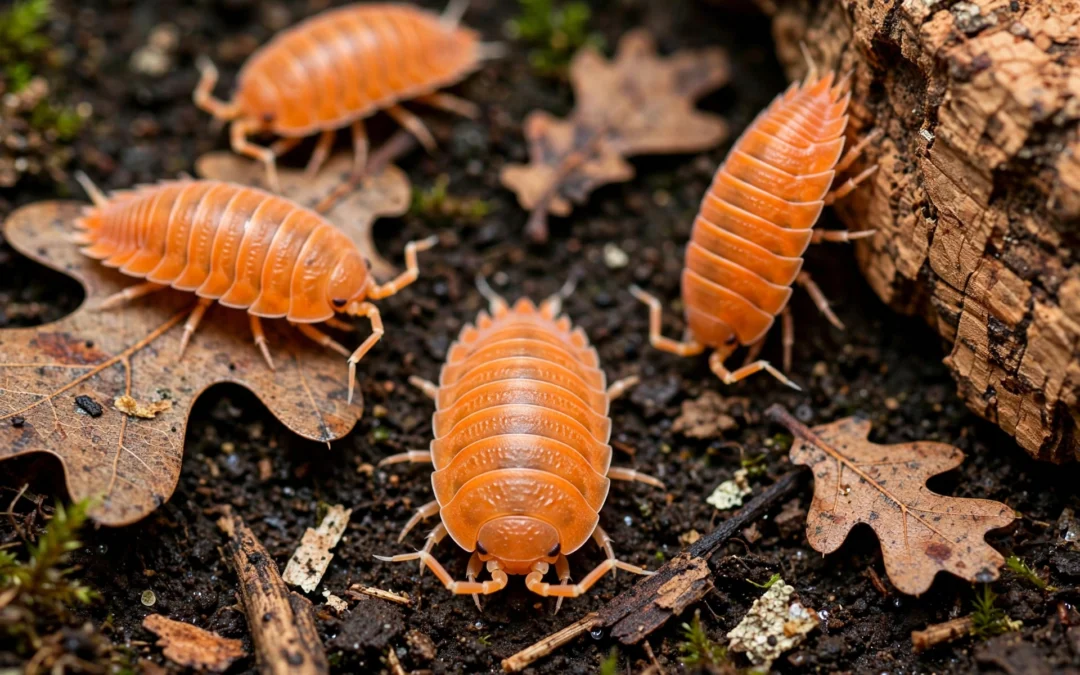
The powder orange isopod (Porcellionides pruinosus “Powder Orange”) is one of the most popular pet isopods in the hobby — and for good reason. These bright orange, fast-moving little crustaceans are also hardy, breed readily, and are nearly indestructible under basic care. So if you’re looking for a forgiving beginner species with serious visual appeal, the powder orange isopod deserves a spot on your list.
In this guide, you’ll learn everything about powder orange isopod care: the ideal enclosure setup, humidity and temperature ranges, what to feed them, and how to breed a thriving colony.
Quick Care Sheet
- Scientific name: Porcellionides pruinosus “Powder Orange”
- Size: ~8–12 mm adults
- Difficulty: Beginner — very forgiving
- Temperature: 20–26°C (68–79°F)
- Humidity: 50–70% (with a moist corner)
- Lifespan: 1–2 years
- Breeding: Prolific — colonies establish fast
Why Powder Orange Isopods Are Great for Beginners
The “powder” in their name comes from a soft, dusty-looking coating on their exoskeleton — a waxy layer that helps them resist drying out. That natural toughness is exactly what makes powder orange isopods so beginner-friendly: they tolerate mistakes, they’re very active and fun to watch (unlike shy species that hide all day), they breed prolifically (a starter culture of 10–15 can become hundreds within months), and they make an ideal cleanup crew for bioactive terrariums.
Enclosure Setup
You don’t need anything fancy. For example, a 6-quart plastic shoebox with a snap-on lid works perfectly for a starter colony.
- Ventilation: 10–15 small holes along the upper sides (not the lid — that dries the enclosure too fast).
- Substrate: 5–8 cm of organic topsoil, coconut fiber, leaf litter, plus crushed limestone or cuttlebone for calcium.
- Moisture gradient: keep one side moist and let the other stay drier, because isopods self-regulate by moving between zones. Also mist the moist side 2–3 times per week.
- Hides: cork bark flats or egg cartons for shelter.
- Leaf litter: lastly, add a thick layer of dried oak or magnolia leaves — both food and shelter.
Temperature & Humidity
- Temperature: Room temperature (20–26°C) is perfect. However, avoid direct sunlight or heaters.
- Humidity: 50–70% overall, with one consistently damp corner. Powder oranges tolerate drier conditions better than most isopods, but babies (mancae) need moisture — never let the whole enclosure dry out.
What to Feed Powder Orange Isopods
- Staple: dried leaf litter (always available). Also feed quality isopod food or fish flakes 2–3x per week.
- Vegetables: carrot, zucchini, sweet potato, squash. Because fresh food molds quickly, remove anything uneaten after 24–48 hours.
- Protein (important!): dried shrimp, fish food, or boiled egg 1–2x per week. Protein-hungry colonies will nibble each other during molting without it.
- Calcium (essential): cuttlebone pieces or crushed eggshells, available at all times — for example, tuck a piece under the bark.
Breeding Powder Orange Isopods
Just keep them alive and they handle the rest. Females carry eggs in a brood pouch (marsupium) for 3–4 weeks, then release tiny white mancae. Tips: keep at 22–25°C, never let the enclosure fully dry out, offer protein regularly, and start with 12+ individuals.
Common Problems
- Colony not growing: usually too dry or too cold — therefore, check the moisture gradient first.
- Die-off after molting: often a calcium or protein deficiency. As a result, add cuttlebone and protein foods.
- Mites: usually grain mites from overfeeding fresh foods. Consequently, cut back fresh food and let the enclosure dry slightly.
Frequently Asked Questions
Are powder orange isopods good for beginners? Yes — one of the top three beginner species alongside dairy cow isopods (Porcellio laevis) and Armadillidium vulgare. Hardy, active, and prolific.
How fast do powder orange isopods breed? Very fast. For example, under good conditions, a starter culture can double every couple of months.
Can powder orange isopods live with reptiles? Yes — one of the best bioactive cleanup crew species for tropical and temperate reptile enclosures.
Do powder orange isopods need high humidity? Moderate (50–70%) with a moist corner is enough. More drought-tolerant than most isopods; however, babies need consistent moisture.
Powder orange vs. powder blue — what’s the difference? Same species (Porcellionides pruinosus), different selectively bred color morphs. However, care is identical.
So, ready to start your colony? Powder orange isopods are widely available from breeders online — grab a starter culture and watch your orange army grow!