
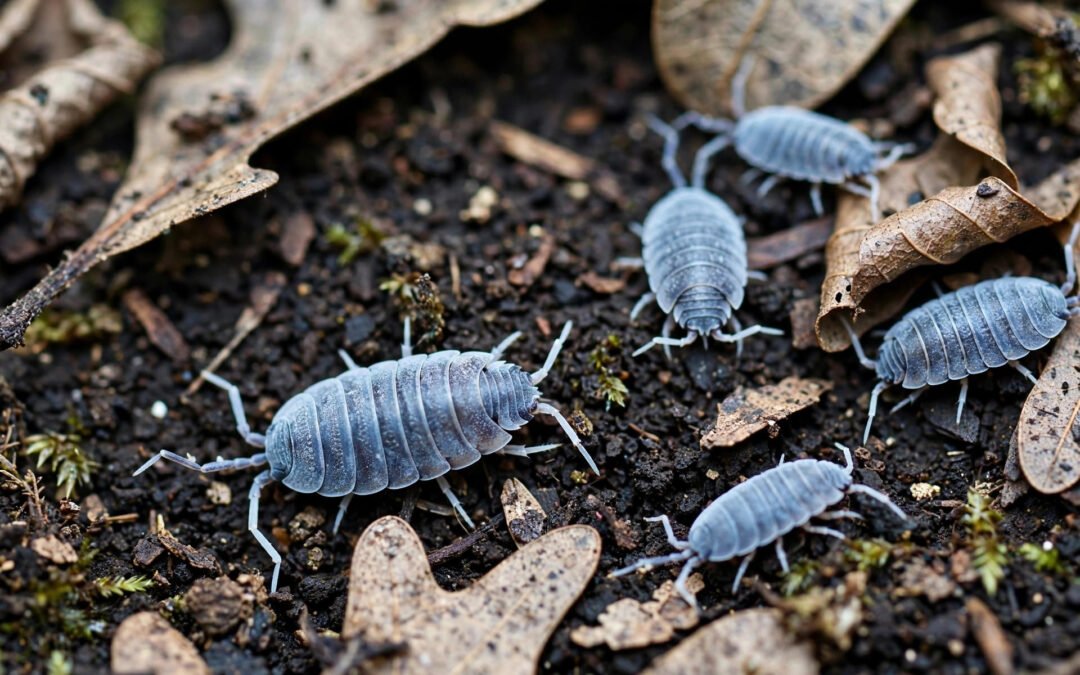
Quick Answer: A powder blue isopod is the blue-gray color morph of Porcellionides pruinosus — the exact same species as the popular powder orange isopod, with the same hardy, drought-tolerant, fast-breeding care. Adults grow to 8–12 mm, live 2–3 years, and suit beginners as a cleanup crew or feeder culture.
The Powder Blue isopod is the blue-gray color morph of Porcellionides pruinosus. It is the exact same species as the popular Powder Orange. That means powder blue isopod care is basically the same as powder orange care. You get the same hardy, drought-tolerant, fast-breeding isopod, just in a striking slate-blue color. Everything in this guide applies equally to both morphs; the differences are purely cosmetic.
Quick Facts
- Scientific name: Porcellionides pruinosus ‘Powder Blue’
- Common names: Powder Blue isopod, blue isopod
- Adult size: 8–12 mm (about 0.3–0.5 inches)
- Difficulty: Beginner
- Temperature range: 65–85 °F (18–29 °C); generally kept around 15–28 °C
- Humidity needs: Tolerates dry conditions — roughly 40–60%, with a moisture gradient
- Breeding speed: Very fast — breeds quickly with fast growth
- Price tier: $ (inexpensive and widely available)
- Lifespan: Generally 2–3 years under typical care
Appearance and size
Powder Blues share the build of all P. pruinosus: small (around 0.5 inches / 12 mm max), fast, and slightly powdery-looking. Where the Powder Orange morph is vivid orange, the Powder Blue morph is a cool slate blue to blue-gray. This color stands out beautifully against dark substrate, cork bark, and green plants in a bioactive enclosure.
Because the two morphs are the same species, they can breed with each other freely. Many keepers maintain separate colonies to keep the color lines pure, since mixed colonies will produce mixed-color young over generations. If color purity matters to you, buy from a trusted breeder and keep morphs in separate enclosures.
Temperament and activity
They are just like the Powder Orange: active, hardy, bold for their size, and primarily nocturnal. However, established colonies are often visible during the day. Powder Blues scatter and forage widely rather than piling up in one spot. As a result, they make excellent cleanup crew members, because they get into the nooks and crannies of an enclosure and process leaf litter and debris efficiently.
Like their orange siblings, they are very drought tolerant. This suits them to arid and semi-arid bioactive setups where most isopods would struggle. As with all non-native isopods, never release them outdoors.
Enclosure setup
Use the same setup as the Powder Orange. A 6-quart ventilated tub is plenty for a starter colony, with cross-ventilation to support the drier conditions this species tolerates. Provide cork bark, leaf litter, and flat stones for hides. Also, maintain one consistently damp corner or patch while letting the rest of the enclosure stay dry. The moisture gradient is the key concept.
One useful note: Powder Blues are the same species as Powder Oranges. So do not house the two morphs together unless you are fine with the colors mixing in future generations. If you are planning enclosure sizes for either morph, the Enclosure Size Calculator works for both.
Substrate
Use the standard isopod mix at 3–4 inches (7.5–10 cm) deep. Mix organic coco fiber or peat moss with decayed hardwood leaves and rotten wood, plus a calcium source like crushed oyster shell or limestone. The damp corner should pass the squeeze test (clumps without dripping); the rest can dry out between mistings.
The drought tolerance of P. pruinosus means the Powder Blue is one of the few isopods truly suited to drier bioactive enclosures. However, the damp refuge must never disappear entirely, since breeding females and newborn mancae depend on it. The Substrate Calculator will help you measure the right amount of mix.
Temperature and humidity
Powder Blues thrive from about 65–85 °F (18–29 °C), with species references typically citing 15–28 °C and 45–60% humidity. Room temperature in most US homes works fine without extra heating; keep the tub out of direct sun and away from heat sources.
On humidity, repeat the Powder Orange rule: slightly humid to dry with a moisture gradient, not constantly wet. Saturating the substrate — the most common beginner error with this species — can increase the risk of mold and colony stress. Mist the damp corner lightly every few days and let the rest stay dry. Then watch the colony’s behavior: clustering tightly in the damp zone can suggest the enclosure is too dry overall. On the other hand, avoiding the damp zone can suggest it is too wet.
Feeding
Feed exactly as you would Powder Oranges. Decaying leaf litter and rotting hardwood should always be available as the staple diet. Supplement a few times a week with vegetables (carrot, zucchini, squash). Also offer protein — dried shrimp, fish flakes, or freeze-dried insects — about twice a week, per care guidance for the species.
Keep a constant calcium source in the enclosure (cuttlebone, limestone, or oyster shell). In a fast-breeding colony, calcium demand is continuous as individuals molt and grow. Remove uneaten fresh food within a day or two to prevent mold. The Feeding Calculator scales portions to your colony size for either morph.
Breeding and colony growth
Just like the Powder Orange, the Powder Blue breeds fast and grows quickly. For example, a starter colony of 12–15 can reach the hundreds within a year. Females carry eggs in a marsupium (brood pouch), and the mancae emerge tiny and white before coloring up to blue-gray.
Because breeding is so reliable, Powder Blues work well as a self-sustaining cleanup crew or as a feeder culture for small insectivores. As a result, the colony rebounds quickly from harvesting. To estimate growth for your colony, use the Colony Growth Calculator and the Breeding Calculator.
Common problems
- Keeping them too wet: As with Powder Oranges, the number-one mistake is treating them like a moisture-loving species. Persistently soggy substrate can increase the risk of mold and stress.
- Color mixing: Housing Powder Blues with Powder Oranges (same species) will mix the color lines over generations. Keep morphs separate if you want to preserve the blue.
- Mold on uneaten food: Remove fresh food after a day or two, particularly in the damp corner.
- Mites: Usually a sign of excess food sitting too long — cut back on food and let dry areas stay dry.
- Slow breeding: Check that the damp refuge has not fully dried out and that calcium is available.
Is this species right for you?
Choose the Powder Blue if you love the hardy, drought-tolerant, fast-breeding nature of Porcellionides pruinosus. It gives you a cooler color palette than orange. For care purposes, the Powder Blue and Powder Orange isopod can be swapped freely. Just pick whichever color you prefer, or keep both in separate colonies.
If you want a larger, more interactive display isopod instead, the Dairy Cow isopod is the classic beginner choice. However, it needs more moisture and protein. To compare any of these side by side, use the Species Finder to match a species to your setup. You can also try the Species Comparison tool.
Related Species
Related Guides
References
- Reptanical Shop — Porcellionides pruinosus ‘Powder Orange’ Isopods — beginner care, temperature range, moisture gradient, bioactive use (same species as Powder Blue)
- Exuvium — Porcellionides pruinosus ‘Powder Orange’ — drought tolerance, humidity 45–60%, prolific breeding, protein and calcium guidance (same species as Powder Blue)
- Josh’s Frogs — Isopod Substrate — substrate depth and moisture guidance
- Colorado State Extension — Pillbug (PDF) — isopod respiration, lifespan, nocturnal feeding, marsupium