
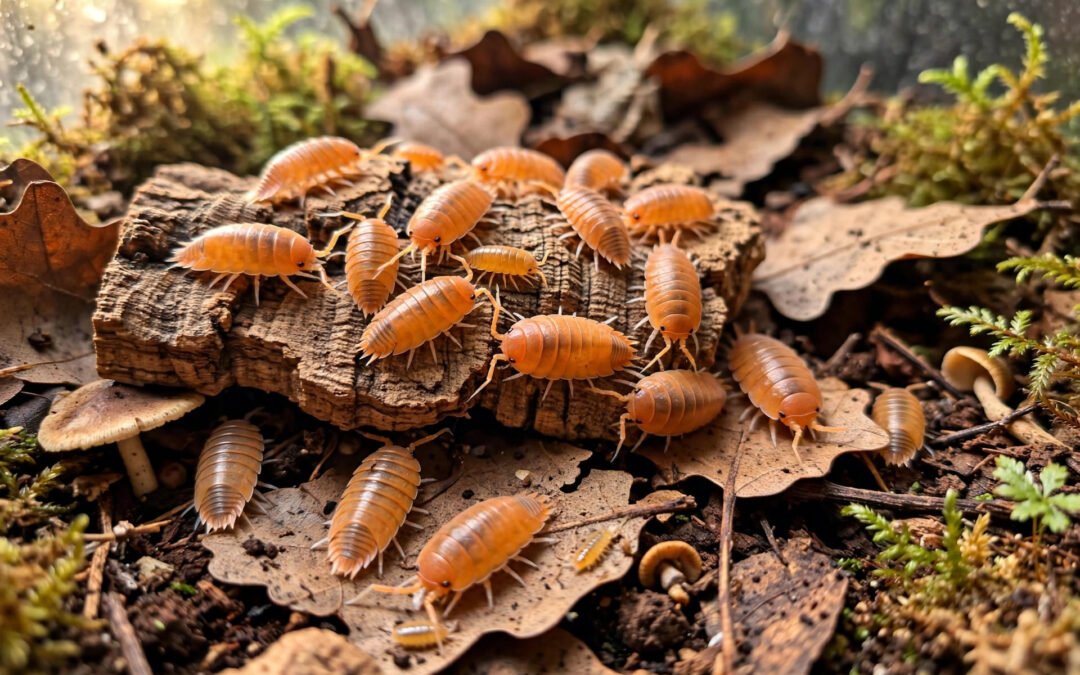
The Powder Orange isopod is a small, vivid-orange isopod. It has a reputation as one of the easiest species in the hobby to keep. It tolerates drier conditions than most isopods, breeds rapidly, and works beautifully as a bioactive cleanup crew. If you want a forgiving species that forgives the occasional missed misting, powder orange isopod care is hard to beat. For detailed setup, feeding, and breeding steps, see the powder orange isopod care guide for a complete walkthrough.
Quick Facts
- Scientific name: Porcellionides pruinosus ‘Powder Orange’
- Common names: Powder Orange isopod, orange isopod
- Adult size: 8–12 mm (about 0.3–0.5 inches)
- Difficulty: Beginner
- Temperature range: 65–85 °F (18–29 °C); usually kept around 15–28 °C
- Humidity needs: Tolerates dry conditions — roughly 40–60%, with a moisture gradient
- Breeding speed: Very fast — breeds quickly with fast growth
- Price tier: $ (inexpensive and widely available)
- Lifespan: Usually 2–3 years under typical care
Appearance and size
Powder Oranges are a selectively bred orange color morph of Porcellionides pruinosus. They are also small, fast-moving isopods with a slightly dusty or “powdered” look to their exoskeletons. Adults reach about 0.5 inches (12 mm) — noticeably smaller than species like dairy cows. However, their bright orange color makes them easy to spot against dark substrate and leaf litter.
They are smooth-bodied isopods that move quickly and are constantly on the go. Like other members of the genus, they cannot roll into a ball; their defense is speed and numbers. A thriving colony is a lively sight — dozens of tiny orange isopods streaming over bark and leaves at night.
Temperament and activity
Powder Oranges are mainly nocturnal but are often visible during the day in a well-established colony, especially around food. They scatter and forage widely rather than piling up in one spot, which makes them very effective as a cleanup crew.
One of their standout traits is drought tolerance. While most isopods need consistently damp substrate, P. pruinosus handles drier conditions well. As a result, it is an excellent choice for arid or semi-arid bioactive enclosures (such as desert reptile setups) where other isopods would struggle. As with any isopod, do not release them outdoors — they are not native to most of the US.
Enclosure setup
A 6-quart plastic tub with a ventilated lid is plenty for a starter colony. Ventilation matters more for this species than for moisture-loving ones. In addition, good airflow helps keep the drier conditions they tolerate and reduces mold risk. Cross-ventilation holes on opposite sides of the tub work well.
Provide the usual hides (cork bark, leaf litter, flat stones). However, the key difference from wetter species is the moisture layout. Keep most of the enclosure on the drier side and keep just one consistently damp corner or a damp patch under a piece of bark. The Enclosure Size Calculator can help you pick the right container as the colony grows.
Substrate
A 3–4 inch (7.5–10 cm) layer of isopod-safe substrate works well. Use organic coco fiber or peat moss mixed with decayed hardwood leaves and rotten wood, plus a calcium source such as crushed oyster shell or limestone. The squeeze test still applies: the damp corner should clump when squeezed without dripping water. The rest of the substrate can dry out between mistings.
Because powder oranges tolerate dryness, many keepers successfully keep them on the drier end of the standard isopod mix. This works especially well in bioactive enclosures for arid reptiles. Just make sure the moist area never fully dries out — the colony’s breeding females and newborn mancae rely on it. The Substrate Calculator will tell you how much mix your enclosure needs.
Temperature and humidity
Powder Oranges are comfortable from about 65–85 °F (18–29 °C). Care references for the species typically cite 15–28 °C and 45–60% humidity. Most US homes sit naturally within this range year-round, so you rarely need extra heating. Avoid placing the enclosure in direct sun or near radiators, since small tubs can heat up fast.
Humidity is where this species stands out: it is truly drought tolerant. It also does well in slightly humid to dry setups, provided a moisture gradient exists. A common beginner mistake is keeping them as wet as a Porcellio species. Constantly saturated substrate can increase the risk of mold and die-off. Instead, mist the damp corner lightly every few days and let the rest of the enclosure stay dry. If you see the colony clustering tightly in the damp corner, that can be a sign the enclosure as a whole is too dry. On the other hand, if they avoid the damp corner entirely, it may be too wet.
Feeding
The staple diet is the same as for most isopods: always-available decaying leaf litter and rotting hardwood. Supplement with fresh vegetables (carrot, zucchini, squash) a few times a week, plus protein and calcium.
Care guidance for this species recommends protein about twice a week — dried shrimp, fish flakes, or freeze-dried insects. Also provide a constant calcium source such as cuttlebone, limestone, or oyster shell. Remove uneaten fresh food within a day or two to avoid mold. Use the Feeding Calculator to scale portions to your colony size.
Breeding and colony growth
Powder Oranges are among the fastest-breeding isopods in the hobby, with fast growth and large broods. A starter colony of 12–15 can number in the hundreds within a year under steady conditions. Females carry eggs in a marsupium (brood pouch), and the tiny white mancae color up to orange as they grow.
Because they breed so readily, many keepers use powder oranges as a self-sustaining cleanup crew. The colony maintains itself indefinitely as long as you replenish leaf litter, moisture, and calcium. To project your colony’s growth, try the Colony Growth Calculator and the Breeding Calculator.
Common problems
- Keeping them too wet: The most common mistake with this species. Soggy substrate that never dries can increase the risk of mold and colony stress — lean dry and keep just one damp zone.
- Mold on uneaten food: Remove fresh food within a day or two, especially in the damp corner.
- Mites: Grain mites show up when excess food sits too long. Cutting back on food and letting the dry areas stay dry usually resolves it.
- Slow breeding: If a colony stalls, the usual culprits are a fully dried-out enclosure (no damp refuge left) or missing calcium. Check both before assuming anything else.
- Escapees: Small and quick; secure the lid after every feeding and maintenance session.
Is this species right for you?
Choose the Powder Orange if you want a small, vividly colored, nearly indestructible isopod. It tolerates drier conditions and multiplies fast. It is ideal for beginners, for arid bioactive enclosures, and as a first breeding project or feeder culture.
If you want a larger, bolder display isopod with more personality, look at the Dairy Cow isopod. It needs more moisture and protein but is more fun to watch. Want the same easy care in a different color? The Powder
Blue isopod is the same species with the same care requirements. To compare options side by side, use the
Species Finder or the Species Comparison tool.
Related Species
Related Guides
References
- Reptanical Shop — Porcellionides pruinosus ‘Powder Orange’ Isopods — beginner care, temperature range, moisture gradient, bioactive use
- Exuvium — Porcellionides pruinosus ‘Powder Orange’ — drought tolerance, humidity 45–60%, prolific breeding, protein and calcium guidance
- Josh’s Frogs — Isopod Substrate — substrate depth and moisture guidance
- Colorado State Extension — Pillbug (PDF) — isopod respiration, lifespan, nocturnal feeding, marsupium