
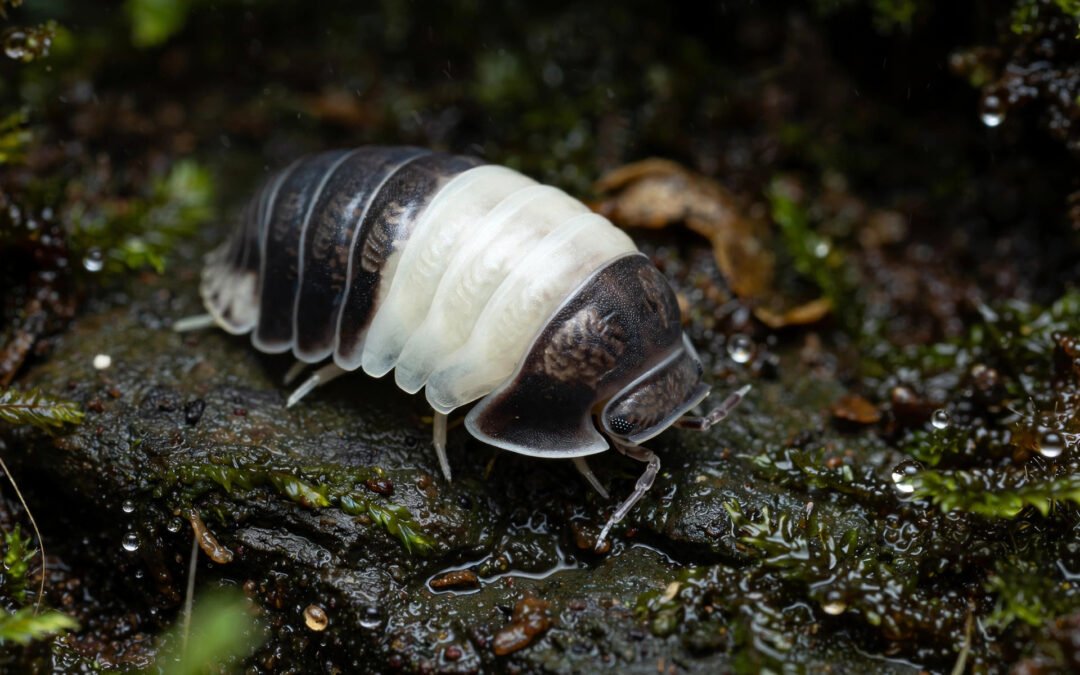
Panda King Isopod Care Guide
The black-and-white Cubaris that’s nearly as famous — and nearly as demanding — as the Rubber Ducky
The Panda King Isopod (Cubaris sp. ‘Panda King’) is named for its panda-like black-and-white patterning, and it’s one of the most sought-after isopods in the hobby. Here’s the key thing to know up front: it’s in the same genus as the Rubber Ducky, so the care is very similar — high stable humidity with real ventilation, deep substrate, slow breeding, and shy nocturnal behavior. If you’ve read the Rubber Ducky guide, much of this will feel familiar.
Quick Facts
- Scientific name: Cubaris sp. ‘Panda King’ (family Armadillidae)
- Common names: Panda King Isopod, Panda Kings
- Adult size: 12–16mm (about 1/2–5/8 inch)
- Difficulty: Intermediate
- Temperature: 68–80°F (20–27°C)
- Humidity: High — 70–80% with a moisture gradient, plus cross-ventilation
- Breeding speed: Slow — small broods; colonies build gradually over many months
- Price tier: $$$ (premium pricing typical of desirable Cubaris species)
- Lifespan: Cubaris species generally live longer than many other isopods — often 2–4 years per individual
Appearance and size
Panda Kings are unmistakable: a dark body broken by bold white banding that reads as a “panda” pattern, most dramatically on the head and rear segments. Adults reach 12–16mm — slightly smaller than Rubber Duckies but still a solid display size. Like other Cubaris, they manage only partial conglobation, so they tend to hunker rather than roll into a full ball.
Temperament and activity
Shy and nocturnal, especially as a new colony — this is the Cubaris temperament. Expect to see little during the day for the first weeks or months; nighttime checks with a dim light will show them foraging. They become somewhat bolder as the colony establishes, but they’re never a high-activity display species. Peaceful with tankmates.
Enclosure setup
A 6qt–16qt ventilated bin works for a starter group. As with all Cubaris, cross-ventilation is essential: vents on opposite sides so air genuinely moves through the bin. Stagnant humid air can increase the risk of mold, respiratory stress, and colony failure. Maintain a moisture gradient — a damp retreat covering roughly a third of the enclosure, drier elsewhere — so they can choose their microclimate. Size things properly with the enclosure size calculator.
Substrate
Go deep: 4–6+ inches (10–15cm) of moisture-retentive substrate. A coco fiber/soil base with generous leaf litter and sphagnum moss works well; limestone pieces mixed in provide the calcium Cubaris species seem to prefer (their wild relatives are associated with limestone habitats). Deep substrate buffers humidity and gives burrowing mancae somewhere safe. Get the volume right with the substrate calculator.
Temperature and humidity
Keep Panda Kings at 68–80°F (20–27°C) — normal room temperature. Humidity needs are high and stable: around 70–80%, with the damp retreat staying consistently moist and genuine airflow through the enclosure. This wet-but-ventilated combination is the defining challenge of Cubaris care. Avoid wide humidity swings, which appear to stress these animals more than steady conditions. Mist the moist side regularly and keep vents unobstructed.
Feeding
Offer protein 2–3 times per week in small amounts (fish flakes, dried shrimp, freeze-dried foods) alongside constant leaf litter — Cubaris species seem to use protein well, particularly breeding females. Vegetable scraps (zucchini, sweet potato, carrot) round out the diet. Provide limestone or cuttlebone for calcium. Springtails are strongly recommended as mold control in the humid setup. Remove uneaten fresh food after a day or two. Portion meals with the feeding calculator.
Breeding and colony growth
Panda Kings are slow breeders, in line with the Cubaris genus traits: lower reproduction rates and longer lifespans than most isopod genera. Broods are small, and a starter culture can take many months — often the better part of a year — to show obvious growth. Babies are tiny and stay hidden in the substrate, so judge progress by nighttime surface sightings of mancae rather than by digging. Don’t disturb the colony hunting for young. The colony growth calculator and breeding calculator give rough timelines, but real Cubaris colonies usually grow slower than formulas predict — patience is part of the care sheet.
Common problems
- Stagnant humid air: The number-one risk for Cubaris — mold blooms and colony crashes follow poor airflow. Ventilation is not optional.
- Humidity swings: Letting the bin dry out and then soaking it stresses Panda Kings more than steady, slightly-less-than-perfect humidity.
- Over-disturbing a slow colony: Digging for babies in a colony that breeds slowly just sets it back. Observe, don’t excavate.
- Too-small starter group: With slow breeding, starting with very few animals means a very long wait. Buy the largest group you can afford.
- Mold outbreaks: In a humid bin, uneaten food molds fast. Feed modestly, remove leftovers, and keep springtails.
Is this species right for you?
Panda Kings suit keepers with some isopod experience who want a premium Cubaris species and understand the humidity-plus-ventilation balancing act. They’re expensive, slow, and shy — and one of the most beautiful isopods you can own. If that combination doesn’t appeal yet, start easier and graduate. Check the species finder and species comparison tool for alternatives. The closest relative in care is the Rubber Ducky Isopod — same genus, same demands, different pattern.
Related Species
Related Guides
References
- PostPods — Rubber Ducky Isopod Care Tips (Cubaris genus care): https://postpods.co.uk/blogs/isopods-useful-articles/rubber-ducky-isopod-care-tips-keeping-your-pet-happy-and-healthy
- TC Insects — Cubaris sp. Rubber Ducky for sale (Cubaris genus traits): https://tcinsects.com/product/cubaris-sp-rubber-ducky-for-sale/