
Everything a beginner needs to keep Armadillidium maculatum — the boldly striped zebra isopod that’s as easy to care for as it is eye-catching. This complete zebra isopod care guide combines a full species profile with step-by-step husbandry: enclosure setup, humidity, feeding, breeding, and troubleshooting.
The zebra isopod (Armadillidium maculatum) earns its name from the striking white-to-yellow stripes splashed across its dark body, making it one of the most visually distinctive beginner isopods in the hobby. First described by C. Koch in 1841, this Mediterranean native is calm, hardy, and rolls into a perfect little ball when startled — a combination that makes it a great first species for new keepers who want something a step above the plain gray pillbug. For a close Armadillidium relative, see the common pillbug care guide.
If you like hardy beginner species, powder orange isopods are another easy starter colony — see the full powder orange care guide for humidity, feeding and breeding notes.
Below you’ll find everything in one place: the zebra isopod species profile (appearance, temperament, and natural history) plus the full care guide (enclosure, substrate, temperature, humidity, feeding, and breeding).
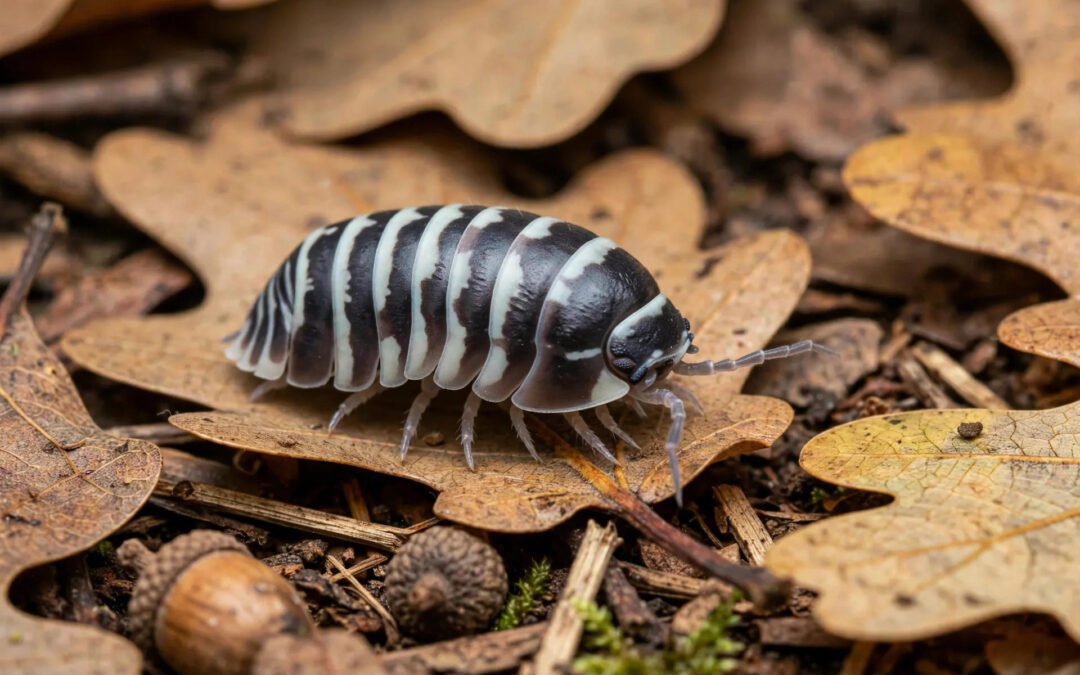
Zebra Isopod Quick Facts
- Scientific name: Armadillidium maculatum (described by C. Koch, 1841)
- Common names: Zebra isopod, zebra pillbug
- Origin: Mediterranean region of southern Europe
- Adult size: 12–18 mm (about 0.5–0.7 inches)
- Difficulty: Beginner
- Temperature: 60–78°F (16–26°C)
- Humidity: Around 60–70%, with a moist retreat on one side and a drier side
- Breeding speed: Moderate (slower than Porcellio species)
- Brood size: Roughly 20–40 mancae per brood
- Price tier: $ — affordable and widely available
- Lifespan: Around 2–3 years in captivity
- Morphs: Wild-type bold stripes; a high-yellow line with heavier yellow markings is also available
Appearance and size
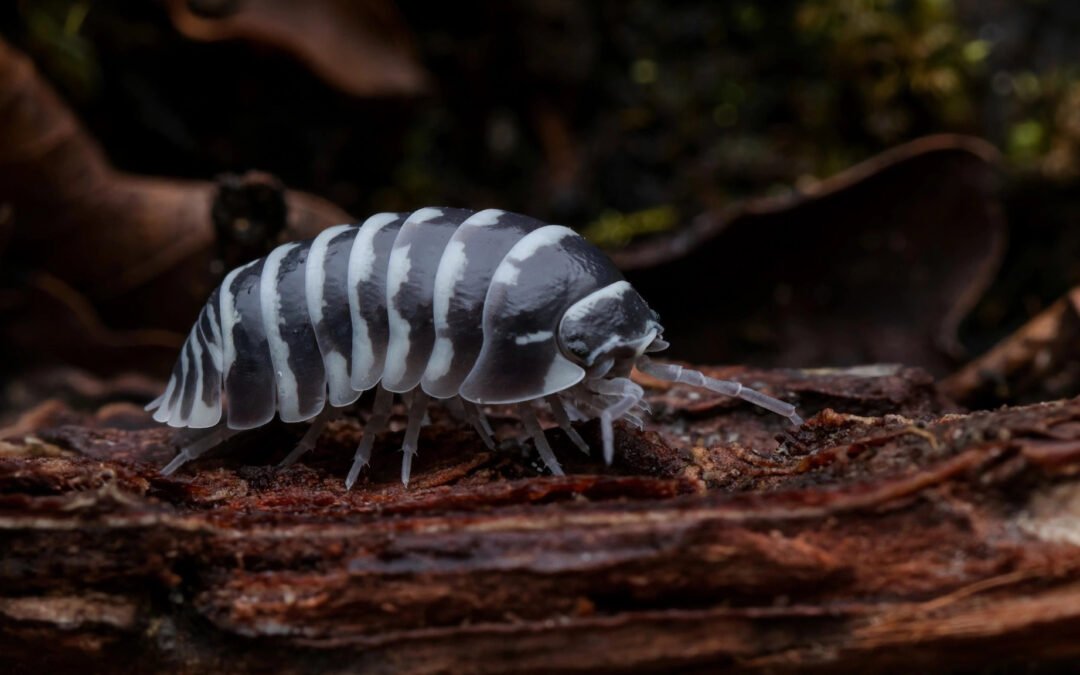
Adult zebra isopods reach about 12–18 mm long — roughly the size of a pea. Their base color is a deep charcoal to black, overlaid with bold, irregular white or pale-yellow stripes and spots that vary from individual to individual, so no two look exactly alike. Like all Armadillidium species, they have a rounded, pill-shaped body covered in segmented, armor-like plates, and their signature defense is conglobation: rolling into a tight, seamless ball when disturbed.
Sexing is difficult for beginners; the clearest clue is a breeding female carrying eggs in a visible brood pouch (marsupium) on her underside. Selectively bred high-yellow zebra isopods show much heavier yellow markings than the wild type and are popular with collectors, though their care is identical.
Temperament and activity
Zebra isopods are calm, slow-moving, and famously shy — especially while a colony is settling in. Expect them to spend most of the day tucked under bark, leaf litter, or cork hides, emerging mainly at night to forage. If you lift a hide and half the colony curls into tiny balls, that’s normal defensive behavior — they usually unroll within a few minutes once left alone.
Slow and gentle, they’re easy to observe and handle: a good fit for keepers who want a low-stress pet. They breed at a moderate pace, so a colony tends to grow steadily instead of exploding overnight.
Are Zebra Isopods Good for Beginners?
Yes — with one honest caveat. Zebra isopods are widely recommended as a first species because they’re hardy, affordable, and visually striking. That said, they’re not quite as bulletproof as common pillbugs (Armadillidium vulgare) or Porcellio laevis, which tolerate a wider range of mistakes. Zebras do best when their moisture gradient is set up correctly from day one, so they’re an ideal second species if your very first colony is still finding its feet.
If you’re still deciding, compare beginner-friendly species in our best isopod species for beginners guide, or take the Species Finder quiz to match a species to your setup.
Quick Answers About Zebra Isopods
Do zebra isopods bite?
No. Zebra isopods don’t bite people or pets. Their mouthparts are built for scraping soft, decaying plant matter — not for biting. They’re completely safe to handle, and even their defensive roll is harmless.
How long do zebra isopods live?
With good care, zebra isopods live around 2–3 years. Lifespan depends on temperature (cooler colonies often live longer), humidity stability, and diet quality — particularly steady access to calcium for molting.
Do zebra isopods need light?
No special lighting is needed. Zebra isopods are nocturnal and prefer darkness — they spend daylight hours hidden under bark and leaf litter. Keep the enclosure out of direct sunlight (which overheats the bin) and let normal room light set the day/night rhythm.
Zebra Isopod Enclosure Setup
A 6-quart (about 5.7-liter) plastic storage bin makes a good starter home for 10–15 zebra isopods, and a 16-quart bin can house a growing colony for a long time. Choose a container with more floor space than height — isopods live on and under the substrate surface, not up in the air.
Add a row of small ventilation holes along the upper sides — airflow helps prevent mold, but avoid over-ventilating, since too much airflow can dry the enclosure out. A secure-fitting lid keeps humidity stable and keeps out pests. Add plenty of hides — cork bark flats, leaf litter piles, or egg carton pieces — since zebra isopods naturally seek daytime shelter.
The Enclosure Size Calculator can help you match container volume to your colony size, and our isopod enclosure setup guide walks through the full build step by step.
Substrate
Aim for 2–3 inches (5–8 cm) of a moisture-retentive isopod substrate: a base of coconut fiber or organic topsoil mixed generously with decaying leaf litter and chunks of rotting hardwood. The leaf litter doubles as shelter and a constant food source, so keep it topped up as it breaks down. Mix in a lasting calcium source such as cuttlebone pieces to support healthy molting.
Moisten the substrate so it feels damp like a wrung-out sponge — it should feel moist but not release water when squeezed. Keep one side of the bin slightly drier than the other to create a moisture gradient, letting the isopods choose their own comfort zone. A patch of damp sphagnum moss in the moist corner makes an excellent retreat. The Substrate Calculator can help you estimate how much mix you need, and our best substrate mix for isopods guide has tested recipes.
Temperature and Humidity
Zebra isopods do well at normal room temperatures, roughly 60–78°F (16–26°C), and most keepers succeed without any supplemental heating. They tolerate brief dips toward 59°F (15°C), but try to avoid prolonged exposure above about 80°F (27°C) — sustained heat above 86°F (30°C) can be dangerous, particularly if the enclosure dries out at the same time. Keep bins away from sunny windows and heat sources.
Humidity needs are moderate — around 60–70% is a reasonable target — but the key is a gradient: mist one side or corner of the enclosure so there’s always a damp retreat, and let the other side stay drier. Armadillidium species generally tolerate slightly drier conditions than Porcellio species, but they still need access to moisture; a colony kept uniformly bone-dry is likely to struggle. A light misting a few times a week is usually enough, adjusted for your climate and ventilation.
A small digital hygrometer takes the guesswork out of humidity — see our isopod humidity control guide and isopod temperature guide for measuring and fine-tuning both. If your room runs cold, a heat mat stuck to the side of the bin (never underneath) adds gentle warmth without cooking the substrate.
Feeding Zebra Isopods
Decaying leaf litter should always be available — it’s the foundation of their diet, since these isopods are detritivores that feed on decomposing plant matter in nature. Supplement a few times a week with small amounts of vegetables such as carrot, zucchini, or sweet potato, and offer occasional protein like fish flakes or freeze-dried shrimp (a pea-sized portion every 1–2 weeks), which can be particularly valuable for breeding females.
Keep cuttlebone in the enclosure at all times for calcium — see our calcium for isopods guide for sources and schedules. Remove uneaten fresh food after 24–48 hours to reduce the risk of mold and grain mites. The Feeding Calculator can help you portion meals to your colony size, and the complete isopod feeding guide covers the full diet in depth.
Breeding and Colony Growth
Zebra isopods are moderate breeders — a healthy colony will grow steadily, but don’t expect the explosive reproduction of Porcellio species. Breeding females carry eggs in the marsupium on their underside, and tiny white mancae (baby isopods) eventually emerge to grow up alongside the adults. A new colony can take 2–4 months to settle in and show obvious growth, which is completely normal. Broods are typically around 20–40 mancae.
To encourage breeding, keep conditions stable and boring: consistent moisture with a proper gradient, temperatures in the low-to-mid 70s°F (21–24°C), deep leaf litter, and regular protein. Avoid constantly rearranging the enclosure — zebra isopods breed best when left undisturbed. To estimate how fast your colony might grow, try the Colony Growth Calculator and the Breeding Calculator.
Troubleshooting Common Problems
- Drying out: The most common beginner issue. If isopods crowd the dampest corner or never emerge, the enclosure may be too dry — mist more often or reduce ventilation slightly.
- Mold: Usually a sign of overfeeding fresh foods or poor airflow. Remove uneaten food promptly and check that ventilation holes aren’t blocked. Persistent mold or grain-mite blooms are covered in our mold and mites in isopod enclosures guide.
- Slow colony growth: Zebra isopods are naturally moderate breeders, so patience is part of keeping them. A colony that never produces babies may be too dry, too cool, or short on protein and calcium.
- Molting issues: Isopods shed in two stages — rear half first, then front half — and a freshly molted isopod is soft and vulnerable. Incomplete sheds can be linked to low humidity or insufficient calcium, so keep the moist retreat damp and cuttlebone available. Not sure what you’re seeing? Our isopod molting vs dying guide helps you tell the difference.
- Sudden die-offs: If several isopods die at once, check for the big three: waterlogged substrate (anaerobic, sour-smelling mix), pesticide contamination (on collected wood or leaves), or a heat spike. Replace foul substrate immediately and review each suspect.
- Heat stress: Prolonged temperatures well above 80°F (27°C) can be dangerous, particularly if the enclosure dries out at the same time. Keep bins away from sunny windows and heat sources.
Is This Species Right for You?
The zebra isopod is an excellent first species if you want a hardy, low-maintenance isopod with serious visual appeal. It’s calmer and slower-breeding than Porcellio species — ideal if you prefer a steady, manageable colony over a booming one. If you’re still deciding, take the Species Finder quiz or line up the stats in the Species Comparison tool. For a similar ball-rolling Armadillidium with a more classic look, see the common pillbug; if you’d rather have a faster, more active colony, the smooth isopod is worth a look.
Related Species
Related Guides
References
- University of Florida IFAS Extension — Featured Creatures: Armadillidium vulgare — Armadillidium biology, brood pouch, molting in two stages
- Colorado State Extension — Pillbug (PDF) — moisture needs, rolling defense behavior, lifespan
- Josh’s Frogs — Isopod Substrate — substrate depth and moisture guidance
- Wikipedia — Armadillidium maculatum — taxonomy and species overview
- iNaturalist — Armadillidium maculatum observations — distribution and field photos
- GBIF — Armadillidium maculatum — global occurrence records
Note: Isopod care requirements can vary by species, enclosure conditions, temperature, humidity, ventilation, and colony size. The recommendations above are general husbandry guidance; always consider the requirements of the specific species you keep.
Zebra Isopod Size
Adult zebra isopods reach 12–18 mm (about 0.5–0.7 inches) — noticeably larger than dwarf species, which is one reason they are easy to spot in an enclosure. Size varies a little with age and feeding, so juveniles will be smaller than the adult range above.