
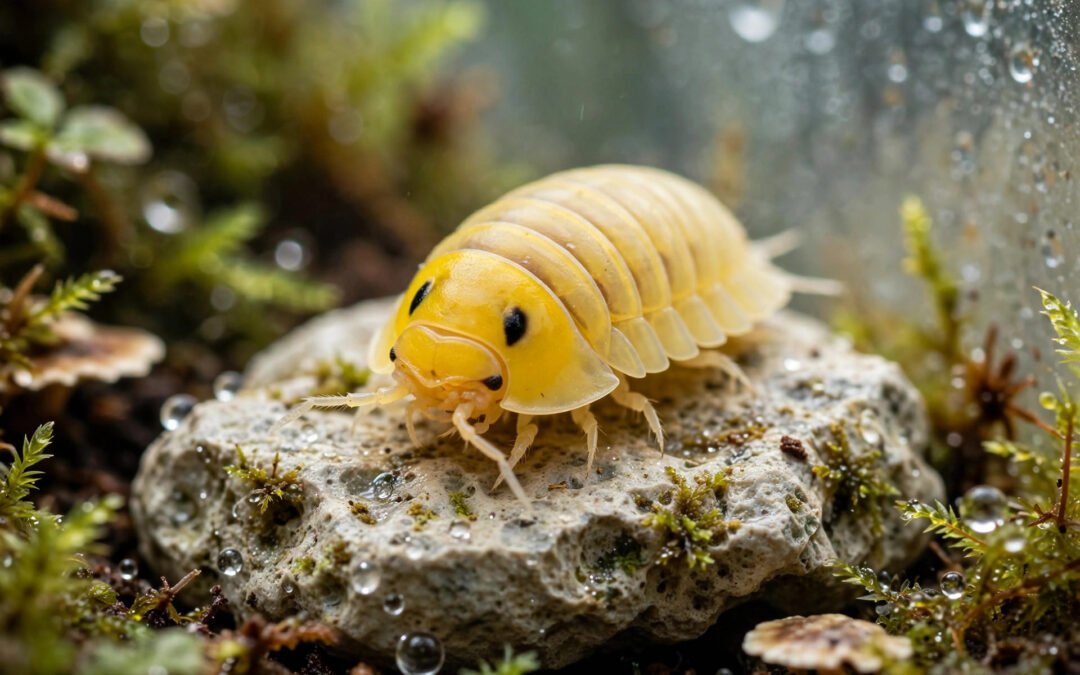
Rubber Ducky Isopod Care Guide
The hobby’s most famous isopod — beautiful, expensive, and absolutely not a beginner species
The Rubber Ducky Isopod (Cubaris sp. ‘Rubber Ducky’) is the species that made isopods famous: a yellow-faced, dark-bodied isopod reported from limestone cave systems in Thailand (reported in the hobby around 2017) that looks like a tiny rubber duck. It’s also one of the most demanding species commonly sold. This guide is honest about what it takes.
Quick Facts
- Scientific name: Cubaris sp. ‘Rubber Ducky’ (family Armadillidae)
- Common names: Rubber Ducky Isopod, Rubber Duckies
- Adult size: 15–20mm (about 5/8–3/4 inch)
- Difficulty: Advanced
- Temperature: 70–80°F (21–27°C)
- Humidity: High — 70–80% with a moisture gradient, plus cross-ventilation
- Breeding speed: Slow — broods of 5–15; a colony may take 12–18 months to become self-sustaining
- Price tier: $$$ (typically sold in small, expensive starter groups)
- Lifespan: Members of the Cubaris genus generally live longer than many other isopods — often 2–4 years per individual
Appearance and size
Rubber Duckies earn their fame with their looks: a dark brown-to-black body with a bright yellow head and yellow tail section, giving them an unmistakable rubber-duck silhouette. Adults reach 15–20mm — a solid, chunky display size. Unlike Armadillidium species, they can only partially roll into a ball (partial conglobation), so you’ll often see them in their full duck-like posture.
Temperament and activity
Rubber Duckies are shy and largely nocturnal, particularly as juveniles — don’t expect to see much during the day, especially in a new colony. This is normal behavior, not a sign of problems. Adults become bolder over time but never “active” the way some Armadillidium species are. Patience is required: you’ll check on them at night with a flashlight more than you’ll watch them at your desk.
Enclosure setup
A 6qt–16qt ventilated bin works for a starter colony, with room to expand as numbers (slowly) grow. The critical feature is cross-ventilation: vents on opposite sides of the bin so air moves through. Stagnant, humid air can increase the risk of mold, respiratory stress, and total culture failure — Rubber Duckies breathe through pleopodal lungs that need humid air, but air that never moves is dangerous. A moisture gradient (damp retreat on roughly one-third of the enclosure, drier on the other side) lets them self-regulate. Use the enclosure size calculator to size your bin for the starter group you’re buying.
Substrate
This species comes from limestone cave systems, and the substrate should reflect that: 6+ inches (15cm+) of deep, limestone-rich substrate. Limestone pieces or crushed limestone mixed into the substrate is preferred — calcium from limestone appears to suit them better than cuttlebone alone. A base of coco fiber/soil mix with leaf litter and sphagnum works, layered over or mixed with the limestone. Deep substrate matters because they burrow and because it holds the stable humidity they need. Figure your volume with the substrate calculator.
Temperature and humidity
Keep Rubber Duckies at 70–80°F (21–27°C) — standard room temperature in most US homes works. Humidity is the make-or-break variable: they need high, stable humidity around 70–80%, with a moist retreat area and a drier zone, and genuine cross-ventilation at the same time. This combo — wet but not stagnant — is what makes them advanced. Mist the moist side regularly, keep the ventilation holes clear, and avoid letting water pool at the bottom. Rapid humidity swings appear to stress this species more than steady conditions do.
Feeding
Rubber Duckies appreciate protein more often than many species: offer protein (fish flakes, dried shrimp, freeze-dried minnows) 2–3 times per week in small amounts, plus constant access to leaf litter. Vegetable scraps (zucchini, sweet potato, carrot) are accepted. Always provide a calcium source, preferably limestone pieces. Springtails are strongly recommended in a Rubber Ducky enclosure — they control mold in the humid environment and reduce the risk of a mold bloom overwhelming the slow-growing colony. Portion with the feeding calculator.
Breeding and colony growth
Set your expectations honestly: Rubber Duckies are slow breeders. Broods are small (5–15 mancae), and it can take 12–18 months for a starter culture to become a self-sustaining colony — some keepers report a colony roughly doubling every 6–12 months. A few practical notes: mancae (babies) can climb glass, so a secure lid with fine ventilation matters; and don’t disturb the substrate hunting for babies — you’ll mostly notice new mancae when they start appearing on the surface at night. Use the colony growth calculator and breeding calculator to model timelines, but treat the outputs as rough estimates — real-world Cubaris breeding is slower than formulas suggest.
Common problems
- Stagnant humid air: The classic Rubber Ducky killer. High humidity without airflow can increase the risk of mold blooms, respiratory stress, and sudden colony crashes. If you smell sourness or see persistent mold, improve ventilation first.
- Impatience / over-disturbing: Digging through the substrate to check for babies stresses a slow colony. Observe at night; disturb rarely.
- Too-shallow substrate: Less than ~6 inches of substrate makes stable humidity much harder to maintain. Go deep.
- Cuttlebone-only calcium: Limestone appears to be the better calcium source for this species given its cave origins.
- Buying too small a starter group: With slow breeding, a tiny starter culture takes very long to establish. Buy the largest starter group your budget allows.
Is this species right for you?
Rubber Duckies are for keepers who already have isopod experience, understand humidity-plus-ventilation management, and can wait a year or more for a colony to establish. They’re expensive, slow, shy, and demanding — and spectacularly beautiful. If any of that sounds wrong, start somewhere easier and come back later. The species finder and species comparison tool can point you to a better match. If you love the Cubaris look but want the same care style in a slightly different package, the Panda King Isopod is the same genus with very similar requirements.
Related Species
Related Guides
References
- PostPods — Rubber Ducky Isopod Care Tips: https://postpods.co.uk/blogs/isopods-useful-articles/rubber-ducky-isopod-care-tips-keeping-your-pet-happy-and-healthy
- TC Insects — Cubaris sp. Rubber Ducky for sale: https://tcinsects.com/product/cubaris-sp-rubber-ducky-for-sale/