What Can Isopods Eat? Safe Kitchen Scraps List for Beginners
What can isopods eat from your kitchen? Leaf litter and rotting wood are the real diet — they should always be in the enclosure — and almost everything else from the kitchen is a side dish: vegetable peelings, fruit pieces, eggshells, and a little protein once or twice a week. The short version: if it is plain, unseasoned, and plant-based, it is probably safe in a small piece; if it is bread, rice, salty leftovers, or meat, keep it out. This guide walks through exactly what is safe, what is a mite trap, and what is genuinely dangerous, so you can feed your colony from the kitchen without turning the tub into a mould farm.
Isopods are detritivores. In the wild they eat fallen leaves, soft rotting wood, and the fungi and bacteria breaking those down, plus the occasional dead insect. That matters for one reason: the tub itself is the diet. Fresh food is a garnish. Every feeding mistake I have seen — and I have made most of them — comes from flipping that around and treating the enclosure like a plate that needs filling three times a day.
What Can Isopods Eat? The Golden Rule First
Before the lists, one rule that makes all of them make sense: isopods will eat it does not mean it is good for them. Isopods will eat cardboard, a slice of white bread, a dead cricket, and the corner of a paper towel. They will also eat each other’s shed skins and their own droppings. They are cleanup crew — their job is to eat whatever is decaying. Your job is to decide what decays in their tub.
Three questions decide whether a kitchen scrap belongs in the enclosure:
- Will it rot into food or into a problem? A carrot slice rots slowly and gets eaten. A bread crust turns to paste, grows mould in a day, and feeds grain mites.
- Is it plain? Salt, oil, butter, spices, and sauces are all no. Seasoning is for you, not for them.
- Can the colony finish it in about a day? If not, the piece is too big. Anything left after 24 hours comes out.
If a scrap passes all three, it is probably fine. If it fails even one, skip it — leaf litter is already in the tub doing the real work. For the full picture of the staple diet, see our isopod feeding guide.
What Can Isopods Eat from the Kitchen? The Safe List
These are the kitchen scraps I actually use, ranked by how well they behave in a humid enclosure. Everything below assumes a plain, unseasoned, washed piece, offered in a thumbnail-sized amount.
Vegetable peelings and ends — the best scraps
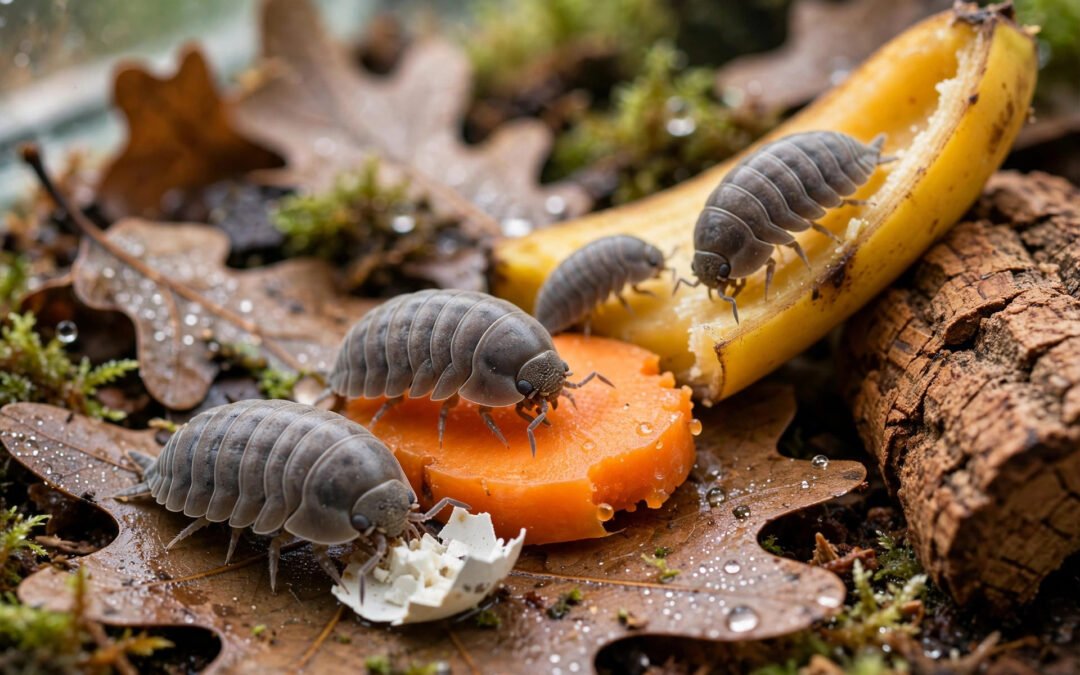
Peelings are the single best thing your kitchen produces for isopods. Carrot peel, sweet potato peel, zucchini ends, squash trimmings, and cucumber peel are all eaten readily, and because they are thin they dry out or get finished before mould takes hold. Sweet potato is the standout: dense, nutritious, and a slice resists moulding for three to four days while the colony works through it. Carrot is the classic for the same reason — hard, slow to rot, easy to remove. For the full ranked list, see our guide to feeding vegetables to isopods.
Fruit pieces and peels — treats, not staples
Apple cores, banana peel, melon rind, pear ends, and berries are all accepted, but fruit is sugar, and sugar is mould food. Offer a small piece once a week at most and remove it after 24 hours. Banana peel is the best of the bunch — the colony eats the soft inner side eagerly, and the peel holds its shape long enough to lift out cleanly. Wash fruit first: supermarket peel is often waxed or sprayed, and the wax is the part the isopods ignore while the chemicals underneath are the part you do not want in the tub.
Eggshells — the scrap that is actually essential
Eggshells are the one kitchen scrap that is not a treat but a need. Every moult rebuilds a calcium-hardened shell, so calcium must be available permanently. Rinse the shells, bake them for ten minutes to dry them out and kill anything on them, crush them, and leave a small pile in the enclosure. They last for months. Cuttlebone and limestone do the same job, but eggshells are free and you already have them. Read more in our calcium guide for isopods.
Plain cooked egg — a rare protein scrap
A pea-sized piece of plain boiled egg white is a good occasional protein boost, especially for fast-breeding species like Dairy Cows. Offer it rarely, and remove whatever is left after a day — cooked egg goes off fast in a warm tub. Never offer raw egg: it rots before it is finished and draws flies.
Leafy greens and herbs from the fridge
Wilted kale, spinach, lettuce, and dandelion leaves from the garden (unsprayed) are all eaten. They wilt fast and should be offered in small amounts. Herbs are a mixed bag: basil and parsley are fine in a leaf or two; strong, oily herbs like rosemary are usually ignored. If the colony ignores a herb three times running, stop offering it — they are telling you something.
Dried foods from the pantry — the safe shelf
Fish flakes, dried shrimp, krill, and gammarus are not kitchen scraps in the usual sense, but they live in most keepers’ kitchens and they are the cleanest protein you can offer. A pinch once or twice a week drives breeding without the mould risk of wet food. Dried shrimp and krill are cleaner than fish flakes — flakes are grain-based, and grain is what grain mites eat, so flakes are the first protein to cut back if mites appear. See our protein sources guide for the full comparison.
Kitchen Scraps Isopods Should NOT Eat
This is the list that saves colonies. Most of these will not kill isopods on contact — that is exactly why they are dangerous. They kill slowly, through mould, mites, and sour substrate.
Bread, rice, pasta, oats, and cereal — the mite trap
Bread is the single most common beginner feeding mistake I see, and I made it myself in my first year. A chunk of bread looks generous. Within 48 hours it is a grey, pasty mite farm, and the grain mites that move in are far harder to evict than they were to invite. The same applies to cooked rice, pasta, oats, and breakfast cereal. Here is the honest disagreement: some guides list oats and rice as acceptable in tiny amounts, and a pinch of dry oats in a dry, well-ventilated tub will usually be eaten without disaster. But “usually” is doing a lot of work there, and the downside — a mite bloom that takes weeks to clear — is much worse than the upside, which is nothing leaf litter does not already provide. My verdict: skip grains entirely. Your colony loses nothing.
Salty, seasoned, or sauced leftovers
Anything from your plate that has salt, butter, oil, sauce, or spices on it stays out. Salt dehydrates isopods. Oil coats the substrate and goes rancid. Spices are concentrated plant chemicals that isopods did not evolve to eat. This includes pizza crusts, chips, crackers, and anything fried. Plain is the rule — if you would not eat it unseasoned, they should not eat it at all.
Meat, dairy, and wet pet food
Isopods will eat meat. In the wild they scavenge dead animals. In a closed tub, a piece of meat rots faster than the colony can finish it, smells, and draws flies and mites. Dairy is worse — milk, cheese, and yoghurt sour within hours in a warm enclosure. Wet dog or cat food has the same problem, plus salt and preservatives. If you want to offer animal protein, use dried shrimp or fish flakes instead: same nutrition, none of the rot.
Citrus, onion, garlic, and hot peppers
Citrus fruit is not proven toxic to isopods, but colonies usually ignore it, and shop-bought peel is often waxed with fungicide. Onion, garlic, chives, and leeks contain thiosulfates that are toxic to many animals; no controlled study exists on isopods specifically, but with so many safe options available, the risk-to-reward ratio is terrible. Hot peppers and chilli are ignored or avoided. Skip all of them.
Coffee grounds and tea leaves — the compost-heap confusion
Composting guides list coffee grounds as isopod food, and that is technically true — in a compost heap. Your tub is not a compost heap. Used coffee grounds are acidic, carry caffeine, and in a closed, humid enclosure they mould quickly and clump into sour patches. Tea leaves have the same problem plus tannins. A tiny sprinkle of spent grounds mixed into substrate outdoors is one thing; a spoonful in a tub is another. Skip both. If you want to use your grounds, compost them first and feed the compost — or just throw them in the garden, where the wild woodlice will do the job properly.
Avocado, chocolate, and sugary foods
Avocado contains persin, a fungicidal toxin that is dangerous to many animals; no isopod-specific study exists, and there is no reason to test it on your colony. Chocolate, sweets, jam, and anything sugary will mould within a day and draw fruit flies. Keep them out.
How Much and How Often: The 24-Hour Rule
Portion size is where most feeding problems actually live — not in the food list. The rule is simple: offer only what the colony can finish in about a day, and remove whatever is left after 24 hours.
- Small colony (under 30 isopods): one thumbnail-sized piece, once or twice a week. The leaf litter is doing the feeding; you are offering dessert.
- Established colony (100+ isopods): a piece the size of two thumbnails, two to three times a week. A big Dairy Cow colony will clear a sweet potato slice in a day.
- Fresh food: always remove after 24 hours, even if it looks fine. Mould starts before you can see it.
- Leaf litter and rotting wood: always available, topped up when the floor shows through. This is the diet; everything else is extra.
- Calcium: always available, permanently. Eggshell, cuttlebone, or limestone — never let the tub run out.
The single most useful feeding habit is not a schedule but a glance: lift the cork bark once a week and look at the food corner. If old food is sitting there untouched and fuzzy, you are overfeeding. If the leaf litter is eaten down to lace and the isopods are clustered on the bark looking for more, top up the leaves. The colony tells you what it needs if you look.
What Can Isopods Eat by Species? It Depends on the Isopod
Not every species eats the same way. Hardy beginner species are forgiving; the expensive, slow-breeding ones are not.
- Porcellio laevis ‘Dairy Cow’ and other Porcellio: the vacuum cleaners of the hobby. They eat almost anything, breed fast on protein, and are the best species to learn feeding on. Give them more protein than other species — a pinch of dried shrimp twice a week is about right.
- Armadillidium (Zebra, Magic Potion, Powder Blue): moderate eaters. They love leaf litter and root vegetables, take fruit happily, and need less protein than Porcellio. Overfeeding fruit is the usual mistake here — a weekly piece is plenty.
- Cubaris (Rubber Ducky, Blonde Ducky, Pak Chong): the careful ones. Slow eaters, slow breeders, and very sensitive to sour substrate. Feed them less fresh food, less often, and keep the leaf litter thick. A bad scrap can crash a Cubaris colony that a Dairy Cow colony would shrug off. If you keep Cubaris, the safest feeding plan is: leaf litter, rotting wood, calcium, and almost nothing else for the first few months.
- Mancae (babies): tiny isopods need soft, fine food — crumbled leaf litter, powdered calcium, and a small piece of soft vegetable. They cannot manage a hard carrot slice. Place food near the damp corner where the babies cluster.
If you are choosing your first species, our best isopod species for beginners guide covers which ones forgive feeding mistakes and which ones do not.
The Mite Test: How to Tell If a Scrap Is Causing Trouble
Grain mites are the price of overfeeding, and kitchen scraps are how most keepers pay it. The signs show up two or three days after a bad feeding: tiny white dots moving on the food, on the glass, and in the substrate; a dusty, crawling film on the surface; isopods clustering on the dry side instead of feeding.
If you see mites, do this: remove all fresh food immediately, let the dry side of the tub dry out properly, and stop offering anything but leaf litter and calcium for two weeks. Springtails help — they compete with mites for the same food. Do not reach for chemicals. The fix is boring and it works: less food, drier dry side, patience. For the full treatment, see our mould and mites guide. And if the problem keeps coming back, read why are my isopods dying — overfeeding is one of the eleven colony-crash causes covered there.
A Simple Weekly Kitchen-Scrap Routine
Here is the routine I use. It takes five minutes a week and it works for every hardy species I keep:
- Monday: a thumbnail-sized piece of sweet potato or carrot on the damp side. Remove last week’s piece if anything is left.
- Wednesday: a pinch of dried shrimp or fish flakes. Check the eggshell pile and top it up if it is low.
- Friday: a small piece of fruit — apple, banana peel, or melon rind. Remove it Saturday if anything remains.
- Every day: leaf litter and rotting wood always in, calcium always in. Top up the leaves when the floor shows through.
- Never: bread, rice, pasta, seasoned leftovers, meat, dairy, citrus, onion, garlic, coffee grounds, or anything you would not eat plain.
That is the whole system. Leaf litter feeds them, the kitchen adds variety, and the 24-hour rule keeps the tub clean. If you are setting up your first enclosure, our isopod enclosure setup guide and substrate mix guide cover the foundation this feeding plan sits on.
Frequently Asked Questions
Can isopods eat banana peel?
Yes — banana peel is one of the best kitchen scraps for isopods. They eat the soft inner side eagerly. Wash it first to remove wax and spray residue, offer a small piece once a week, and remove it after 24 hours.
Can isopods eat bread?
They will eat it, but do not offer it. Bread turns to paste, moulds within a day, and is the fastest route to a grain mite bloom. Leaf litter does everything bread was supposed to do, without the mites.
Can isopods eat rice?
It is not recommended. Cooked rice goes sour fast and feeds grain mites; dry rice is ignored until it moulds. Some keepers use a tiny pinch of dry oats without disaster, but the risk is not worth it when leaf litter is free and better.
Can isopods eat eggshells?
Yes, and they should. Eggshells are an excellent calcium source. Rinse, bake for ten minutes, crush, and leave a small pile in the enclosure permanently. The isopods will graze on it for months.
Can isopods eat coffee grounds?
Skip them. Composting guides list coffee grounds as isopod food, but in a closed tub they are acidic, mould quickly, and clump into sour patches. Your tub is not a compost heap.
What should I feed isopods every day?
Nothing fresh every day. Leaf litter, rotting wood, and calcium should always be available — that is the daily diet. Fresh kitchen scraps are a side dish, offered once or twice a week in thumbnail-sized pieces and removed after 24 hours.
References
Vivkeeper — “What Do Isopods Eat?” (vivkeeper.com/guides/isopods/food). Leaflitterlab — “What Do Isopods Eat? Food List and Feeding Schedule” (leaflitterlab.com/guides/what-do-isopods-eat). Cork and Chitin — “What Do Isopods Eat? A Complete Isopod Diet” (corkandchitin.com/blog/what-do-isopods-eat). ReptileKnowledge — “What Should I Not Feed My Isopods?” (reptileknowledge.com/reptile-pedia/what-should-i-not-feed-my-isopods). Isopod Care Hub — Isopod Feeding Guide; Feeding Vegetables to Isopods; Protein Sources for Isopods; Calcium for Isopods. Note: Isopod care requirements can vary by species, enclosure conditions, temperature, humidity, ventilation, and colony size. The recommendations above are general husbandry guidance; always consider the requirements of the specific species you keep.