Why Are My Isopods Dying? 11 Colony Crash Causes & Fixes
Finding dead isopods in your enclosure is gutting — especially when the colony was thriving a week ago. If you are asking why are my isopods dying, the honest answer is that there is rarely one single culprit. Isopods are land-dwelling crustaceans that breathe through modified gills called pleopodal lungs, so almost everything that kills them comes back to the same few basics: moisture, air, food, calcium, temperature, and what you last put into the tub.
The good news: most colony crashes are fixable, and most give you warning signs before the whole bin is lost. This guide walks through the 11 most common reasons isopods die, how to tell which one is hitting your colony, and a rescue plan that has saved more than one “dead” tub. Read the first two sections before you change anything — the most common beginner mistake is tearing the whole setup apart before knowing what actually went wrong.
Why Are My Isopods Dying? First, Are Your Isopods Actually Dead?
Before diagnosing a crash, make sure you are looking at a crash at all. Isopods are masters of looking dead while being perfectly fine:
- Molting isopods look half-dead. An isopod mid-molt is two-toned — one half dull and chalky, the other shiny — and barely moves. It is shedding its exoskeleton in two stages, back half first, front half days later. Leave it alone. Poking a molting isopod can kill it.
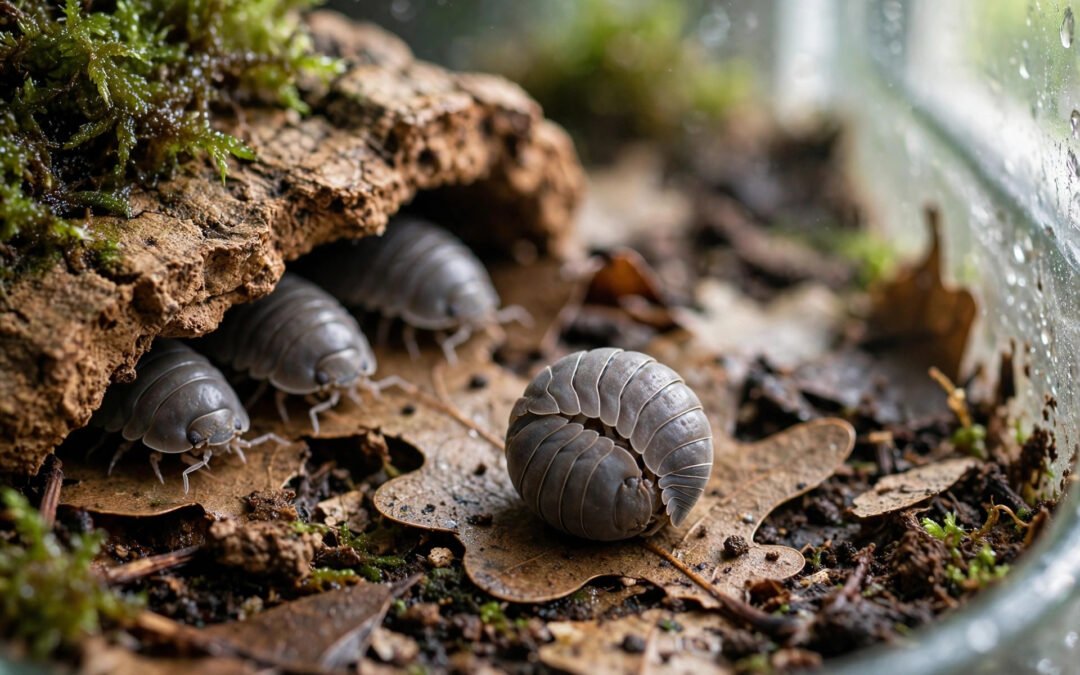
- Curled-up isopods are usually alive. Rolling into a ball is a defence reflex, not a death pose. Gently nudge one with a soft brush: a live isopod uncurls or twitches its legs. A dead one stays curled, feels light and brittle, and its legs tuck tight against its body.
- “Missing” isopods are often just hiding. Mancae — newborn isopods — are tiny, white, and nearly invisible against substrate. Adults spend most of the day under bark and leaf litter. Lift the cork bark at night, when the colony is active, before concluding they are gone.
- Seasonal slowdowns are normal. In winter, many species breed less and move less. A quiet colony in January is not necessarily a dying one.
If you are unsure whether an isopod is molting or dying, our full comparison walks through every sign: Isopod Molting vs Dying — How to Tell the Difference.
Why Are My Isopods Dying? The One Question That Diagnoses Most Crashes
Ask yourself this before anything else: what changed in the enclosure right before the deaths started? A new bag of substrate, a different leaf litter source, a new food, a heat mat, a move to a sunnier shelf, a fresh plant, a cleaning product used nearby — the culprit is almost always the most recent change. Colonies that have been stable for months do not suddenly crash for no reason.
If nothing changed, work through the causes below in order. They are listed roughly by likelihood, starting with the killer responsible for more dead colonies than all the others combined.
Cause 1: The Enclosure Dried Out
Drying out is the number-one isopod killer, and it is also the most preventable. Because isopods breathe through gills, dry air is not just uncomfortable for them — it suffocates them. A colony can go from healthy to dead in a few hot, dry days, and the victims are usually found curled up on the surface of bone-dry substrate.
Signs: dead isopods curled into tight balls on the surface; substrate that crumbles to dust; the moss corner dry and crispy; survivors clustered desperately around the water dish or the dampest spot.
Fix: re-wet the damp side immediately — pour dechlorinated water into the substrate on the moist side rather than misting the whole tub. Misting the entire enclosure is the single most overrated habit in the hobby: it wets the surface for an hour and leaves the deep substrate dry. Pouring water into one corner creates a lasting moisture gradient the colony can actually use. Keep one side damp and one side dry, and check the gradient every few days with the squeeze test: a handful of substrate from the damp side should hold its shape when squeezed, without dripping. Our full guide explains the technique: Isopod Humidity Control: How to Measure and Adjust It.
Prevention: a thick layer of leaf litter on top of the substrate slows evaporation dramatically. If your tub dries out between weekly checks, your ventilation is too open, your lid is too loose, or the tub is too close to a heat source.
Cause 2: The Substrate Is Waterlogged
The opposite extreme kills just as fast. Waterlogged substrate has no air pockets left in it, so the pleopodal lungs cannot pull oxygen from it — the isopods effectively drown in mud. Soggy tubs also go anaerobic: the substrate turns sour, smells like rotten eggs, and breeds the kind of bacteria and mold that finish off weakened animals.
Signs: substrate that drips when squeezed; standing water at the bottom; a sour or swampy smell when the lid opens; isopods climbing the walls and lid to escape the wet ground; white or grey mold spreading fast.
Fix: stop watering entirely and add dry leaf litter and dry substrate to soak up the excess. Open the ventilation for a few days and let the tub dry toward a proper gradient. In a bad case, move the survivors to a fresh tub with correct moisture — do not try to “fix” a swamp in place while animals are dying in it. The depth of substrate matters here too: a shallow layer has no dry zone to retreat to. See How Deep Should Isopod Substrate Be? for the depth that keeps a gradient alive.
Cause 3: Stale Air and Poor Ventilation
Here is an opinion most care sheets will not give you: “add more ventilation” is not a cure-all, and too much of it kills colonies just as surely as too little. What your isopods actually need is humid air that moves — gentle cross-ventilation, not a sealed box and not a wind tunnel.
A sealed tub with no airflow traps carbon dioxide and stale, humid air at the substrate surface. The colony slowly suffocates, and the first sign is often isopods gathering at the lid or dying with no visible cause. On the other hand, a tub with huge open vents dries out in a day, and a Cubaris colony in a drafty tub will crash from dehydration while the keeper insists the moisture is fine — because it was fine at 9 a.m., right after misting.
Signs: a foul, sour smell on opening the lid; condensation that never clears; isopods clustered at the top of the tub; mold that returns within days of cleaning.
Fix: small, mesh-covered holes on two opposite sides of the tub, low on one side and higher on the other, create gentle cross-flow without turning the tub into a sieve. If the tub dries out within a day of watering, you have too much ventilation; if it smells sour, you have too little. Our guide covers the balance in detail: Isopod Ventilation Guide: How Much Airflow Is Enough?.
Cause 4: A Heat Spike — or a Cold Snap
A single hot afternoon can wipe out a colony. The classic killer is a tub left in direct sunlight: the plastic acts like a greenhouse, the soil bakes, and the humid air inside superheats. Heat is almost always fatal within hours, while cold is usually slower — it stalls breeding and movement first, and only kills after prolonged exposure below a species’ tolerance.
Signs: many dead isopods at once after a hot day or a move near a window, radiator, or heat vent; survivors sluggish and gathered on the cool side; in cold, a colony that stops breeding and barely moves for weeks.
Fix: move the tub to an interior room away from windows, radiators, and heating vents. Never put a heat mat under the tub — if you must heat, mount it on the side so the colony can move away from it, and always use a thermostat. Most common pet species are comfortable at ordinary room temperature, 18–25°C, but check your species: Cubaris from tropical caves tolerate heat worse than hardy Porcellio. See Isopod Temperature Guide: Ideal Ranges by Species.
Cause 5: Failed Molts and a Calcium Shortage
Every isopod must shed its exoskeleton to grow, and every shed needs calcium to build the new shell underneath. Without a constant calcium source, the old shell hardens into a trap: the animal gets stuck halfway through its molt, two-toned and unable to walk, and dies. Calcium deficiency is a slow killer — the colony looks fine until molts start failing one by one.
Signs: dead isopods that are half dull, half shiny; shed skins that look incomplete; adults that seem “stuck” and stop moving; mancae that never seem to grow.
Fix: keep cuttlebone, crushed eggshell, or limestone powder in the enclosure at all times — not as an occasional treat, but as permanent furniture. A calcium source that runs out for a month is the same as having none. Also keep the damp side genuinely damp during molting season: dehydration cements the old shell to the animal just as surely as a calcium shortage does. Full details: Calcium for Isopods: Sources, Schedules, and Deficiency Signs.
Cause 6: Old, Depleted Substrate
Substrate is not just flooring — for most terrestrial isopods it is food, shelter, and a moisture reservoir in one. Over months, a growing colony eats the decomposing organic matter out of it and replaces it with frass (droppings). Eventually the tub is mostly waste: compacted, low in nutrition, and unable to hold a moisture gradient.
Signs: substrate that is dark, fine, and compacted like coffee grounds; very little leaf litter or wood left; the colony’s growth has stalled even though moisture and temperature look right; deaths are slow and spread out rather than sudden.
Fix: refresh the substrate in stages — replace about a third at a time over a few weeks, so the colony keeps its familiar microfauna and scent. Add fresh leaf litter and rotten wood on top at the same time. Never replace 100% of the substrate in one go: the shock alone can crash a weakened colony. If you are setting up from scratch, start right: Isopod Enclosure Setup: The Complete Beginner’s Guide.
Cause 7: Rotting Food and Mold Explosions
Isopods eat decay, but there is a difference between a leaf that has been rotting for a month and a chunk of courgette that has been rotting for four days in a warm, humid tub. Fresh supplemental foods — vegetables, fruit, fish flakes — spoil fast. Uneaten food grows thick mold carpets, and those carpets can trap tiny mancae and smother juveniles before they can escape. Rotting food also produces ammonia and attracts fungus gnats and grain mites, which outcompete the colony for food.
Here is the part beginners get wrong: white mold on a leaf is normal in a bioactive setup and usually harmless. A thick grey carpet growing over a lump of uneaten food is not. Learn to tell the two apart before you panic — “mold equals doom” is one of the most overrated fears in the hobby.
Signs: fuzzy mold spreading from a piece of uneaten food; a sharp ammonia smell; clouds of tiny flies when the lid opens; thousands of grain mites crawling over the food.
Fix: feed supplemental foods in portions the colony can finish within 24 to 36 hours, and remove anything uneaten after that. A healthy springtail population is the most underrated tool in the hobby here — springtails outcompete harmful mold and eat the same decaying matter. See Springtails vs Isopods: Cleanup Crew Explained. And if mold keeps returning, the real problem is usually overfeeding or poor ventilation, not the mold itself. Cleaning schedule: How to Clean an Isopod Enclosure.
Cause 8: Pesticides and Tap-Water Chemicals
Isopods are small invertebrates, and doses of chemicals that mean nothing to us can wipe them out. The usual suspects: leaf litter collected from a sprayed garden, produce with pesticide residue, treated wood, a cleaning spray used near the tub, and — the one most keepers miss — tap water.
Most municipal water contains chlorine or chloramine. Letting tap water sit overnight removes some free chlorine, but it does not reliably remove chloramine, and chloramine is the one that matters. If deaths started after you switched water sources or misted heavily with fresh tap water, suspect the water.
Signs: sudden deaths across all ages at once, shortly after new leaf litter, new food, new substrate, or a heavy misting; no moisture, temperature, or ventilation problem visible.
Fix: remove the suspect material immediately. Use dechlorinated, filtered, or rain water for misting and the damp corner. Collect leaf litter only from pesticide-free areas, and bake or freeze it before use. Wash all produce. And never spray cleaning products, air freshener, or insecticide in the same room as your isopods — airborne residues settle on the substrate.
Cause 9: Overcrowding
Fast-breeding species like Porcellio laevis and dwarf whites can go from a starter culture of twenty to hundreds in a few months. That sounds like success until the colony starts eating its substrate faster than you can replace it, producing more frass than the tub can absorb, and competing for the damp corner. Overcrowding rarely kills outright — it grinds a colony down through stress, depleted substrate, and failed molts, and then a small problem that a healthy colony would shrug off finishes it.
Signs: the tub is visibly packed at night; substrate disappears fast; mancae numbers drop even though adults look fine; deaths creep upward month by month.
Fix: split the colony into a second tub, move to a larger enclosure, or rehome the surplus through a local keeper or pet shop. Never release captive isopods into the wild — it is illegal in many places and risks spreading disease and non-native species. If your colony has stopped breeding, check this against the other causes first: Isopod Colony Not Breeding? Troubleshooting Checklist.
Cause 10: Predators, Pests and Hitchhikers
Materials collected outdoors can bring in more than leaves. Predatory mites, centipedes, spiders, and parasitic flies all arrive the same way — hidden in leaf litter and rotting wood. Grain mites are mostly a nuisance, but a heavy infestation crowds out mancae and monopolises food. And if your isopods share a bioactive reptile or amphibian tank, remember the other half of the story: a hungry frog or lizard can eat a cleanup crew faster than it reproduces, and the “crash” is really predation.
Signs: isopods disappearing without bodies; unfamiliar insects in the tub; mancae vanishing while adults survive; in a bioactive tank, the cleanup crew shrinking while the reptile looks well fed.
Fix: sterilise collected materials by baking or freezing before they go in. Quarantine any new culture for a few weeks before adding it to an established colony — Quarantining New Isopod Cultures explains how. In a bioactive tank, keep a separate master colony as a backup population so you can top up the cleanup crew without buying more.
Cause 11: The Wrong Species for Your Setup
Not every isopod tolerates beginner conditions. Cubaris species — Rubber Ducky, Panda King, Blonde Ducky — need high, stable humidity and long establishment periods, and they crash hard when the moisture gradient slips for even a few days. Dairy Cows, Porcellio scaber, and Armadillidium vulgare forgive almost everything. If your first colony was a rare Cubaris and it died, the species was probably the problem, not your effort.
Signs: a sensitive species dying while a hardy species in the same room thrives; repeated crashes with the same species despite correct-looking care; a colony that never really establishes — no mancae after months.
Fix: start with a hardy species and build your skills on it. Once you can keep Dairy Cows breeding for a year, you are ready for Cubaris. Choosing the right starter species is the cheapest insurance in the hobby: Best Isopod Species for Beginners.
How to Rescue a Crashing Colony: A 7-Step Triage
If isopods are dying right now — the reason you searched “why are my isopods dying” in the first place — do not redesign the whole setup. Work this list in order, one step at a time:
- Stop the bleeding. Move the tub away from sun, heat, and draughts. Remove any rotting food and any obviously contaminated material.
- Check the moisture gradient. Squeeze-test the substrate on both sides. If it is bone dry, pour water into the damp corner. If it is a swamp, add dry leaf litter and open the vents.
- Move the survivors. Set up a small, clean rescue tub with fresh substrate, leaf litter, cork bark, a damp moss corner, and cuttlebone. Move every living isopod — including mancae, which hide under the bark — into it. This isolates them from whatever is killing the old tub.
- Remove the dead. Pick out dead bodies daily. A few dead isopods left in place are usually eaten harmlessly, but a mass die-off left to rot breeds bacteria and ammonia that kill the survivors.
- Offer calcium and a tiny amount of food. Cuttlebone always; a pinch of fish flakes or a small piece of vegetable, removed after 24 hours if uneaten.
- Leave them alone. No handling, no daily digging, no misting the whole tub. Check once a day, at night, and otherwise let the rescue tub settle.
- Wait two weeks before judging. Survivors need time to molt, feed, and settle. Mancae are nearly invisible at first — the colony often looks empty for a week before tiny white babies appear.
When to Restart and When to Wait
Buy a replacement colony only after you know what killed the first one. If you are still asking why are my isopods dying after working through all 11 causes above, go back to the one question that diagnoses most crashes — what changed last — and look harder at the water, the leaf litter source, and the tub’s position. This is the expensive mistake beginners make twice: they restock the same tub, with the same problem, and watch the new colony die the same way. Diagnose first, fix the cause, and only then restock — or the second colony is just an expensive test of a hypothesis you already have.
Wait and watch if: a few adults died but mancae are still visible, the moisture gradient is now correct, and no new deaths appear for a week. A colony that still has babies will rebuild, slowly but surely.
Restart if: every animal is dead, the substrate is contaminated with pesticides or chemicals, or the tub has been waterlogged and anaerobic for weeks. In that case, throw the substrate away, sterilise the tub, and start clean — then quarantine the new culture before it goes anywhere near your other colonies.
Crash-Diagnosis Table: Symptoms, Likely Cause, Fix
| What you see | Most likely cause | First fix |
|---|---|---|
| Curled, brittle bodies on dry substrate | Enclosure dried out | Pour water into the damp corner; restore the gradient |
| Isopods climbing walls; sour smell; dripping substrate | Waterlogged substrate | Stop watering; add dry litter; improve airflow |
| Sour smell on opening; condensation never clears | Poor ventilation | Add mesh cross-vents on opposite sides |
| Many dead at once after a hot day | Heat spike | Move tub to a cool interior room; never in direct sun |
| Half dull, half shiny bodies; stuck molts | Calcium shortage or dehydration | Permanent cuttlebone; keep the damp side damp |
| Slow decline; substrate like coffee grounds | Old, depleted substrate | Replace a third of the substrate; add fresh litter |
| Mold carpet on food; tiny flies; grain mites | Overfeeding and rotting food | Smaller portions; remove uneaten food in 24–36 hours |
| Sudden deaths after new litter, food, or water | Pesticides or chloramine | Remove suspect material; use dechlorinated water |
| Tub packed at night; breeding has stalled | Overcrowding | Split the colony or move to a larger tub |
| Isopods vanish without bodies | Predators or predation in a bioactive tank | Sterilise collected materials; keep a backup master colony |
| Sensitive species dies; hardy species thrives | Wrong species for your setup | Start with Dairy Cow, P. scaber, or A. vulgare |
Frequently Asked Questions
Why are my isopods dying all of a sudden?
A sudden die-off almost always follows a recent change: a heat spike, a dried-out or waterlogged tub, a new batch of leaf litter or food, or a heavy misting with untreated tap water. Ask what changed in the last few days, and check the moisture gradient first — it is the most common cause.
How do I know if my isopods are dead or molting?
A molting isopod is two-toned — half dull and chalky, half shiny — and still moves slightly if gently touched. A dead isopod is curled tight, light, and brittle, with its legs tucked in, and does not respond at all. Never throw away a molting isopod: it needs days to finish shedding.
Can isopods drown?
Yes. Isopods cannot swim, and waterlogged substrate with no air pockets will suffocate them. Never use an open water dish — provide moisture through a damp moss corner and a proper gradient instead.
Should I remove dead isopods from the enclosure?
Remove them daily during a die-off. A few dead isopods in a healthy colony are normally eaten and recycled harmlessly, but a mass die-off left to rot produces ammonia and bacteria that kill the survivors.
Do isopods die after giving birth?
No — female isopods do not die after releasing a brood. They carry their babies in a brood pouch under their body and release them as mancae, then go on living and breeding. If females are dying after brooding, look for calcium deficiency or a moisture problem. Our guide to the full timeline: Isopod Life Cycle: From Mancae to Adult.
How long do isopods live?
Most common pet species live 2–3 years with good care, and some Porcellio can reach 4–5 years. A colony that keeps dying in its first year is almost always a husbandry problem, not old age. See How Long Do Isopods Live? Lifespan by Species.
References
RarePetCare — “Why Are My Isopods Dying? 5 Causes & Simple Fixes” (rarepetcare.com)
Holy Poly Isopods — “Why Isopod Colonies Crash” (holypolyisopods.com)
Ariumology — “Why Your Dwarf White Isopods Crashed (and How to Fix It)” (ariumology.com)
Isopod Care Hub — Common Isopod Keeping Mistakes: Fixes for Beginners (isopodcarehub.com/common-isopod-keeping-mistakes/)
Isopod Care Hub — Isopod Molting vs Dying (isopodcarehub.com/isopod-molting-vs-dying/)