
Pak Chong Isopod Care: The Complete Cubaris sp. ‘Pak Chong’ Guide
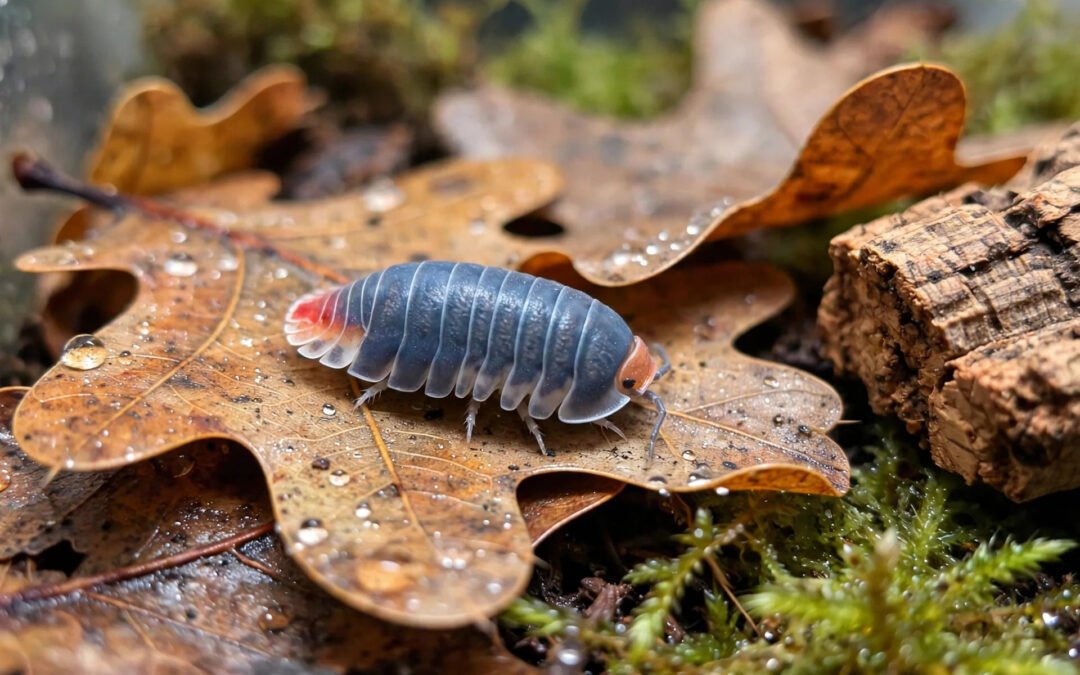
Cubaris sp. ‘Pak Chong’ care comes down to one balance that most care sheets state but never explain: high humidity with strong ventilation. Keep a starter group of 10–12 animals in a well-ventilated tub at 22–26°C, with 6–10 cm of deep organic substrate, a damp sphagnum moss retreat on one side and a drier end they can move to, feed leaf litter and rotting wood with a little vegetable and protein, and always keep calcium available. Do that, leave the colony alone for months, and you get one of the prettiest Thai Cubaris in the hobby — a blue-grey isopod with a reddish-orange head and tail, edged in white, sometimes sold as the “Pink-Faced Ducky”. Treat it like a hardy Porcellio and it will stall; seal it in a soggy box and it will die. This guide covers identification, the Thailand-versus-Vietnam origin confusion, the full setup, the temperature disagreement between sellers, the Red Pak Chong question, and the mistakes that actually kill colonies.
Pak Chong Isopod Care at a Glance
| Care point | What Pak Chong needs |
|---|---|
| Scientific name | Cubaris sp. ‘Pak Chong’ — an undescribed species sold under a trade name |
| Common names | Pak Chong isopod, Pink-Faced Ducky isopod |
| Origin | Pak Chong District, Nakhon Ratchasima Province, Thailand |
| Adult size | About 1.2–1.5 cm (roughly 0.5–0.6 in); sellers quote up to 1.8 cm |
| Lifespan | 2–3 years in good captive conditions |
| Difficulty | Intermediate — not a first isopod, but a fair first Cubaris |
| Temperature | 22–26°C (72–78°F); brief tolerance of 20–28°C, sustained heat above 28°C is dangerous |
| Humidity | 75–85% overall, with a moisture gradient — damp moss retreat on one side, drier end on the other |
| Enclosure | Shoebox-sized tub (about 30 × 20 × 15 cm) for a starter group; mesh-vented lid or large vent area |
| Substrate | 6–10 cm of deep organic substrate with decaying hardwood, leaf litter and a little sphagnum |
| Diet | Leaf litter and rotting wood always available; vegetables 2–3 times a week; protein once a week; calcium always available |
| Breeding | Moderate once established; small broods of about 5–15; 6–12 months to a self-sustaining colony |
| Behaviour | Shy, mostly nocturnal, burrows into deep substrate; rolls into a ball when disturbed |
What Is the Pak Chong Isopod?
The Pak Chong isopod is a small Thai Cubaris sold under the trade name Cubaris sp. ‘Pak Chong’. Adults are unmistakable once you have seen one: a blue-grey body, a reddish-orange head and tail end, and a thin white rim around every segment. That colour combination is the whole reason the animal sells — it looks like a tiny painted duck, which is why Terrarium Tribe markets it as the “Pink-Faced Ducky”. Juveniles are duller and plainer than adults, and the orange face deepens with age, so do not judge a culture by its smallest animals.
Two things about the name deserve honesty before you spend money. First, the species is undescribed. “Cubaris sp.” is a hobby trade label, not a confirmed species name — the animal has no formal scientific description, and the name should be treated as a designation linked to a real Thai region rather than a settled identification. Second, the origin is Pak Chong District in Nakhon Ratchasima Province, Thailand. Several seller pages get this wrong: one major shop claims the animals come from “caves of Vietnam, in the Pak Chong province”, which is simply incorrect — there is no Pak Chong province in Vietnam, and the Pak Chong District is in Thailand. A seller who cannot place the animal on a map is not automatically selling the wrong animal, but it is a small red flag for a shop that copies care sheets instead of keeping the species. The same Vietnam error appears on Panda King listings, so treat any “caves of Vietnam” claim on a Thai Cubaris page with suspicion.
Pak Chong is the parent line of the wider Pak Chong-region Thai Cubaris in the trade, which is why you will see closely related animals sold under nearby names. The best-known is Red Pak Chong, a line with a stronger red wash that sellers sometimes list as a separate animal and sometimes as the same animal under a different name. Our Panda King isopod guide covers the other famous Thai Cubaris, and the comparison table later in this guide puts Pak Chong next to it, the Rubber Ducky and the Blonde Ducky so you can see what your money actually buys.
Is Pak Chong Isopod Care Good for Beginners?
Honestly: not as a first isopod, but yes as a first Cubaris. Pak Chong sits in the intermediate tier. It is far more forgiving than a Rubber Ducky — it breeds faster, tolerates a wider humidity range, and costs a fraction of the price — but it is still a tropical Cubaris that punishes the two classic beginner mistakes: a sealed, soggy tub and a tub that dries out completely. If you have already kept a hardy species through a full breeding cycle, Pak Chong is a sensible step up. If you have never kept isopods at all, start with one of the animals in our guide to the best isopod species for beginners — Dairy Cow, Powder Blue or Zebra — and come back to Pak Chong once you have learned to read a moisture gradient.
There are two people who should skip it even after that. If you want an animal you will see every day, Pak Chong will disappoint you: it is shy, mostly active at night, and spends much of its life buried in deep substrate or under moss. And if you want fast results, this is the wrong animal — a Pak Chong colony takes 6–12 months to become self-sustaining, and the first mancae are so small you will need a magnifier and patience to spot them. For everyone else — a second or third colony, a display tub you enjoy maintaining, a breeding project with a beautiful payoff — it is one of the best-value Thai Cubaris you can buy.
Pak Chong Isopod Care: Enclosure Setup
Start a group of 10–12 animals in a smooth-sided, tightly lidded tub of about 30 × 20 × 15 cm — a shoebox-sized container is the standard starting point, and a 3-gallon terrarium works just as well. Add floor space as numbers rise, or split the colony across two tubs once it is established. Floor area matters more than height: these animals live on and in the substrate, not on the walls, and a tall tub with a small footprint is a worse home than a shallow tub with a large one.
Ventilation is the single most important structural choice, and it is where most Pak Chong colonies are lost. Plan the setup around a mesh lid or a large vent area, with air moving through the enclosure without drying out the moist side. A sealed shoebox with damp substrate everywhere is the most common reason hobby Pak Chong colonies fail: the substrate sours, mould blooms, and the animals climb the walls trying to escape air that has gone stale. Heavy condensation that never clears from the walls is a warning sign, not a sign of a healthy humid setup. Drill fine cross-ventilation holes on the sides and lid, or fit a mesh-vented lid, and cover every opening with fine mesh — the mancae are tiny white specks that can walk straight out through coarse mesh. Our full isopod enclosure setup guide walks through tub choice and ventilation in more detail, and our isopod ventilation guide explains how much airflow is enough.
Decorate simply. A generous layer of safe deciduous leaf litter across the whole surface, a piece or two of cork bark for hiding, and a thick patch of sphagnum moss on the moist end only. Lotus pods, coconut halves and egg carton all work as extra hides, but none of them is required. Pak Chong does not need plants, a water dish, or elaborate decoration — it needs leaf litter to eat, bark to hide under, moss to retreat into, and deep substrate to burrow in. Keep the enclosure out of direct sunlight: a sunny windowsill turns a small tub into a greenhouse and will cook the colony in an afternoon.
Substrate and the Moisture Gradient
Lay down 6–10 cm of deep organic substrate — deeper than the 5–8 cm that suits most isopods, because Pak Chong burrows. Mix pesticide-free topsoil with crushed hardwood leaves, soft rotten wood and a little sphagnum moss, then cover the surface generously with dry deciduous leaf litter. That substrate is not just bedding: it is the colony’s food, its humidity buffer and its nursery, all at once. If you want a tested recipe with exact ratios, our best substrate mix for isopods guide gives one that works for Pak Chong with the depth increased to the range above.
The moisture gradient is the whole secret of Pak Chong isopod care, and it is the thing most generic care sheets get wrong by omission. Keep the moss retreat and the substrate beneath it damp at depth, and let the surface become progressively drier toward the main vents. The colony must be able to move between moisture levels at all times: adults spend much of their time on the drier end, while newborn mancae — which dry out far faster than adults — live in the damp moss and the fine leaf litter around it. Pour water into the damp corner instead of spraying the whole enclosure. Pouring puts water where it belongs, at depth, without soaking the dry end or the leaf litter the animals eat.
Here is the opinion that matters most in this guide: daily whole-tub misting is overrated, and for this species it is actively harmful. Seller pages that tell you to “mist regularly and keep humidity high” are copying generic isopod advice onto an animal that needs high humidity paired with strong ventilation, not a uniformly wet enclosure. The two main ways Pak Chong colonies fail are drying out the newborns and sealing a wet box. Misting every surface every day causes the second failure while doing nothing for the first, because mist wets the surface and evaporates, while the damp moss retreat at depth is what the mancae actually need. Pour into the corner once or twice a week, check that the deep substrate there stays dark and squeezable, and leave the spray bottle in the cupboard. Our isopod humidity control guide explains the squeeze test and the gradient setup in detail.
Avoid fertilised compost, cedar and other aromatic woods, resinous conifer litter, and any collected material exposed to pesticides or road pollution. These are not minor preferences — cedar oils and pesticide residues kill isopods outright. Oak, beech and other deciduous leaves, collected away from roads and baked or frozen to kill hitchhikers, are the safe staple. Add springtails to the tub: they eat mould before it spreads, and in a humid Pak Chong setup that is not a luxury, it is insurance. Our springtails vs isopods guide explains how the two work together.
Pak Chong Isopod Care: Temperature and Humidity
The honest answer on temperature is that the sources disagree, and you should know that before you trust any single number. TC Insects, which keeps the species and writes the most careful care page available, recommends 72–78°F (22–26°C). Reptile Deli quotes 68–78°F (20–25°C). Reptanicals lists approximately 65–85°F — a range so wide it is useless as guidance, since the extremes at both ends can be lethal. The overlap — 22–26°C — is the safe target, and it is ordinary warm room temperature in most homes for most of the year, which is why this species needs no special heating in a normal heated room.
Two points on which the careful sources agree are worth more than the exact range. First, Pak Chong is a tropical animal that stays active near the upper part of its range and slows sharply in the cold — a colony kept below 20°C all winter will breed slowly or not at all. Second, sustained temperatures above roughly 28°C sharply increase the drying risk, and a hot tub dries from the surface down, killing the mancae first. If you need supplemental heat, apply it to one side of the tub above substrate level, regulate it with a thermostat, and never put a heat mat beneath the moist corner — heating the damp end cooks the refuge the colony depends on. Keep the tub out of direct sun and away from radiators. Our isopod temperature guide gives the safe ranges for the common species side by side.
For humidity, aim for 75–85% overall with the gradient described above: damp at depth on the moss side, dry surface everywhere else, and a humid retreat of sphagnum moss that never dries out completely. Do not chase a hygrometer number. The squeeze test — a handful of substrate from the damp corner should hold together and release a drop or two when squeezed, while substrate from the dry end should crumble — tells you more than any dial. No water dish is needed. Persistent lid condensation, mould spreading across the dry end, or animals climbing the walls in a crowd are all signals to check ventilation, heat and water volume in that order — ventilation first, because a sealed wet tub is the usual culprit.
Feeding Pak Chong Isopods
Feeding is the easiest part of Pak Chong isopod care. Leaf litter and decaying hardwood are the core diet and should always be available — they are the food the colony lives on between your feedings, not a garnish. On top of that, offer a little carrot, squash, zucchini or sweet potato two or three times a week, and a small protein portion once a week. Fish flakes are the easiest protein and the most underrated food in the hobby: a pinch of cheap fish flakes once a week does more for breeding than any boutique isopod blend, and Pak Chong takes it readily. Dried shrimp, turtle pellets and freeze-dried shrimp are all good alternatives. Our protein sources for isopods guide ranks the options if you want to vary it.
Calcium is non-negotiable. Like all Cubaris, Pak Chong needs a constant calcium source for its exoskeleton and for clean moults — cuttlebone, limestone, oyster shell or clean crushed eggshell, available at all times, not offered once in a while. Our calcium for isopods guide covers sources and schedules. Remove moist leftovers after 24 hours: in a humid Pak Chong tub, rotting vegetables grow mould fast and attract fungus gnats, and a tub full of mouldy food is a tub full of problems. Our full isopod feeding guide has the safe-vegetable list and the preparation steps, and our feeding vegetables to isopods guide covers which vegetables are safe and how to prepare them.
One warning about colour: no food will make a Pak Chong redder, bluer or more orange. Sellers who push “colour-enhancing” food for Thai Cubaris are selling you a story. The blue-grey body and the orange face are inherited, not fed — buy from a breeder who labels the line honestly instead of paying for food that cannot do what the label promises. The same goes for the Red Pak Chong premium: the stronger red wash is a line-bred trait, and it will not appear in your animals because you fed them carrots.
Breeding Pak Chong Isopods
Breeding is where Pak Chong isopod care rewards patience — and where it tests it. Pak Chong is a moderate breeder once established: females carry their eggs and embryos inside a fluid-filled pouch on the underside of the body, the marsupium, and release them as miniature mancae. There are no exposed eggs for you to incubate, and brooding females should be left completely undisturbed. Broods are small, about 5–15 young, and a starter group of 10–12 will usually show its first mancae within a few months if the temperature is 22–26°C and the damp refuge is deep enough for the newborns to survive. That is slower than the weedy Porcellio species, which is why a Pak Chong colony takes 6–12 months to become self-sustaining — but once it is going, it is steady rather than explosive.
Warmth and steady access to the moist end support breeding. If you want to maximise the breeding rate and the survival of the young, keep the temperature at the upper end of the range and deepen the damp refuge — but never flood the tub to do it. Keep fine leaf particles around the damp shelter for the newborns, because mancae feed on soft, fine detritus before they can tackle whole leaves. And when you split the colony, transfer all age groups together: a split that takes only adults leaves the mancae behind, and a split that takes only mancae leaves the colony without breeders. If your colony seems stuck, our isopod colony not breeding guide walks through the diagnostic checklist in likelihood order — for Pak Chong, check the damp refuge and the temperature first, because those two cause most stalls.
Quarantine new animals before adding them to an established colony. Sixty days in a separate tub lets you confirm the animals are feeding, moulting and breeding, and lets any hitchhiking mites or mould show themselves where they cannot spread. Our quarantining new isopods guide covers the setup and the daily checks. This matters more for Pak Chong than for cheap hardy species, because a single sick culture costs real money — and because a Cubaris colony that crashes from an introduced problem takes a year to rebuild.
Pak Chong vs Rubber Ducky, Panda King and Blonde Ducky
Pak Chong is usually bought alongside the other famous Thai Cubaris, so here is the honest comparison. Prices are typical US retail for a starter culture of 10–12 animals and move with availability — treat them as a guide, not a quote.
| Species | Adult size | Difficulty | Breeding speed | Typical price (10–12) | Best for |
|---|---|---|---|---|---|
| Pak Chong | 1.2–1.5 cm | Intermediate | Moderate; 5–15 per brood | $50–70 | First Cubaris; best value Thai ducky |
| Rubber Ducky | 1.2–2.0 cm | Advanced | Slow; 5–15 per brood | $150–250 | Patient keepers after a hardy species |
| Panda King | 1.0–1.5 cm | Intermediate | Steady; 5–15 per brood | $60–90 | First Cubaris; striking black-and-white pattern |
| Blonde Ducky | 1.2–1.8 cm | Intermediate–advanced | Slow to start | $120–200 | Keepers who want the pale ducky look |
The verdict is simple: if you want a ducky-type Cubaris and this is your first one, Pak Chong or Panda King is the right buy, and Pak Chong is usually the cheaper of the two. The Rubber Ducky costs three to four times as much, breeds more slowly, and forgives fewer mistakes — it is a trophy animal, not a starter animal. The Blonde Ducky sits between them on price and patience. Read our Blonde Ducky isopod care guide and our Cubaris murina care guide if you are weighing the whole genus before you buy.
Pak Chong vs Red Pak Chong: What’s the Difference?
This is the most common question about the species, and the trade makes it confusing. The standard Pak Chong has a blue-grey body with a reddish-orange head and tail and a white rim on each segment. Red Pak Chong — sometimes sold as “Red Pak Chong” and sometimes folded into the standard listing — is a line with a stronger, more extensive red wash. TC Insects describes the standard Pak Chong as the parent line of the Pak Chong-region Thai Cubaris in their catalog, with Red Pak Chong as a related line, while PostPods notes that the two are sold as separate animals and both as Thai. In practice, treat them as two lines of the same undescribed animal: the standard line is the cheaper, hardier, more available one, and the red line commands a premium for colour, not for easier care. If a seller charges a large premium for “Red Pak Chong” but cannot show you a photo of the actual animals, buy the standard line. The colour difference is real but small, and it is not worth double the price unless you have seen the animals yourself.
Common Pak Chong Problems and How to Fix Them
| Problem | Likely cause | Fix |
|---|---|---|
| Animals climbing the walls in a crowd | Stale air, sour substrate, or too much water | Increase ventilation first; check for sour smell; stop misting and let the dry end dry out |
| Mould spreading across the dry end | Sealed tub, over-misting, rotting food left in | Open up ventilation; remove mouldy food; add springtails; pour water only into the damp corner |
| No mancae after 6 months | Too cold, damp refuge too shallow, or colony too small | Raise temperature to 24–26°C; deepen the moss retreat; confirm at least 10–12 adults |
| Failed moults, animals stuck half-shed | Calcium shortage or the damp end dried out | Keep cuttlebone available at all times; re-wet the moss retreat and check the squeeze test |
| Colony shrinking, dead adults found | Heat spike, pesticide in leaf litter, or sour substrate | Move the tub out of sun and heat; replace suspect leaf litter; refresh the top substrate layer |
| Mites swarming the food | Overfeeding wet food in a humid tub | Remove all wet food for a week; feed dry leaf litter only; reduce protein portions |
One warning that applies to every problem above: do not “fix” a struggling Pak Chong colony by tearing the tub apart. A full substrate change destroys the mancae hiding in the damp leaf litter and resets the colony’s microfauna. Fix the air, the water and the food first, change only the top layer if you must change anything, and give the colony four weeks before judging whether the fix worked. Our isopod molting vs dying guide helps you tell a moulting animal from a dead one before you panic, and our mould and mites guide covers the two pests in detail.
Buying Pak Chong Isopods: What to Check
Buy a starter group of at least 10–12 animals — the hobby consensus for Cubaris is that smaller groups establish slowly and lose genetic diversity fast. Expect to pay roughly $50–70 for a group of 10–12 in the US, with Red Pak Chong lines higher; listings at $59.99 for six animals are common and poor value by comparison, so count the animals, not the headline price. Pak Chong sells out often — most major shops list it out of stock for long stretches — so if a reputable seller has it in stock at a fair price, that is a genuine reason to buy now rather than wait.
Before you pay, check four things. First, the photo should show the actual animals: blue-grey body, orange head and tail, white segment rims. A listing that uses a stock photo of a Rubber Ducky is selling you a story. Second, the origin should say Thailand, not Vietnam — the Vietnam claim is a copied error and tells you the seller does not keep the species. Third, the seller should state the count and the age; adults-only cultures skip the wait for breeding but cost more, while mixed-age groups are cheaper and establish just as well. Fourth, ask how the animals are shipped: Pak Chong should travel in damp sphagnum moss, with a heat pack in cold weather and a cold pack above 29°C. If the seller cannot answer any of these, buy from someone who can.
Frequently Asked Questions About Pak Chong Isopod Care
How big do Pak Chong isopods get?
Adults reach about 1.2–1.5 cm, with some sellers quoting up to 1.8 cm. They are a small-to-medium isopod — smaller and slimmer than a Dairy Cow isopod, about the same size as a Panda King, and noticeably smaller than the giant Porcellio species. Juveniles are duller than adults and colour up as they grow.
Do Pak Chong isopods need high humidity?
Yes, but paired with strong ventilation. They need 75–85% humidity with a moisture gradient: a damp sphagnum moss retreat on one side and a drier end on the other. A sealed, uniformly wet tub is the fastest way to kill this species. Pour water into the damp corner instead of misting the whole enclosure.
Are Pak Chong isopods good for beginners?
Not as a first isopod, but yes as a first Cubaris. They are intermediate: more forgiving and cheaper than a Rubber Ducky, faster to breed, and tolerant of a wider humidity range — but they still punish a sealed soggy tub and a tub that dries out. Keep a hardy species through one breeding cycle first, then step up to Pak Chong.
What is the difference between Pak Chong and Red Pak Chong?
Red Pak Chong is a line of the same undescribed animal with a stronger, more extensive red wash. Standard Pak Chong is the parent line: blue-grey body, orange head and tail, white segment rims. The red line costs more for colour, not for easier care — buy it only if you have seen the actual animals.
Where do Pak Chong isopods come from?
Pak Chong District in Nakhon Ratchasima Province, Thailand. Some seller pages wrongly claim Vietnam; there is no Pak Chong province in Vietnam, and the Thai origin is confirmed by the most careful care sources. The species is undescribed, so “Cubaris sp.” is a trade designation, not a confirmed species name.
How fast do Pak Chong isopods breed?
Moderately, once established. Females carry young in a marsupium and release broods of about 5–15 mancae. A starter group of 10–12 usually shows its first mancae within a few months at 22–26°C, and the colony takes 6–12 months to become self-sustaining. That is faster than a Rubber Ducky but slower than any Porcellio.
References
TC Insects — Cubaris sp. ‘Pak Chong’ care page (tcinsects.com): the most detailed Pak Chong care source available; temperature 72–78°F, humidity medium-high to high with strong ventilation, substrate 2.5–4 in, Thai origin, parent line of the Pak Chong-region Cubaris. PostPods — Cubaris Isopods guide (postpods.co.uk): Pak Chong described as reddish-orange head and tail, white rim, blue-grey body, sometimes traded as Red Pak Chong; Cubaris temperature 22–26°C and humidity 60–85% by species. Reptanicals — Cubaris sp. Pak Chong product page (reptanicalshop.com): difficulty Advanced, size 0.71 in, temperature approximately 65–85°F, moderate breeder with small broods; origin claim of Vietnam is incorrect. Reptile Deli — Pak Chong Cubaris Isopods product page (reptiledeli.com): temperature 68–78°F (20–25°C), moderate humidity with humid hide, $59.99 for six animals. Terrarium Tribe — Cubaris Pak Chong (Pink-Faced Ducky) product page (shop.terrariumtribe.com): 10 animals need at least a 3-gallon terrarium, misting every 3–4 days, high-humidity setup. VivKeeper — Isopod Care Sheets (vivkeeper.com): Cubaris species comparison table, 72–78°F and 70–90% humidity by species, moisture gradient and ventilation requirements.
Hello, I believe red pak chong is confirmed to be a different species based on genetic testings
Hi Iveel, thank you — you’re right, and it’s a good catch. Genetic testing shared by keepers last month found that Red Pak Chong is distinct from the standard Pak Chong, while Cherry Blossom turned out to be the same species as Red Pak Chong — just a pink colour morph bred from it. The formal taxonomy is still catching up (most of these Cubaris are still undescribed), so the guide keeps the wording cautious, but the distinction you mention is real. Thanks for reading!