
Blonde Ducky Isopod Care: The Complete Beginner’s Guide
Blonde ducky isopod care looks almost identical to rubber ducky care on paper — same warm, humid tub, same leaf litter, same limestone. That is exactly why so many keepers fail with them. The two animals share a care sheet, but the Blonde Ducky is slower, shyer, and far less forgiving of the small mistakes a rubber ducky colony shrugs off. This guide covers the real differences, the setup that actually works, and the honest timeline nobody selling them wants to put in big print: expect up to a year before your colony looks established.
What Is a Blonde Ducky Isopod?
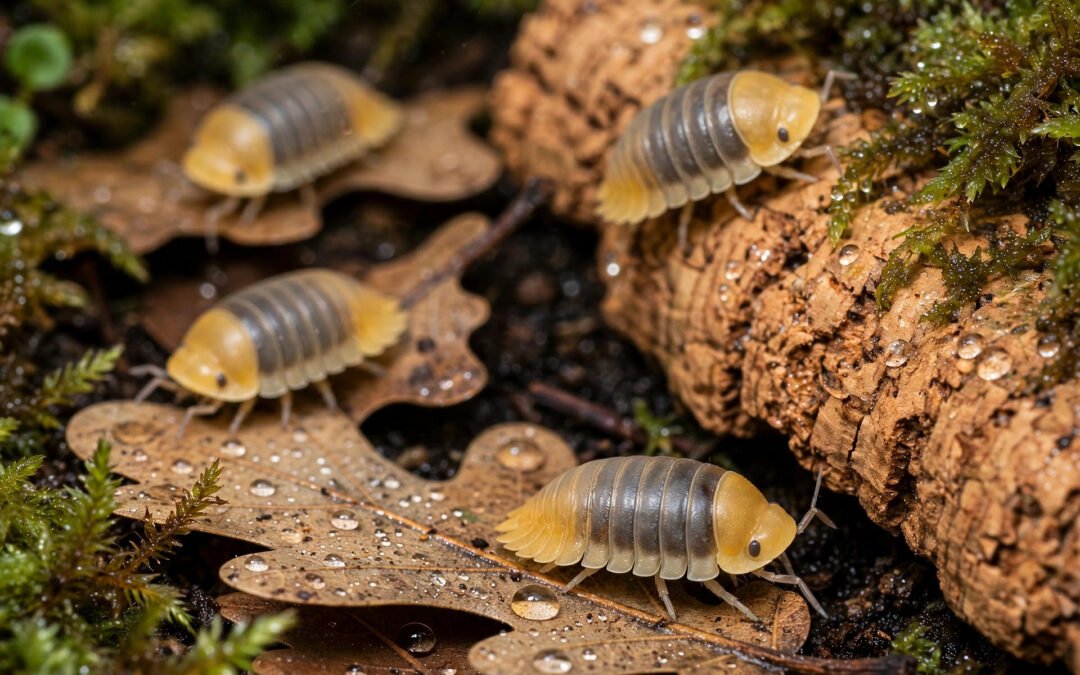
The Blonde Ducky is a Cubaris species from the cave systems of Southeast Asia, sold in the hobby as Cubaris sp. “Blonde Ducky”. It is the pale, blonde-yellow version of the famous Rubber Ducky isopod: same duck-shaped head, same ability to roll into a tight ball, but with a blonde-yellow head and tail and a grey-brown band across the middle instead of the Rubber Ducky’s darker brown. Adults reach roughly 2 cm long.
One thing worth knowing before you buy: whether the Blonde Ducky is a selectively bred colour form of the Rubber Ducky or a separate collection form from a different cave is genuinely debated. Specialist sellers such as TC Insects treat it as a separate collection form, not a morph, and the exact collection locality is not consistently confirmed across the trade. That uncertainty matters for one practical reason — you should buy from a seller who can tell you where their stock came from and show you clear photos of the actual animals, not a stock image of a rubber ducky with the brightness turned up. A culture labelled “Blonde Ducky” that arrives looking uniformly brown is either mislabelled or juvenile, and juveniles of many Cubaris look plain until they colour up.
Blonde Duckies are not a beginner’s first isopod, and no honest guide should pretend otherwise. They are an intermediate-to-advanced species because they combine three beginner-hostile traits: they need high humidity and real airflow at the same time, they breed slowly, and they punish disturbance. If you have never kept isopods before, start with a forgiving species such as Dairy Cow isopods or Powder Orange isopods, learn the moisture gradient on an animal that tolerates mistakes, and come back to Blonde Duckies second.
Blonde Ducky vs Rubber Ducky: What’s Actually Different?
Most care sheets copy the Rubber Ducky parameters across and stop there. The parameters are the same — but the animals are not, and the differences decide whether your colony thrives or quietly dwindles.
| Blonde Ducky | Rubber Ducky | |
|---|---|---|
| Colour | Blonde-yellow head and tail, grey-brown centre band | Darker brown body, yellow head and tail |
| Establishment time | Up to 12 months before the colony looks settled | Slow, but usually faster than Blonde Ducky |
| Breeding speed | Slow; small broods of 5–15 mancae | Slow; small broods |
| Price | Usually higher — a premium collector species | Expensive, but more widely available |
| Availability | Harder to find; fewer breeders | Widely sold |
| Care parameters | 72–80°F, 70–80% humidity | 72–80°F, 70–80% humidity |
The practical takeaway: if you want the ducky look and you want to see babies within a few months, buy Rubber Duckies first. Buy Blonde Duckies because you specifically want this animal and you are willing to watch a tub of leaf litter for a year. That is not a criticism of the species — it is the single most useful piece of buying advice in this guide.
Blonde Ducky Isopod Care: Enclosure Setup
A ventilated 6 US quart tub (about 5.7 litres) is the standard starter home for a culture of six to ten animals, and a shoebox-size tub or small 3-gallon terrarium works just as well. What matters is not the container but the airflow: Cubaris need humid air that still moves. Drill or melt ventilation holes along the upper sides of the tub and in the lid, and cover them with fine mesh if you keep the tub anywhere near other cultures. Stale, still air is the most common reason a Cubaris colony crashes — the animals suffocate slowly in their own damp, oxygen-poor air long before any mould shows up.
Furnish the tub the way a cave floor works: cork bark flats for hides, a thick layer of oak or magnolia leaf litter across the whole floor, and pieces of rotting white wood scattered through it. Add a few pieces of limestone or crushed coral — Blonde Duckies use more calcium than most temperate isopods, and limestone doubles as both a calcium source and a hiding surface. Keep a patch of sphagnum moss on the moist side; it holds humidity between waterings and gives the animals a damp refuge. Do not build a display terrarium with a sealed glass lid and no cross-ventilation — that is a greenhouse, not a home, and it will kill them.
One rule that saves more colonies than any gadget: leave a new culture alone for the first three months. Do not rehouse them, do not tip the tub up to count them, do not dig through the leaf litter looking for babies. Blonde Duckies settle slowly, and every disturbance resets the clock. Set the tub up properly on day one, then practise the hardest skill in Cubaris keeping — doing nothing.
Blonde Ducky Isopod Care: Temperature and Humidity
Keep Blonde Duckies at 72–80°F (22–26°C) and 70–80% humidity, with good airflow. Those two numbers are agreed across every serious source, from TC Insects to Crawler Island. The disagreement is only at the edges — some sellers list a wider 65–85°F survival range — but survival is not thriving, and you should treat 72–80°F as the real target. Avoid letting the tub sit below 65°F or above 85°F for long; cold slows them to a standstill and heat in a sealed, humid tub is lethal fast.
Humidity is where beginners get into trouble, because the number on a hygrometer matters less than the gradient in the tub. Keep roughly one-third of the floor genuinely moist and two-thirds dry, so the animals can choose. Here is the opinion most care sheets will not print: daily whole-tub misting is overrated, and for this species it is actively harmful. Misting the entire surface every day keeps the dry side damp, collapses the gradient, and invites the mould and mite outbreaks that high-humidity tubs are famous for. Pour water into the moist corner instead — a small, controlled pour that soaks the substrate there — and mist only lightly, two or three times a week, when the gradient starts to fade. The squeeze test beats the hygrometer here: grab a handful of substrate from the moist side; it should clump without dripping. If water runs out, it is too wet; if it crumbles, it is too dry. For the full mechanics of gradients, see our isopod humidity control guide.
Pair the culture with springtails from day one. In a tub this humid, springtails are not optional decoration — they are the cleanup crew for the moist zone, eating mould before it can take hold. The isopods cannot manage that layer alone. A springtail culture costs almost nothing and is the cheapest insurance a Blonde Ducky keeper can buy.
Blonde Ducky Isopod Care: Substrate and the Moisture Gradient
Substrate depth is the one place the good sources disagree, so here is the honest picture. TC Insects recommends 6 or more inches of organic substrate; Crawler Island’s guide uses 5–8 cm (2–3 inches). Both keep animals alive, which tells you the exact number matters less than the structure: deep enough to hold a stable moisture gradient, loose enough to breathe. In practice, 4–6 inches (10–15 cm) of a proper mix is the sweet spot for a standard tub — deep enough that the bottom stays damp while the surface dries, shallow enough that the lower layers do not go anaerobic and sour.
Mix coconut coir or peat with aged hardwood, crushed limestone, and a thick cap of oak or magnolia leaves. The leaf litter is not bedding — it is food, shelter, and the surface the animals actually live on, so keep it topped up and never let the tub run bare. For the full recipe and ratios, see our best substrate mix for isopods guide, and for how deep to go by species, our substrate depth guide.
Two mistakes kill more Cubaris than anything else: substrate that is wet all the way through with no dry side, and substrate that has dried out completely because the keeper was afraid of the first mistake. The gradient is the whole game. Water one corner, leave the rest alone, and let the animals vote with their feet — if they are all huddled on the dry cork bark, the tub is too wet; if they are all buried in the wet corner, it is too dry.
Feeding Blonde Ducky Isopods
Leaf litter and rotting white wood are the staple diet and should never run out. On top of that, offer small supplements once or twice a week: vegetables such as carrot, sweet potato, squash, or cucumber, and a protein source such as fish flakes, dried shrimp, or a quality isopod diet mix. Remove uneaten fresh food within 24–48 hours — in a tub this humid, a forgotten piece of squash becomes a mould farm overnight.
Calcium deserves its own paragraph because Cubaris are heavy calcium users. Provide limestone as the primary source and keep a secondary source — cuttlebone or crushed coral — available at the same time. Multiple calcium sources offered simultaneously work better than any single one, because the animals pick what they need and the limestone also buffers the substrate. A culture without constant calcium access will show it in failed moults: animals stuck half out of their old shell, or dying mid-moult. See our calcium for isopods guide for sources and schedules.
One claim worth treating with suspicion: some sellers suggest vegetables high in carotenoids — carrot, sweet potato, pumpkin — support the Blonde Ducky’s yellow colouring. It is a plausible idea and the vegetables are good food anyway, but there is no solid evidence that diet changes their colour, and colour in this species is mostly genetics and age. Feed carotenoid vegetables because they are nutritious, not because you expect a colour upgrade. And keep protein modest and regular rather than large and rare — a pinch of fish flakes twice a week beats a feast once a month, and overfeeding protein in a humid tub is the fastest route to a mite explosion. Our protein sources guide covers the options in detail.
Blonde Ducky Isopod Care: Breeding and the Long Wait
Blonde Duckies breed slowly. Females carry their young in a marsupium pouch and release broods that are often just 5–15 tiny mancae, which hatch looking like miniature adults. Compared with a Porcellio species that can flood a tub with babies in weeks, this feels glacial — and that is normal.
The establishment timeline is the most important honest note in this guide. Expect a long, quiet phase before the first mancae appear, and give a new culture 6–12 months before you judge it — TC Insects puts the full establishment at up to a year, longer than the already-slow Rubber Ducky. Keepers who expect results within a month will conclude the colony is failing when it is simply being a Cubaris. Minimal disturbance, consistent temperature, consistent humidity, and steady calcium access are the breeding conditions. There is no trick, no food, and no supplement that speeds this up; the only accelerator is stability.
Do not harvest heavily from a young culture. Give the colony that first year to build numbers, and only then take animals for trades or sales. A culture that looks “stuck” at six animals for months is usually a culture that is still settling — check the conditions, not the headcount. If you suspect a real breeding problem rather than impatience, run through our colony not breeding troubleshooting checklist before changing anything.
Common Problems and How to Fix Them
| Symptom | Likely cause | Fix |
|---|---|---|
| Animals always on the dry side, avoiding the wet corner | Moist side waterlogged or anaerobic | Stop watering for a week, add dry leaf litter, check for sour smell |
| Animals all buried in the wet corner | Tub too dry overall | Pour water into the moist side, add damp sphagnum moss |
| Mould spreading across food and litter | Overfeeding + poor airflow | Remove uneaten food, add ventilation, add springtails |
| Tiny white mites swarming food | Excess protein or food left too long | Cut protein portions, remove food after 24 hours, let the dry side dry |
| Animals dying mid-moult | Calcium shortage or humidity crash | Add limestone + cuttlebone, restore the moisture gradient |
| No babies after 6+ months | Usually normal for this species | Check temperature and calcium first; otherwise wait — up to a year is normal |
| Colony shrinking, dead animals on the surface | Stale air, heat spike, or contaminated food | Increase ventilation, check temperature, remove suspect food, quarantine if spreading |
Two of those rows deserve emphasis. First, a moulting isopod lying still on its side is usually not dying — moulting looks alarming and the animal is vulnerable, so never “rescue” it by handling it. Second, if deaths are spreading rather than isolated, quarantine the culture the way you would any new arrival: separate tub, fresh substrate, no shared tools. Our quarantining guide applies to sick cultures as well as new ones.
Should You Buy Blonde Ducky Isopods?
Buy them if you want this exact animal, you already keep isopods successfully, and you can accept a year of patience. Do not buy them as your first isopod, do not buy them expecting fast breeding, and do not buy the cheapest listing you can find — in this corner of the hobby, the cheapest culture is often the one with the murkiest origin, and a mislabelled culture costs more in wasted time than the saving was worth.
Before you order, ask the seller three questions: where did this stock originate, how old is the culture, and can I see photos of the actual animals for sale? A good seller answers all three without hesitation. When the animals arrive, give them the first-week treatment every new culture deserves — set up the tub first, move them in gently, offer leaf litter and a calcium source immediately, and then leave them alone for at least a week before your first proper check. Quarantine them away from your other cultures for a few weeks, as with any new arrival.
And the honest verdict: the Blonde Ducky is a collector’s isopod, not a starter pet. The blonde colouring is genuinely beautiful, the ducky face is as charming as the photos promise, and a settled colony is deeply satisfying. But the price, the wait, and the unforgiving humidity balance mean most keepers will be happier starting with the Rubber Ducky — or with a hardy beginner species — and adding Blonde Duckies once they have a year of successful keeping behind them. There is no shame in that order. The animals will still be there when you are ready.
Blonde Ducky Isopod Care FAQ
Are Blonde Ducky isopods the same as Rubber Ducky isopods?
No. They are closely related Cubaris from the same cave systems and share identical care parameters, but the Blonde Ducky is a lighter, blonde-yellow form treated by specialist sellers as a separate collection form, not a colour morph. It is also slower to establish — up to a year, versus the Rubber Ducky’s already-slow pace.
How long do Blonde Ducky isopods live?
With proper care, around 2–3 years. Like most Cubaris, they are relatively long-lived for isopods, but lifespan depends heavily on stable temperature, constant calcium, and avoiding the humidity crashes that cause failed moults.
How often should I mist a Blonde Ducky enclosure?
Mist lightly 2–3 times a week, and pour water into the moist corner when the gradient fades. Daily whole-tub misting is overrated and often harmful — it collapses the moisture gradient and encourages mould. Judge by the squeeze test, not the calendar.
Why aren’t my Blonde Ducky isopods breeding?
Most likely they are still establishing. Broods are small (5–15 mancae) and a new culture can take 6–12 months to produce visible babies. Check temperature (72–80°F), humidity (70–80%), and calcium access first — then wait. Only suspect a real problem if animals are also dying.
Do Blonde Ducky isopods need springtails?
Yes — treat them as mandatory, not optional. In a tub kept at 70–80% humidity, springtails control mould in the moist zone that the isopods cannot manage alone. Add them on day one.
References
TC Insects — Cubaris sp. “Blonde Ducky” product and care page (tcinsects.com). Crawler Island — Blonde Ducky Isopods Care Guide (crawlerisland.ca). Reptanicals — Cubaris sp. Blonde Ducky Isopods product page (reptanicalshop.com). Terrarium Tribe — Blonde Ducky Isopods product page (shop.terrariumtribe.com).
Species-variation disclaimer: Blonde Ducky isopods are a cave-origin Cubaris form, and care advice varies between breeders. The ranges in this guide reflect the agreement across specialist sources; individual cultures may prefer the warmer or cooler end of the range. Observe your own animals and adjust the gradient to their behaviour.