
Can Powder Blue and Powder Orange Isopods Live Together?
If you keep isopods, you have probably asked this exact question: can powder blue and powder orange isopods live together? The short answer is yes — they get along perfectly well in the same tub. But the honest answer is more interesting, because the question itself contains a surprise: Powder Blue and Powder Orange are not two different species at all. They are two color forms of one single species, Porcellionides pruinosus, and that one fact changes everything about what happens after you mix them.
This guide gives you the straight answer, explains what really happens to the colors over time, and helps you decide whether mixing is right for your setup — a bioactive cleanup crew, a display tank, or a breeding project. The three situations have three different answers.
The Short Answer: Yes, They Live Together Peacefully
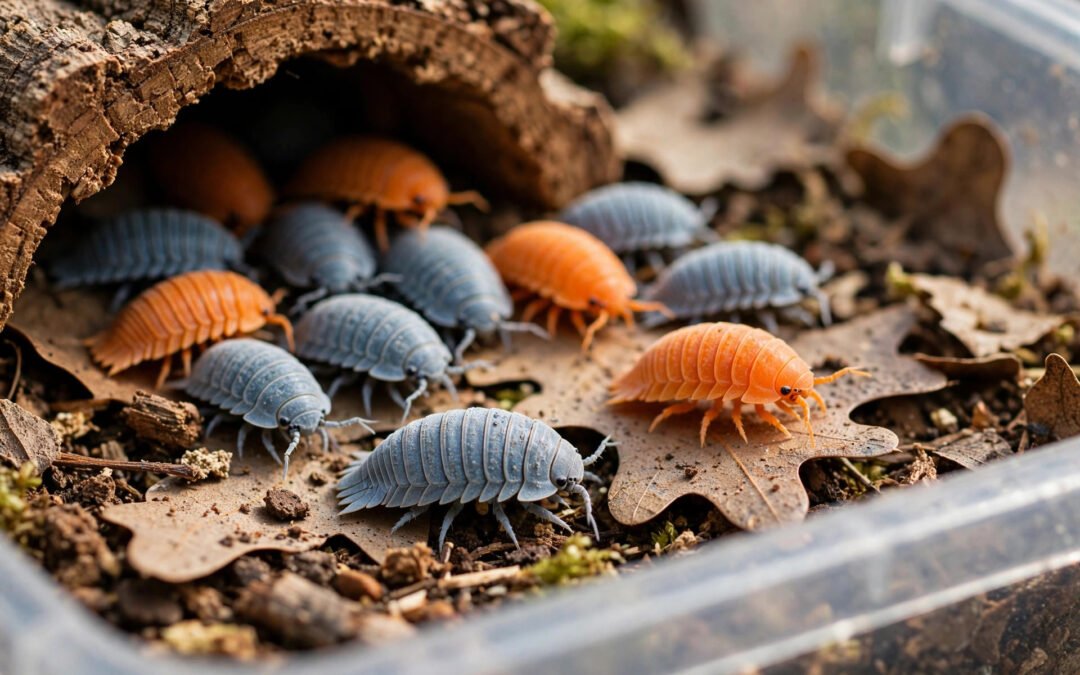
Powder Blue and Powder Orange isopods share identical care needs: the same moisture range, the same foods, the same temperatures, and the same fast, active temperament. Neither one bullies, eats, or harms the other. In a well-set-up tub, you will see blue and orange animals clustered under the same piece of cork bark, eating the same leaf litter, and breeding at the same enthusiastic pace. There is no fighting to worry about, and no special divider or separate zone is needed.
So if your only worry was aggression, relax. The real question is not whether they can live together — it is whether you will still have two distinct colors a year from now. That is where most keepers get caught out.
The Twist: They Are the Same Species
Both morphs are Porcellionides pruinosus, a small, fast-breeding Mediterranean species that has become one of the most popular beginner isopods in the hobby. “Powder Blue” is the blue-grey color form; “Powder Orange” is the bright orange color form. Same animal, different paint job — like a black Labrador and a yellow Labrador.
This matters for two reasons. First, it means their care is truly identical, so no compromise is needed on humidity, food, or temperature. Second, and far more importantly, it means they will interbreed freely. Put a blue and an orange together and you will get babies — and those babies will not stay neatly blue or orange.
What Actually Happens When You Mix Them
Here is the part almost no short answer tells you. The orange color in Powder Orange isopods is recessive, which means it only shows when an isopod inherits the orange version of the gene from both parents. Blue-grey is the dominant, wild-type look.
When blue and orange animals breed together, most of the first-generation babies look blue-grey — even though many of them secretly carry the orange gene. Breed those babies together, and orange animals start reappearing in later generations, but only in a minority. Left to themselves over many months, a mixed colony gradually drifts toward blue-grey, with orange animals becoming rarer and rarer unless you deliberately pick them out and breed them on.
This is not a defect or a health problem. The colony is thriving. It just stops looking like two colors. Keepers who bought both morphs for a two-tone display are often disappointed six months later when the tub looks mostly blue — not because anything went wrong, but because nobody told them the genetics.
The honest rule: mixing Powder Blue and Powder Orange is safe for the animals, but it costs you the color lines. If the colors are the reason you bought them, keep them apart.
So, Can Powder Blue and Powder Orange Isopods Live Together? Three Situations, Three Answers
The right answer depends on what the tub is for:
1. Bioactive cleanup crew — mix freely
If the isopods are a working cleanup crew in a reptile or planted vivarium, mix away. The job is eating waste and leaf litter, not preserving colors, and a mixed P. pruinosus crew does that job brilliantly. This is the one situation where every source agrees: genetics do not matter, and the colony’s vigor is all that counts.
2. Display tank — mix, but know what you are signing up for
A mixed tub looks spectacular at first: bright orange against dusty blue on dark leaf litter. Enjoy it, but expect the balance to shift over generations. If you want the two-tone look to last, top the colony up with fresh orange animals now and then, or keep a small separate orange-only tub as your “color bank” and restock the display from it.
3. Breeding project or selling cultures — keep them separate
If you plan to sell or trade “pure” Powder Orange, or you want to track a line’s genetics, one morph per tub is the only reliable method. A mixed tub cannot produce a guaranteed pure orange culture, and buyers who paid for orange will rightly be unhappy with blue-grey babies. Serious breeders run separate tubs and label them clearly.
How to Keep Your Color Lines Pure
If you decide to keep the morphs separate, the method is simple:
- One morph per tub. No exceptions, no “just a few” strays — a single orange male in a blue tub is enough to start the drift.
- Quarantine new arrivals. New cultures sometimes contain hitchhiker morphs. Hold them separately for a few weeks and check the colors before they join your main line. Our guide to quarantining new isopods walks through the full routine.
- Select, don’t just hope. In an orange-only tub, remove any blue-grey animals that appear — they are carriers showing the dominant color. Breeding only orange to orange keeps the line clean.
- Label everything. Tubs that look identical from the outside get mixed up. A strip of tape with the morph name and start date prevents the most common beginner mistake in this hobby.
What If You Already Mixed Them?
Do not panic, and do not throw the colony away. A mixed colony is healthy and useful. If you still want a pure orange line, start a second tub with only the most vividly orange animals from the mixed colony and breed orange to orange from there. It takes a few generations for the line to stabilize, but keepers recover clean lines this way all the time. The mixed tub itself makes a superb bioactive crew or display tank — it has lost nothing except its label.
What About Mixing Other Isopod Species?
The Powder Blue and Powder Orange case is the easy one, because they are the same species. Mixing genuinely different species follows stricter rules, and beginners should know the ladder:
- Same species, different morphs: safe to house together, but colors blend — the Powder situation described above. Our isopod morphs explained guide covers how morphs work in more detail.
- Same genus, different species: usually safe from cross-breeding, but rare crosses have been reported in the hobby (the best-known involves Armadillidium species), and the faster breeder tends to crowd out the slower one.
- Different genera: no cross-breeding risk, but competition is real. A prolific species like Porcellio laevis will out-eat and out-breed a slow species like a Cubaris in the same tub, and the slow species fades away over months.
- Isopods plus springtails: the one combination that is always recommended. Springtails eat mold and microscopic debris while isopods handle the big pieces, so they help rather than compete. See our springtails vs isopods guide for the full breakdown.
The general rule experienced keepers repeat is simple: one species per tub for any breeding colony, and mixing only where genetics do not matter. It sounds strict, but it prevents the slow, quiet losses — a faded color line, a vanished species — that beginners only notice months later.
Signs Your Mixed Colony Is Doing Fine
Whether mixed or separate, a healthy P. pruinosus colony shows the same signs: animals active at night, plenty of tiny white mancae (babies) under bark and leaves, steady eating of leaf litter and vegetables, and regular molts. If you see those, the mix is working. Warning signs have nothing to do with color: a colony that hides constantly, stops breeding, or shows die-offs points to a moisture, food, or ventilation problem, not a mixing problem. Check the moisture gradient and food supply first — those fix nine out of ten colony troubles.
Common Mistakes Keepers Make
- Buying a “powder mix” pack and expecting permanent variety. Sellers are upfront about this if you read the listing: mixed morph packs are starter or display cultures, and the colors blend over generations. The pack is not a scam — but it is not a permanent rainbow either.
- Assuming blue is “winning” because it breeds faster. The drift toward blue is mostly genetics, not speed. Both morphs breed at a similar pace; the dominant color simply shows up more often.
- Mixing, then trying to sell the offspring as pure. This is the one mistake that costs trust. If a culture has ever been mixed, say so when trading or selling.
- Overthinking aggression. New keepers worry most about fighting, which is the least of the issues here. The genetics question is the one that actually matters, and it is the one most short answers skip.
Frequently Asked Questions
Can powder blue and powder orange isopods live together in a small tub?
Yes. Tub size does not change the answer — they share the same needs and temperament. A small tub just means the color drift shows up sooner, because the population turns over faster.
Will the babies be blue, orange, or something in between?
Mostly blue-grey at first, because orange is recessive. You will not get a stable 50/50 split, and you will not get a new blended color — the babies are one or the other, with blue-grey dominating.
Can I separate them again later and get pure lines back?
Partly. Pull out the orange animals and breed orange to orange, and you can rebuild a mostly-orange line over a few generations. A genetically guaranteed pure line, though, can only come from animals that were never mixed.
Do powder blue and powder orange isopods fight?
No. They cluster together peacefully like any single-species colony. Any “fighting” a keeper sees is usually just normal jostling at a food item.
Can I mix powder morphs with Dairy Cows or other species?
For a bioactive crew, yes — Powders are famously good tankmates. For breeding, no: Dairy Cows (Porcellio laevis) are larger, faster-breeding, and will outcompete the smaller Powders for food over time. Keep breeding colonies separate.
Which should I start with if I only want one?
Powder Orange, for most beginners. It is the most forgiving first isopod in the hobby, its bright color makes colony health easy to judge at a glance, and it is usually the cheaper culture. Read our full Powder Orange care guide and Powder Blue care guide before choosing, and our breeding basics guide if you plan to grow the colony.
References
- PostPods, “Can Different Isopods Live Together in One Tub?” — postpods.co.uk
- Reptile Knowledge, “What is a Blue Isopod?” — reptileknowledge.com
- TC Insects, “Porcellionides Pruinosus Powder Mix” — tcinsects.com
Disclaimer: This guide is based on widely reported keeper experience and breeder guidance. Individual colonies vary, and color expression can differ between lines. If you plan to sell cultures, label mixed lines honestly.
Can Powder Blue and Powder Orange Isopods Live Together
Yes, powder blue and powder orange isopods can live together. They are the same species, Porcellionides pruinosus, just different color forms, so they do not fight and they share the same care needs. Keep in mind that the two colors will breed with each other, and because their offspring are mostly the blue-grey wild type, a mixed colony gradually loses its bright orange. If you want clean lines of each color, keep them in separate tubs, but if you want a lively bioactive clean-up crew, a mixed colony is perfectly fine.