
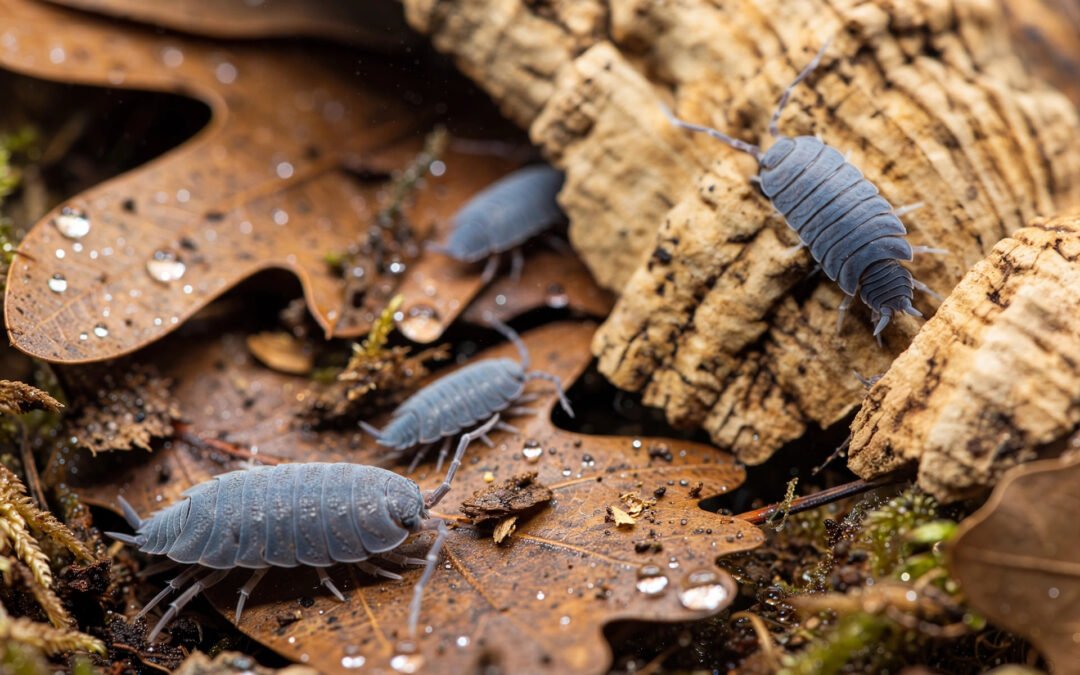
Quick Answer: Powder blue isopods (Porcellionides pruinosus ‘Powder Blue’) are a beginner species that need a ventilated tub at 20–26°C (68–80°F), moderate humidity with one reliably damp corner, and a leaf-litter base with vegetables, protein 1–2 times a week, and calcium. They are fast, visible during the day, and breed very fast — plan for a colony that can double in a matter of weeks.
Powder Blue Isopod Care: The Complete Porcellionides Pruinosus Guide
Every hobby has a boring workhorse — the species nobody posts about, yet every serious keeper has a tub of. In the isopod hobby, that species is Porcellionides pruinosus, better known as the powder blue isopod. This powder blue isopod care guide explains why the cheapest, plainest-looking isopod on most vendor lists might be the smartest first purchase you ever make.
Powder blues are fast, visible during the day, absurdly forgiving, and breed like they have rent due. They clean bioactive enclosures, serve as soft-bodied feeders for small insectivores, and shrug off mistakes that would end a pricier colony. The catch? That same hardiness turns into a management problem within months — and honest powder blue isopod care means planning for that success, not just the easy start. Here is the full picture — the easy setup, the honest pitfalls, and the things the thin care sheets leave out.
Powder Blue Isopod Care at a Glance
| Feature | Detail |
|---|---|
| Scientific name | Porcellionides pruinosus |
| Morph name | “Powder Blue” — a captive-bred trade designation, not a wild locality |
| Adult size | Up to ~12 mm |
| Difficulty | Beginner |
| Temperature | 20–26°C (68–80°F) |
| Humidity | Moderate overall, with one reliably damp corner |
| Diet | Leaf litter base + vegetables + protein 1–2× weekly + calcium |
| Breeding speed | Very fast — cultures can double in a matter of weeks |
| Best for | Cleanup crews, beginner colonies, soft-bodied feeder cultures |
What Makes Powder Blue Isopods Different
Porcellionides pruinosus is a cosmopolitan species with Mediterranean origins that has hitchhiked around the world through plant trade. It turns up in gardens, greenhouses, and compost piles on nearly every continent — which tells you most of what you need to know about its toughness.
The dusty blue “powder” is a waxy coating of microscopic organic spheres on the exoskeleton. It plays a real biological role: it increases the animal’s hydrophobicity and helps manage water loss. The coating is deposited early in each molt cycle, which is why freshly molted individuals look their bluest — and why the powder gradually rubs off with age and handling. If your older animals look a little duller, that is completely normal, not a disease.
Unlike the shy species that vanish under bark for weeks, powder blues are active, quick, and out in the open during the day. For a beginner, that visibility matters: you can actually see whether your colony is thriving, eating, and breeding, instead of guessing from an empty-looking tub.
Here is an underrated use most powder blue isopod care guides never mention: powder blues make an excellent “canary colony.” Before trusting an expensive species to a brand-new bioactive build, run a cheap powder blue culture in it for a month. If the powder blues thrive, your moisture, ventilation, and substrate are proven. If they struggle, you have learned that lesson on a $12 culture instead of a $120 one.
The Powder Blue Morph Family, Honestly Explained
“Powder Blue” is one color form of a single species. The same animal is also sold as Powder Orange, White Out, Oreo Crumble, Red Koi, Papaya, Glacier, and several others. Care is identical across the whole family — if you keep one morph, you can keep them all the same way. Our Powder Orange isopod care guide runs exactly the same playbook, just in a different coat.
One thing worth saying plainly: “Powder Blue” is a hobby trade designation for a captive-bred color line, not a separate species and not a confirmed wild locality. Any listing that implies an exotic wild origin for the morph is selling you a story. Morph prices reflect aesthetics and breeding effort, not different care requirements. Therefore, there is no reason to pay collector prices expecting a different animal.
My honest take: chasing rare pruinosus morphs as “investments” is overrated. The underrated move is the plain powder blue itself — cheapest on the list, hardiest of the bunch, and the most useful colony you will ever own.
Powder Blue Isopod Care: Enclosure Setup
Any ventilated plastic tub from 6 quarts up works for powder blue isopod care, and a 12-quart box is a comfortable starting point. The one planning mistake beginners make is size: powder blues breed so quickly that a small tub fills up within a few months. Start with room to grow, or plan to split the colony.
Ventilation matters more for this species than for most isopods. Sealed, stagnant tubs with no airflow tend to develop mite blooms and crash pruinosus cultures — it is the single failure mode this otherwise bulletproof animal will not tolerate. Give the lid real cross-ventilation, but cover vents with fine mesh (120 mesh or finer): the juveniles, called mancae, are tiny enough to walk straight through pinholes.
Powder blues are also good climbers, so use a tight-fitting lid and keep a 2–3 cm dry band at the top of the tub walls — they are far less inclined to wander across dry plastic. Our full isopod ventilation guide walks through vent placement and airflow dialing in detail.
Powder Blue Isopod Care: Substrate & the Moisture Gradient
Lay down around 5 cm of a genuinely nutritious base — flake soil blended with white-rotted hardwood and organic topsoil — rather than plain inert coco coir, which feeds nothing. Top it with a generous layer of hardwood leaf litter and a few pieces of cork bark for cover; powder blues spend most of their downtime wedged underneath something, and extra surfaces effectively enlarge the tub. The exact ratios are in our best substrate mix for isopods recipe.
Then build a moisture gradient: keep one end of the enclosure damp and let the other run drier. A pocket of damp sphagnum moss or a moist leaf-litter pile in the damp corner gives molting and breeding animals the humid retreat they need. Magnolia leaves are worth singling out here — they stand up well to a colony that eats at powder blue speed. Never keep the whole tub uniformly soaking; damp corner plus real ventilation is the formula.
Powder Blue Isopod Care: Temperature & Humidity
The practical working range is 20–26°C (68–80°F). An ordinarily heated room is fine, and the colony breeds better with a little extra warmth from autumn through spring. Reproduction picks up at the warmer end of the range, but sustained heat above the mid-80s without strong ventilation will stress the colony — airflow and heat have to move together.
Humidity should be moderate overall, roughly 45–80%, with that one reliably moist corner. Powder blue isopod care sits in a forgiving middle zone here: they handle a drier average enclosure better than moisture-hungry species like Cubaris, but they should never be kept fully dry. In arid setups such as some leopard gecko enclosures, they can survive if a protected humid hide is always available — just expect them to breed far less productively than they would in a typical bioactive build.
Powder Blue Isopod Care: Feeding
Leaf litter is the staple, and these animals work through it fast — that appetite is exactly what makes them such effective cleaners, but it also means you must top the litter up regularly rather than treating it as decoration. Supplement with vegetables and a little protein such as fish flakes or dried shrimp once or twice a week, and keep a calcium source like cuttlebone available at all times for healthy molting. Our isopod feeding guide, protein sources for isopods, and calcium for isopods articles cover each piece in depth.
In addition, clear away uneaten fresh food before it molds — basic powder blue isopod care hygiene that prevents most mite problems. And here is the honest warning most care sheets skip: if the leaf litter runs out, hungry pruinosus can and will turn on live plants. A colony that starts nibbling your plants is not misbehaving — it is telling you the litter layer needs topping up.
Breeding Powder Blue Isopods
If you want an isopod that multiplies, this is one of the best choices in the hobby. Breeding is the easiest part of powder blue isopod care: give a healthy group stable, well-fed conditions and the colony builds fast on its own. Females carry their eggs in a visible white brood pouch (the marsupium) between the legs, and the young hatch as miniature adults called mancae within a few weeks, hiding under leaf litter and bark at first.
In fact, a starter group of 12–20 animals is plenty — and here is the overrated habit to avoid: buying a 50-count starter “to get going faster.” With powder blues, 12 becomes hundreds within a few months under good conditions; as a result, the extra 38 were never going to matter. Sub-adults can even begin breeding before reaching full size, which is part of why the population curve looks so steep. The full mechanics are in our isopod breeding basics for beginners guide.
Powder Blue Isopod Care: Managing the Population Explosion
This is the section the thin powder blue isopod care guides skip, and it is the one you will actually need. Within months of starting, your tub can hold hundreds of powder blues. That is a good problem — as long as you have a plan for it:
- Split the colony. Set up a second tub with fresh substrate and move a scoop across. Two medium cultures are more resilient than one overcrowded one.
- Trade or sell locally. Powder blues are always in demand as starter cultures and feeders; hobby groups and local reptile keepers will take them.
- Seed bigger bioactives. Extra animals make excellent free cleanup crews for larger terrariums — move them, don’t waste them.
- Use them as feeders. Their soft bodies make them a handy supplemental feeder for small insectivores, though they work better as an occasional supplement than a daily staple diet.
One firm rule: never release extras outdoors. The species is already cosmopolitan, but your local ecosystem does not need your spare colony.
Common Powder Blue Isopod Problems & Fixes
Culture crash in a sealed tub. The classic powder blue isopod care failure: a closed, uniformly wet bin with no airflow invites mite blooms and colony crashes. Fix the setup, not the animals — vented lid, moisture gradient, one damp corner.
Grain mites. Usually a symptom of stagnation and uneaten protein sitting too long. Improve airflow, remove old food promptly, and add springtails — they compete with mites for the same resources. See our springtails vs isopods comparison for how the two work together.
Escapes. They climb, and mancae fit through surprisingly small holes. Tight lid, mesh over every vent, and that dry band at the top of the walls.
Faded powder coating. Normal with age and handling — freshly molted animals always look bluest. Not a disease, and not a care failure.
Plants getting nibbled. Top up the leaf litter. Hungry colonies eat what is available.
Colony stalled in winter. A little supplemental warmth usually restarts breeding; cool rooms slow them down without harming them.
Finally, handle the animals gently and infrequently — the coating rubs off with rough handling. Our guide to handling isopods safely covers the technique.
Powder Blue Isopods as a Cleanup Crew
As a bioactive cleanup crew, powder blues are close to ideal: fast, hungry, visible, and tolerant of the conditions inside a working terrarium. They suit enclosures for dart frogs, mourning geckos, day geckos, crested geckos, and similar small species. Because they are active during the day, they become part of the display rather than invisible janitors.
They are less suited to fully dry enclosures with no humid retreat zone — they will survive with a damp hide, but they will not do their best cleanup work there. For the complete setup method, see our bioactive terrarium cleanup crew setup guide.
Frequently Asked Questions
How big do powder blue isopods get?
Adults reach up to about 12 mm, with much of an established colony sitting a little under that.
How fast do powder blue isopods breed?
Very fast. A starter group of 12–20 becomes a clearly visible, self-sustaining population within a few months, and cultures can double in a matter of weeks in warm, well-fed conditions.
Do powder blue isopods bite?
No. They are detritivores with no interest in biting — harmless to keepers, plants (when fed properly), and enclosure mates.
Can I keep powder blue isopods with other isopod species?
You can, but think twice: they breed so aggressively that they tend to outcompete slower species in a shared tub. Keep them separate if the other colony matters to you.
Will powder blue isopods escape?
They climb well and the babies are tiny, so a loose lid or unmeshed vent is an invitation. A tight lid, fine mesh over vents, and a dry band at the top of the walls keeps them in.
Do powder blue isopods need special lighting?
No. Ambient room light is fine — they are not basking animals and do best with normal day/night room conditions plus plenty of hides.
References
- Porcellionides pruinosus on Wikipedia — taxonomy, cosmopolitan distribution, and recorded color forms.
- PostPods’ Powder Blue care notes — adult size, moderate-humidity approach, and nutritious-substrate recommendation.
- TC Insects’ Powder Blue breeding notes — trade-designation honesty, cross-ventilation warning, and temperature working range.
- Soil Ecology Wiki’s Porcellionides pruinosus overview — the waxy powder coating’s role in water management.
Note: Isopod care requirements can vary by species, enclosure conditions, temperature, humidity, ventilation, and colony size. The recommendations above are general husbandry guidance; always consider the requirements of the specific species you keep.