How to Buy Isopods: Where to Buy, What to Check & Red Flags
Learning how to buy isopods is the one step most beginners rush — and the one that causes the most first-month heartbreak. A healthy colony starts long before the parcel arrives: it starts with picking the right species, finding a seller who actually breeds what they sell, and knowing what a fair deal looks like before any money changes hands. Get the buying part right and the keeping part gets dramatically easier. Get it wrong and you can spend your first month nursing stressed, mislabelled, or half-dead animals while wondering what you did wrong. You did nothing wrong. You just bought badly.
This guide walks through the whole purchase, in order: choosing your first species, how many to buy, where to buy them, how to judge a seller, what they should cost, and exactly what to do when the box lands on your doorstep.
Before You Buy Isopods: Pick the Species First, Not the Seller
The single most common first-purchase mistake is shopping by photo. A beginner falls for a jewel-bright morph, pays a premium, and only afterwards discovers the species needs 80% humidity, a heated room, and a year to establish — none of which they have. Buy the species that fits your setup, your budget, and your patience. Then find a seller who stocks it.
For a first colony, the forgiving choices are the same ones experienced keepers recommend over and over, because they forgive the mistakes every beginner makes:
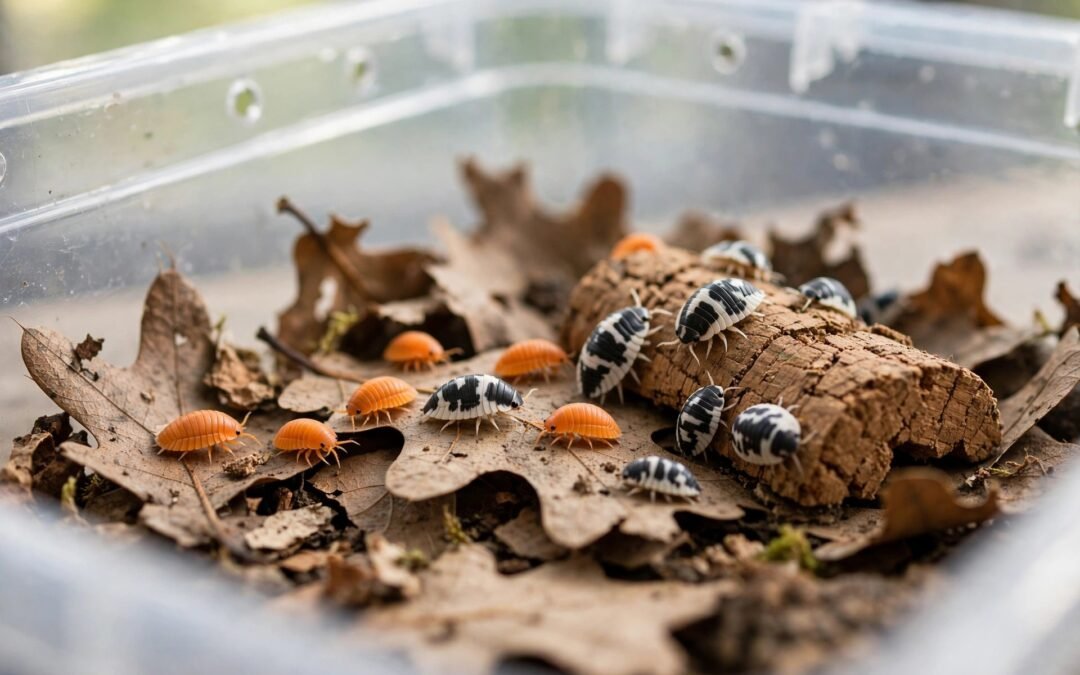
- Powder Orange isopods (Porcellionides pruinosus) — bright, fast-breeding, and tolerant of a wide humidity range. If you want visible activity quickly, start here. Our full powder orange isopod care guide covers their setup in detail.
- Dairy Cow isopods (Porcellio laevis ‘Dairy Cow’) — big, bold, black-and-white, and prolific. The best first pick if you want a display species you can actually watch. See our dairy cow isopod care guide.
- Dwarf White isopods (Trichorhina tomentosa) — tiny, near-invisible, and absurdly prolific. The workhorse of bioactive setups; less of a display pet, more of a living cleanup crew. See our dwarf white isopod guide.
- Zebra isopods (Armadillidium maculatum) — classic black-and-white striping, hardy, and happy in a normally heated room for most of the year. See our zebra isopod guide.
What to skip on a first purchase: Rubber Duckies, Cubaris species generally, and anything labelled “rare” with a three-figure price tag. They are not harder in an interesting way — they are slower to breed, slower to recover from mistakes, and far more expensive to replace. There is a time for them. It is your second or third colony, not your first. If you are still deciding between species, our best isopod species for beginners guide compares the starter options side by side.
One more thing to settle before you shop: have the enclosure ready first. Substrate mixed, leaf litter in, moisture gradient set, lid on. Isopods arriving to a dry, empty tub while you scramble to order supplies is a bad start that is entirely avoidable. Our isopod enclosure setup guide walks through the whole build.
How Many Isopods Should You Buy?
Most sellers sell starter cultures of 10 to 12 animals, and for the hardy beginner species that number is genuinely enough. Ten healthy powder oranges or dairy cows, given food, moisture, and peace, become a visible colony within a couple of months. Buying 30 instead does not buy you a colony three times faster — it buys you a crowded tub and a bigger bill.
There are two exceptions. First, tiny species like dwarf whites are usually sold in larger counts (25+) because each animal is the size of a grain of rice and a starter group needs critical mass. Second, slow-breeding or expensive species are sometimes sold in smaller groups of 6 to 8 — in that case, the small count is a warning about the species, not a bargain. We answer the numbers question properly, species by species, in are 10 isopods enough to start a colony?
Do not buy a single pair and hope for the best. Isopods are colony animals; a lone pair that loses one animal to a bad moult is a dead end. A starter culture of ten gives you breeding females, a buffer against losses, and a colony that can absorb a beginner mistake or two.
Where to Buy Isopods: The 4 Options, Ranked
1. Specialist online breeders — the best option for most beginners
A breeder who specialises in isopods is the safest place to buy isopods online. They keep the species they sell, they can tell you how the culture was raised, and their reputation depends on animals arriving alive. Look for a shop that lists the scientific name, gives species-specific care information, and shows real photos of its own stock rather than generic images. The wider the species range and the better the care information, the more likely you are dealing with a real breeder rather than a reseller.
2. Invert shows and expos — best if you can get to one
Nothing beats seeing the animals before you pay. At an invert show you can check the culture with your own eyes, ask the breeder questions face to face, and take the tub home the same day — no shipping stress at all. The range is limited to what breeders bring, and shows are seasonal, but if one is within reach, it is the lowest-risk way to buy your first colony.
3. Local exotic pet shops — convenient, but check the stock
Some specialist exotic shops stock isopods, usually the common species. The range is small and the staff may know less about isopods than about the reptiles next door, so judge the animals, not the shop: are the tubs clean, is there leaf litter and moisture, and can anyone tell you when the culture arrived? A shop that cannot answer basic questions about its own stock is a shop to walk away from.
4. General marketplaces and big-box pet stores — the riskiest option
This is where most bad first purchases happen. General marketplaces and big-box stores often source from mass-breeding facilities where overcrowding and stress are normal, and the listing photo may have nothing to do with the animals you receive. Animals arrive stressed, mislabelled, or carrying mites — and a marketplace seller who does not specialise in isopods is unlikely to help you afterwards. Use general marketplaces for supplies, not for live animals. If a deal looks far cheaper than every specialist breeder, it is not a bargain; it is a warning.
How to Spot a Good Isopod Seller
Before you pay anyone, run through this checklist. A good seller passes all of it without being asked; a bad one fails the first two questions.
- Captive-bred stock, stated clearly. The listing should say captive-bred. Wild-caught animals, particularly tropical species, can suffer heavy losses in their first months of captivity and may carry parasites. If the seller will not say how the animals were sourced, assume the worst.
- A real DOA (dead on arrival) guarantee. The seller should explain, in writing, what happens if animals arrive dead: photo evidence within a set time, then a replacement or refund. No DOA policy means no accountability.
- Species-specific care information. A seller who keeps the species can tell you its humidity, temperature, and substrate needs. A reseller cannot — and their care sheet, if they have one, will be generic copy.
- Real photos of their own stock. Stock photos from the internet are a red flag. Ask for a photo of the actual culture if the listing only shows a glossy catalogue image.
- Verifiable reviews from real buyers. Look for reviews that mention the species, the arrival condition, and the seller’s response to problems — not just five stars with no words.
- They answer questions before you pay. Message the seller. Ask how old the culture is, how many breeding females it holds, and how they pack for shipping. A breeder who keeps the species will answer happily. A reseller will dodge, delay, or reply with a copy-paste.
- Quarantine and hygiene. Ask whether new stock is quarantined before it joins their breeding cultures. A seller who quarantines protects you from inheriting their mite problem.
My honest opinion, after watching beginners buy for years: the pre-purchase message is the most underrated step in this whole hobby. Five minutes of questions tells you more about a seller than fifty reviews. The sellers worth buying from enjoy talking about their animals. The ones who treat questions as an annoyance are telling you exactly how they will treat a DOA claim.
Red Flags: When to Walk Away From an Isopod Seller
Walk away — no matter how pretty the photo — if you see any of these:
- No DOA guarantee, or a guarantee hidden in fine print. Live animals shipped without any arrival guarantee is a seller who has priced your loss into their business.
- Wild-caught sold as captive-bred. Vague sourcing, “field-collected” euphemisms, or a price far below every breeder for a species that is hard to breed in captivity.
- Only stock photos, no photos of their own cultures. You are buying a picture, not a colony.
- No scientific name on the listing. Common names are a mess in this hobby — “dalmatian” alone names two different animals. A seller who will not give you the Latin name either does not know it or does not want you checking.
- “Rare” markups on common species. A morph being new does not make it rare, and a high price does not make it better. Check the same morph at two or three specialist breeders before paying a premium.
- Pressure tactics. “Only one left”, “price goes up tomorrow”, countdown timers on live animals. A colony is not a flash sale.
- Shipping in extreme weather with no heat or cold pack. A seller willing to post isopods through a heatwave or a freeze without insulation is a seller who does not care whether they arrive alive. Order in mild weather, or wait a week.
- No reviews, no history, no way to contact them after payment. A brand-new account selling expensive morphs at a discount is the oldest pattern in the hobby.
What Should Isopods Cost?
Fair prices depend on the species, and the range is wide: a starter culture of a common beginner species can cost less than a takeaway, while a rare Cubaris morph can cost more than a phone. What matters is not the absolute number but whether the price matches the species, the count, and the seller.
As a rough guide: common beginner cultures (powder orange, powder blue, dairy cow, zebra, dwarf white) sit at the budget end; mid-range morphs and larger Porcellio species cost several times more; genuinely rare or slow-breeding species command premium prices because they are genuinely slow to produce. A price far below the going rate for the same species elsewhere is not a bargain — it usually means wild-caught stock, a mislabelled morph, or animals the seller wants rid of. A price far above the going rate needs a reason: a proven breeding group, an established line, or a morph that is actually scarce. “Rare” on its own is not a reason.
We break down real prices species by species, and where the money actually goes, in how much do isopods cost? Read it before you pay a premium for anything.
How to Buy Isopods Online: The Order Checklist
Run through this before you click buy:
- Enclosure ready? Substrate, leaf litter, moisture gradient, lid. If not, order supplies first and animals second.
- Weather check. Avoid ordering during a heatwave or a cold snap. If the seller offers a heat or cold pack, take it. If they do not offer one in extreme weather, wait.
- Delivery day. Order early in the week so the parcel does not sit in a depot over the weekend. If you cannot be home for delivery, do not order that week.
- Count and species confirmed. Check the Latin name, the morph name, and the count on the listing — and confirm they match what you actually want.
- DOA policy read and understood. Know the time window for reporting a problem (often 24 hours) and what evidence the seller needs.
- Seller messaged. One short message with your questions, answered before payment. If they will not answer now, they will not answer later.
On shipping itself — packaging, heat packs, and what good packing looks like — our how to ship isopods safely guide covers the details, and it is worth reading even as a buyer, so you can judge the box when it arrives.
Your Isopods Arrived — What to Do First
The first hour matters more than the first week. Open the parcel promptly, in a warm room, and work through this:
- Photograph the unboxing. Before you touch anything, take clear photos of the packaging and the animals. If there is a DOA problem, this is your evidence — and most guarantees require it within 24 hours.
- Check for dead animals and count. Count what arrived against what you ordered. A few dead mancae in a large culture can be normal; several dead adults is not. Contact the seller the same day if the loss is more than trivial, with your photos attached.
- Move them gently into their prepared enclosure. Tip the container, let them walk out, and do not dig through the substrate hunting for a headcount. They need darkness, moisture, and peace — not an inspection.
- Offer food and a damp corner, then leave them alone. Leaf litter, a small piece of vegetable, and a cuttlebone fragment are enough. Resist the urge to check on them every hour for the first day.
- Quarantine before mixing with existing colonies. New animals stay separate until you are sure they are healthy and mite-free — at least a few weeks. Our quarantining new isopods guide explains the setup and the timeline.
If the animals arrive sluggish or curled up, do not panic. Shipping is stressful; most healthy isopods recover within a day in a proper setup with a moisture gradient. What should worry you is a strong smell from the tub, animals that stay curled and unresponsive after 24 hours, or visible mites swarming the container — those are seller problems, and the seller needs to hear about them the same day.
Can You Catch Wild Isopods Instead?
Yes — and it is free. But free is not the same as better, especially for a first colony. Garden isopods are wild animals: they may carry parasites and mites, they may have been exposed to pesticides, and you may not even be sure which species you caught. A wild-caught starter colony also needs a proper quarantine before it goes anywhere near your other cultures, and its breeding performance is unpredictable compared with a captive-bred line that has lived in tubs for generations.
That said, catching a few local woodlice is a fine way to learn the basics before spending money — as long as you collect from a pesticide-free spot, identify the species, quarantine them properly, and treat them as a learning colony rather than a display piece. It is also the only honest way to keep a genuinely local species. Just do not compare a wild-caught tub with a breeder’s colony and conclude the hobby is hard. You are comparing a wild animal with a domesticated one.
Frequently Asked Questions
Where is the best place to buy isopods for beginners?
A specialist online breeder is the best place for most beginners: widest choice, captive-bred stock, a real DOA guarantee, and species-specific advice. An invert show is even better if you can reach one, because you see the animals before paying. Avoid general marketplaces and big-box stores for live animals.
How many isopods should I buy to start a colony?
A starter culture of 10 to 12 animals is enough for hardy beginner species like powder orange or dairy cow isopods. Tiny species like dwarf whites are usually sold in larger counts of 25 or more. Do not start with a single pair.
How much do isopods cost?
Common beginner species cost very little per starter culture, while rare morphs can cost many times more. The price should match the species, the count, and the seller — a price far below every other breeder is a warning sign, not a bargain. Our isopod cost guide breaks it down species by species.
Is it safe to buy isopods online?
Yes, if you buy from a specialist breeder with a written DOA guarantee, captive-bred stock, and verifiable reviews. Order early in the week, avoid extreme weather, and photograph the unboxing so you have evidence if anything arrives dead.
What should I do if my isopods arrive dead?
Photograph everything immediately, count the losses, and contact the seller the same day with your photos. Most reputable sellers replace or refund under their DOA guarantee if you report within 24 hours. Do not wait a week — the guarantee window will have closed.
Can I keep wild-caught isopods from my garden?
You can, but quarantine them first, collect only from pesticide-free areas, and identify the species. Wild-caught colonies carry more parasites, breed less predictably, and are a learning project rather than a display colony. For a first pet colony, captive-bred is the safer choice.
References
PostPods — “Buying Your First Isopods | UK Beginner’s Guide (2026)”, postpods.co.uk — species selection, supplier vetting, captive-bred vs wild-caught mortality.
PostPods — “Isopods for Sale UK: The Complete Buyer’s Guide”, postpods.co.uk — where to buy isopods in the UK, beginner species recommendations.
Terrarium Basics — “Best Isopods & Springtails to Buy (2026 Guide)”, terrariumbasics.com — supplier vetting, big-box store risks, species by humidity.
Isopod Care Hub — “How Much Do Isopods Cost? Prices by Species & Where to Buy”, isopodcarehub.com — price ranges by species.
Isopod Care Hub — “Are 10 Isopods Enough to Start a Colony?”, isopodcarehub.com — starter culture sizes by species.
Isopod Care Hub — “How to Ship Isopods Safely”, isopodcarehub.com — packaging and heat-pack standards for live arrival.
Isopod Care Hub — “Quarantining New Isopod Cultures”, isopodcarehub.com — quarantine setup and timeline for new arrivals.