
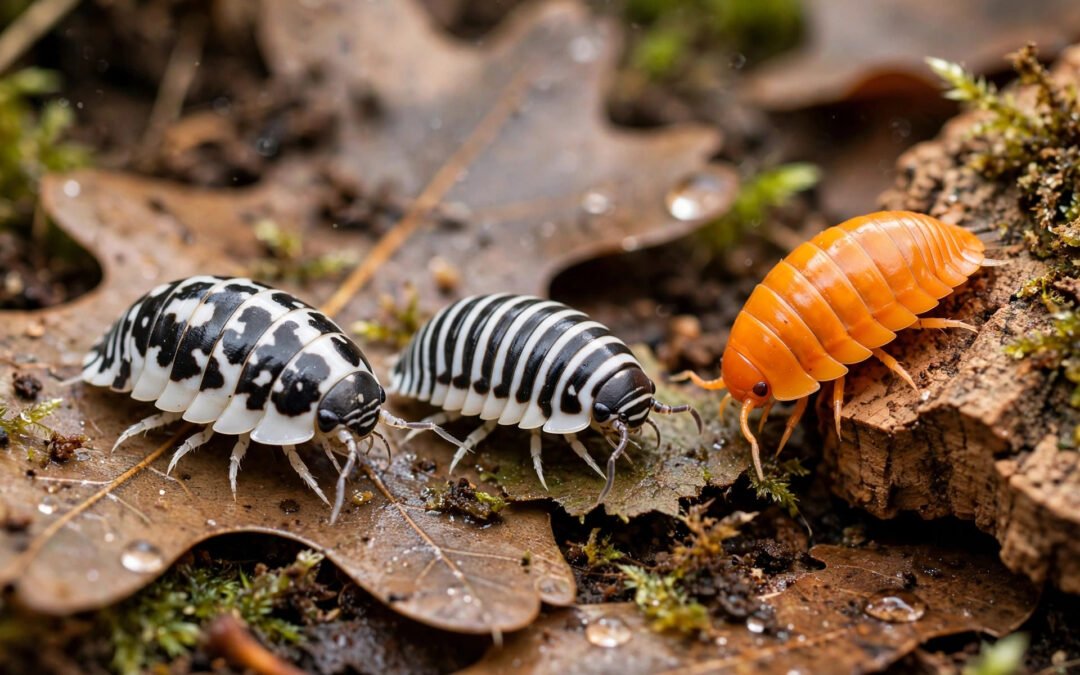
How Much Do Isopods Cost? Prices by Species & Where to Buy
How much do isopods cost? A starter culture of common isopods costs about $10–$30, while rare collector species can sell for $100–$400 or more. Most beginners spend $25–$60 all-in for their first colony, including the tub and basic setup. The huge price range surprises new keepers, because one tub of pillbugs looks much like another — but breeding speed, rarity, and demand decide the price tag, not size or looks alone. This guide gives you real prices by species, the hidden costs nobody mentions, and where to buy without getting ripped off.
How Much Do Isopods Cost? The Short Answer
Isopods are sold as a “culture” — a group of mixed-age animals, usually 10 to 15 individuals — not one by one. Prices fall into three rough tiers, and the tier tells you more about the animal than the price does. A cheap species is almost always a fast breeder that forgives beginner mistakes. An expensive one is usually slow to breed, hard to keep, or both.
| Tier | Typical price per culture | Examples |
|---|---|---|
| Budget (common, fast breeders) | $5–$15 for 10–12 | Dwarf White, wild-type Porcellio scaber, Powder Orange, Powder Blue |
| Mid-range (popular display species) | $15–$50 for 10–15 | Dairy Cow, Zebra, Clown, Magic Potion, Panda King |
| Collector (rare or slow-breeding) | $50–$400+ for 5–12 | Rubber Ducky, Cherry Blossom, White Tiger, rare Cubaris and Merulanella |
That top tier is where beginners get hurt. A $75 Rubber Ducky culture is not five times better than a $15 Dairy Cow culture — it is five times harder to keep alive. Price is a rough guide to difficulty, and the hobby’s cheapest animals are usually its best teachers.
What “Culture Size” Means (and Why It Changes the Price)
When a listing says “12 mixed” or “10ct”, it means 10–12 isopods of mixed ages and sizes, not 12 adults. Sellers mix juveniles and adults because a culture with breeding-age animals and young stock establishes faster than a dozen adults of the same age. A few sellers also list “starter culture with enclosure” bundles, which include a small tub — handy, but check what is actually inside before paying a premium for it.
Count matters more than most buyers realise. A 10-count of Dairy Cows at $15 works out to $1.50 per animal; a 50-count at $40–$50 drops that to under a dollar each. Larger counts are better value, but only if you actually need 50 isopods — a fast-breeding species will turn 10 into 50 within a few months anyway. For slow breeders, buying the bigger count is the smarter move, because every lost animal is a bigger share of your colony. My rule: buy 10–12 of a fast breeder, 12–15 of a slow one, and never buy a single pair and hope they breed.
How Much Do Isopods Cost by Species? Real Seller Prices
Prices below are typical US seller prices as of late 2026, gathered from specialist shops. They move with season and stock, so treat them as ranges, not guarantees. Prices in the UK and EU run broadly similar in pounds or euros, sometimes a little higher for imported tropical species.
| Species | Typical price | Count | Beginner fit |
|---|---|---|---|
| Dwarf White (Trichorhina tomentosa) | $5–$10 | 10–15 | Excellent — tiny, prolific cleanup crew |
| Wild-type Porcellio scaber | $6–$12 | 12 | Excellent — the classic first isopod |
| Powder Orange / Powder Blue (Porcellionides pruinosus) | $10–$15 | 10–12 | Excellent — fastest breeder on this list |
| Dairy Cow (Porcellio laevis ‘Dairy Cow’) | $15–$20 | 10 | Excellent — big, bold, forgiving |
| Zebra (Armadillidium maculatum) | $14–$25 | 10–12 | Great — hardy, striking stripes |
| Clown (Armadillidium klugii) | $25–$35 | 10 | Good — drier setup, slower to establish |
| Magic Potion (Armadillidium vulgare ‘Magic Potion’) | $40–$50 | 10–12 | Good — hardy, but you pay for the pattern |
| Panda King (Cubaris sp. ‘Panda King’) | $23–$50 | 10–15 | Intermediate — slower breeder, needs humidity |
| Rubber Ducky (Cubaris sp. ‘Rubber Ducky’) | $40–$75 | 5–10 | Advanced — slow, needs warm humid setup |
| Cherry Blossom (Cubaris sp. ‘Cherry Blossom’) | $120+ | 6 | Collector only |
Two prices on that table deserve a second look. Magic Potion at $40–$50 is the same species as the $6 wild-type pillbug in your garden — Armadillidium vulgare — with a piebald pattern bred into it. You are paying for looks, not for a different animal. And the $120 Cherry Blossom is a slow-breeding tropical Cubaris that a beginner has no business buying first: one bad week of humidity and a six-figure-lookalike price tag becomes a dead tub.
If you want the full picture on any of these, our species guides cover care in detail — start with the best isopod species for beginners, then read the Dairy Cow isopod care guide, the Powder Orange isopod care guide, and the Zebra isopod care guide before you spend anything.
How Much Do Isopods Cost — and What Makes One $5 and Another $400?
Five things set the price, and understanding them stops you overpaying.
1. Breeding speed. This is the biggest factor. Powder Orange females can produce broods of 20–30 mancae every few weeks; a Rubber Ducky female produces a handful, slowly. A seller who can make 500 Powder Oranges a month can sell them for $10. A seller who makes 20 Rubber Duckies a month cannot.
2. Rarity and origin. Species from one cave system in Thailand or one hillside in Spain are rare because few people collect them and fewer still breed them. Newly described or newly imported species spike hardest — early buyers pay for novelty, and prices usually fall as more keepers breed them. The “new morph” premium is the most overrated thing in the hobby: last year’s $200 isopod is often this year’s $40 one.
3. Demand and looks. Bold patterns sell. Dairy Cows, Zebras, and Panda Kings look striking in photos, so they hold higher prices than equally hardy plain species. Demand also follows social media — a species that goes viral on a reptile channel can double in price within a season.
4. Morph and locale. Within one species, prices split by morph. A wild-type Porcellio scaber is $6; a ‘Lava’ or ‘White Tiger’ morph of the same species is $30–$50. Locale matters too — Porcellio expansus from La Sénia costs more than the same species from a less famous locality, even though the care is identical. Our Porcellio expansus care guide explains which locale premiums are worth paying and which are not.
5. Seller reputation and guarantees. Established sellers charge a little more and are usually worth it: live-arrival guarantees, correctly identified species, and animals that were actually quarantined. The cheapest listing from an unknown seller is the most expensive mistake in this hobby — a misidentified species can mean the wrong humidity, the wrong temperature, and a dead colony within a month.
How Much Do Isopods Cost in Total? The Hidden Costs of a First Colony
The isopods are the cheap part. A realistic first-colony budget looks like this:
| Item | Typical cost | Notes |
|---|---|---|
| Isopod culture (10–12, beginner species) | $10–$25 | Dairy Cow, Powder Orange, or Zebra |
| Plastic tub with lid (6–16 qt) | $5–$15 | Any clear food-safe tub works — no fancy enclosure needed |
| Substrate mix | $0–$10 | Free if you mix your own; see our best substrate mix for isopods |
| Leaf litter + cork bark | $5–$15 | Oak leaves are free if you collect and bake them; see our best leaf litter for isopods |
| Cuttlebone (calcium) | $3–$5 | One piece lasts months |
| Food (fish flakes, vegetables) | $0–$5 | Kitchen scraps cover most of it |
| Shipping | $10–$20 | Often free over a minimum order; heat packs add $3–$5 in winter |
Total for a first colony: roughly $35–$60, and most of that is one-off. After setup, running costs are close to zero — leaf litter, vegetable scraps, and a piece of cuttlebone. The ongoing cost that catches people out is not money but time: a colony that outgrows its tub needs splitting, and a colony that crashes needs diagnosing. Read our isopod enclosure setup guide and the colony not breeding troubleshooting guide before your animals arrive, not after.
One cost that is genuinely optional: heating. Most beginner species are fine at normal room temperature, and a heat mat is often a waste of money — or worse, a colony killer if it dries the tub out. Our heat mat guide explains when heating helps and when it does not.
Where to Buy Isopods (and Where Not To)
Specialist isopod sellers are the safest first stop. Shops that sell only isopods and related invertebrates identify species correctly, pack animals properly, and usually offer a live-arrival guarantee. Expect to pay the prices in the table above plus shipping.
Reptile expos and shows are the best value if one is near you: no shipping, you see the animals before paying, and you can ask the breeder questions face to face. Prices at expos are often 10–20% lower than online, and sellers sometimes throw in extra animals.
Hobbyist groups and forums are where the bargains live — keepers selling surplus colonies at half the shop price. They are also where the risks live: no guarantee, no recourse, and identification is only as good as the seller’s knowledge. Buy from hobbyists only once you can identify a species yourself.
Places to avoid: generic marketplace listings with no scientific name, sellers who cannot tell you the species’ humidity needs, and anyone offering wild-caught animals as pets. Wild-caught isopods can carry mites and parasites, may be a protected species, and often die in captivity because their exact microclimate is unknown. Also check your local rules before ordering — some US states (notably Florida, Louisiana, and Oregon) restrict certain species, and reputable sellers list those restrictions on each product page.
Finally, buy by scientific name, always. Trade names cover more than one animal: “Dalmatian” is used for both an Armadillidium nasatum morph and a Porcellio laevis morph, and the two need different care. Our Yellow Ghost guide shows how badly this can go — it is a dry-climate Porcellio bolivari, not a tropical Cubaris, and following the wrong care sheet kills it.
5 Buying Mistakes That Waste Money
1. Buying the cheapest listing. A $5 culture from a seller with no reviews and no guarantee is a gamble, not a bargain. One dead-on-arrival shipment costs you the animals, the shipping, and the week you waited.
2. Buying too few animals. Five isopods of a slow breeder is a colony that can vanish with one bad moult. Spend the extra $10 for the 12-count — it is the cheapest insurance in the hobby.
3. Buying the pretty species first. Rubber Ducky, Panda King, and other tropical Cubaris are display animals for keepers who already know how to hold humidity steady for months. Learn on Dairy Cows or Powder Oranges, then spend the big money once you have a colony that is actually breeding. Our Blonde Ducky guide makes the same point: buy the cheaper, hardier species first and enjoy the expensive one later.
4. Ignoring shipping and weather. A $15 culture with $18 shipping is a $33 culture. Order in mild weather, combine orders to hit free-shipping minimums, and never have isopods shipped in a heatwave or a freeze without a heat pack. Our shipping guide covers packaging and timing in detail.
5. Paying collector prices for a cleanup crew. If you need isopods to clean a bioactive terrarium, Dwarf Whites and Powder Oranges do the job for $10. A $50 culture of show isopods will hide under the bark and do the same job worse. Match the animal to the purpose — read our bioactive cleanup crew guide and our feeding guide before you choose.
Frequently Asked Questions
How much do isopods cost for a beginner?
Budget $25–$60 all-in for your first colony: $10–$25 for a beginner species culture, $10–$20 for a tub, substrate, leaf litter and cork bark, and $10–$20 for shipping. After setup, running costs are close to zero.
What is the cheapest isopod species?
Dwarf White isopods (Trichorhina tomentosa) and wild-type Porcellio scaber are the cheapest, usually $5–$12 for a culture of 10–15. Powder Orange and Powder Blue are nearly as cheap and much easier to see and enjoy.
Why are Rubber Ducky isopods so expensive?
Rubber Ducky isopods (Cubaris sp. ‘Rubber Ducky’) cost $40–$75 for 5–10 animals because they breed slowly, need warm humid conditions, and demand for them stays high. They are an advanced species — most keepers should start with a cheaper, hardier species first.
Do isopod prices include shipping?
Usually not. Expect $10–$20 for shipping in the US, with heat packs adding $3–$5 in winter. Many sellers offer free shipping over a minimum order, so combining two cultures in one order often saves money.
Is it cheaper to catch isopods outside?
Wild-caught isopods are free, but they are a false economy as pets: they can carry mites and parasites, may be a protected species, and often die because their exact microclimate is unknown. A $10 captive-bred culture is cheaper than a free wild one that crashes your tub.
How much do isopods cost per month to keep?
Almost nothing — a few dollars at most. Leaf litter, vegetable scraps, and cuttlebone are the main consumables, and a single piece of cuttlebone lasts months. The real ongoing cost is your time, not money.
References
GBTimes — “How Much Do Isopods Cost? A Comprehensive Guide for Enthusiasts” (gbtimes.com). VivKeeper — “Best Isopods for Beginners & Clean-Up Crews” (vivkeeper.com). Roach Crossing — Isopods category price list (roachcrossing.com). Aquarimax Pets — Isopods price list (aquarimax.com). 7th Leg — Shop Isopods & Supplies (7thleg.com). Prices cited were checked against live seller listings in November 2026 and will change with season and stock.